



Kenya does not ask for your attention politely. It commands it. From the red-dusted plains of the Maasai Mara, where the mechanics of survival play out in full daylight, to the ancient coral streets of Lamu, where the Indian Ocean breeze carries centuries of Swahili memory, the country presents a range of experiences so distinct from one another that calling them by a single name, tourism, feels almost reductive.
What makes Kenya particularly worth understanding is not simply what it contains but what those things reveal about the continent it represents. Among tourist destinations in Kenya, the range is the first thing that separates it from comparable African travel experiences: wildlife, cultural heritage, coastal geography, and highland ecology converge in a way few countries on earth manage. For the traveller who wants depth rather than a postcard, Kenya rewards that ambition generously.
Spanning roughly 580,000 square kilometres with a coastline of approximately 480 kilometres along the Indian Ocean, Kenya compresses ecosystems that elsewhere require multiple countries to experience. Short domestic flights of under an hour connect the capital to the Maasai Mara, the northern reserves, the coast, and the highland mountain towns, making a multi-destination itinerary genuinely practical within a single trip. Few countries in Africa concentrate this range of wildlife, cultural heritage, and geography within borders that a single well-planned journey can cover.
A place reveals itself slowly. Kenya also tests how closely you are willing to look.



1. Maasai Mara National Reserve
The Maasai Mara is where Kenya’s wildlife reputation was built, and it continues to justify that reputation without apology. Occupying 1,510 square kilometres in the south-west and forming the northern extension of Tanzania’s Serengeti ecosystem, it is most visited between July and October when roughly 1.5 million wildebeest cross the Mara River in the Great Migration. The crossings are chaotic, instinct-driven, and without parallel in any managed wildlife setting.
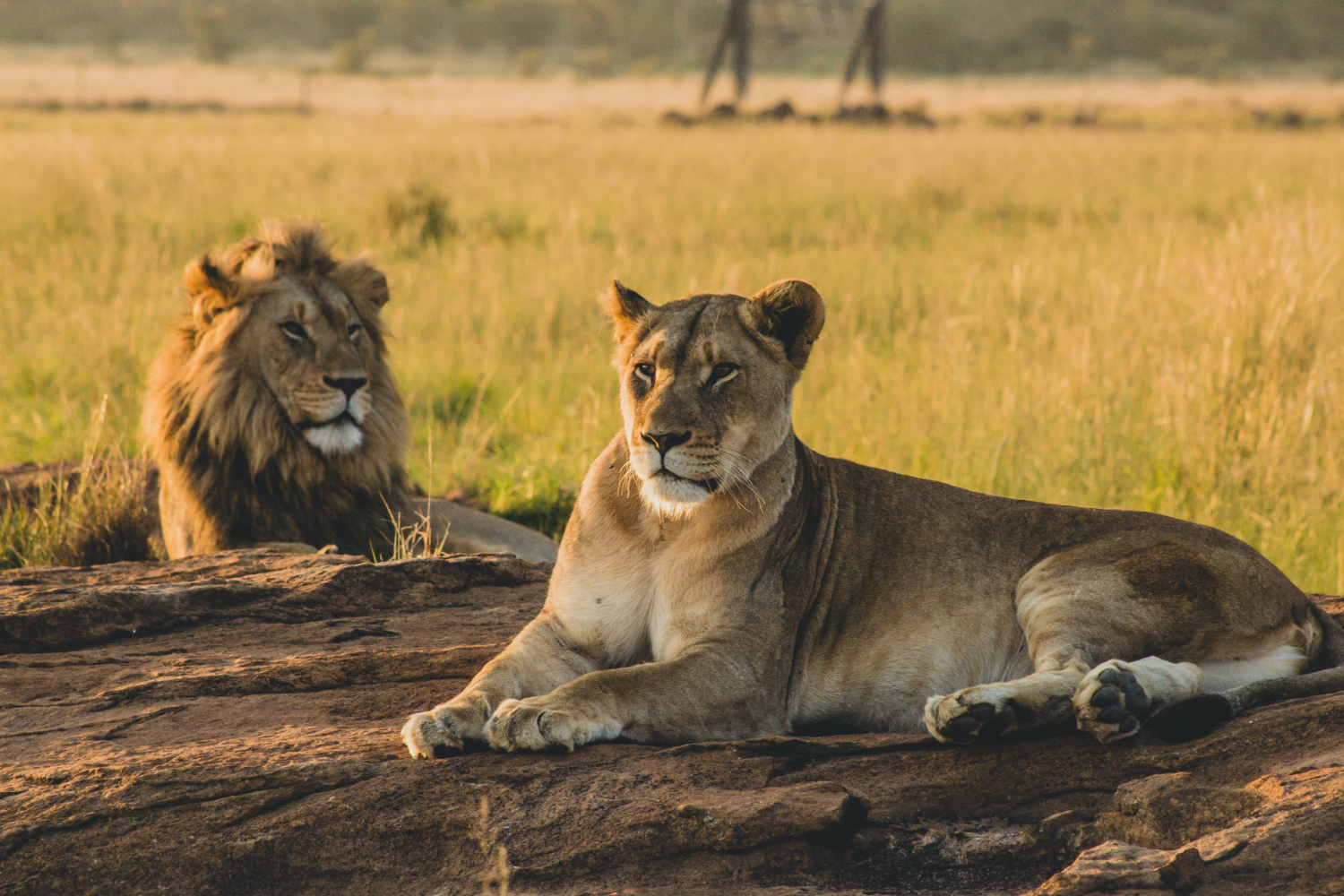
Outside migration season, the Mara remains one of Africa’s most reliable destinations for lion, cheetah, and leopard sightings. Dawn game drives, when predators are most active and the light sits amber across the plains, offer a quality of experience that peak-hour tourism cannot replicate. Hot air balloon safaris, launching at first light and drifting above the grassland in near-silence, are among the most celebrated wildlife experiences in the world. Private conservancies surrounding the official reserve permit night drives and off-road tracking, activities the main reserve does not allow. This distinction is worth knowing before booking accommodation.
The Mara does not reward passive attention. It rewards the visitor who arrives early, stays patient, and allows the place to become familiar before drawing conclusions.


2. Amboseli National Park
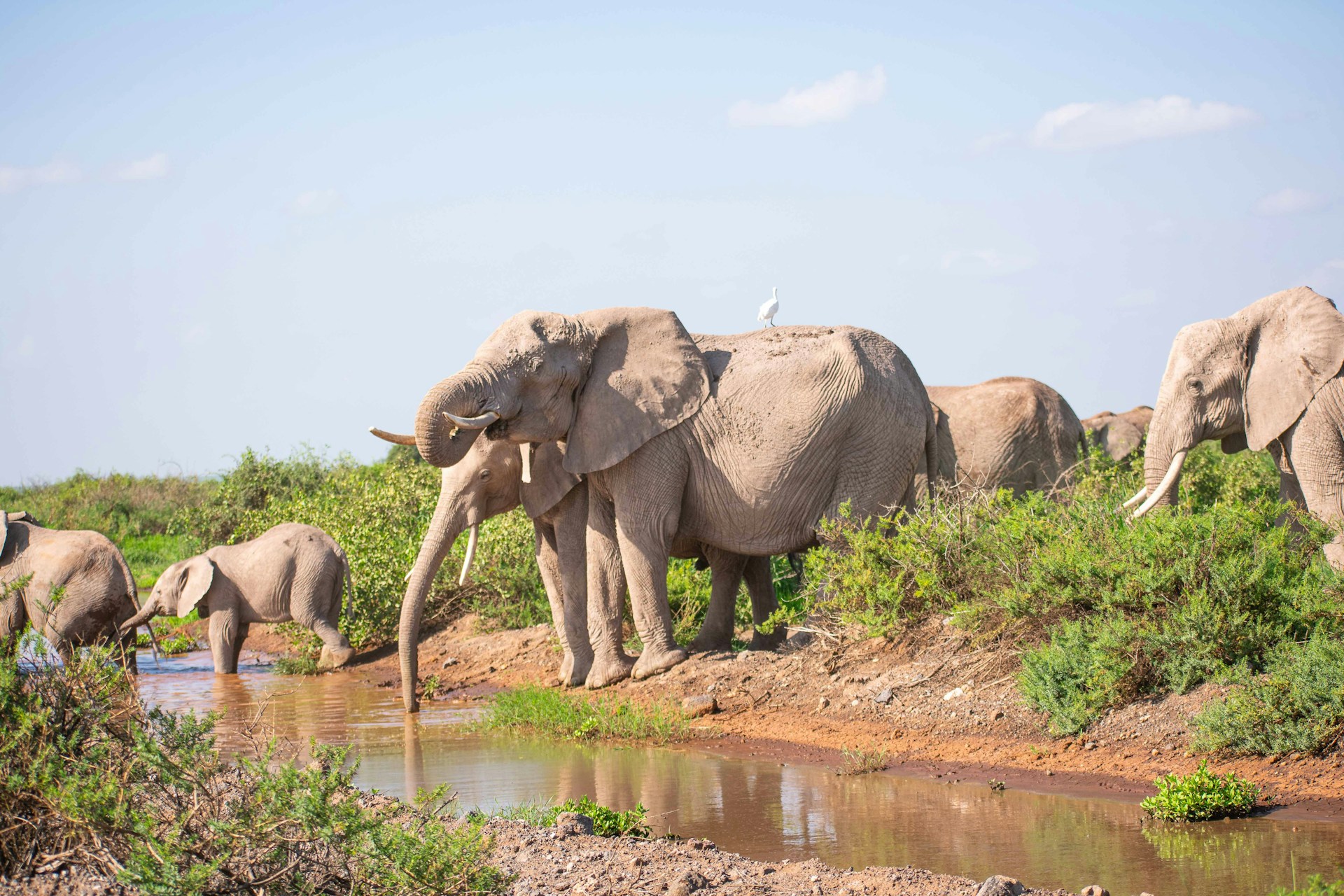
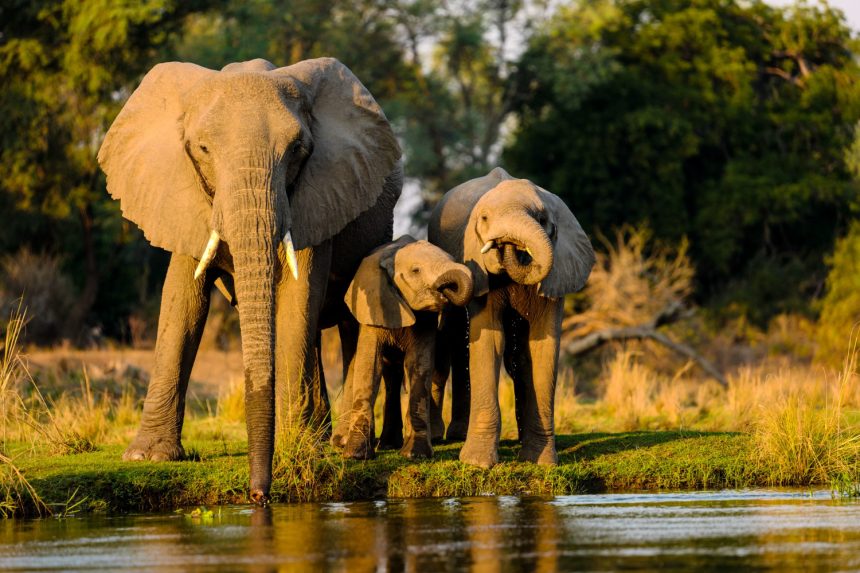
Amboseli presents its best image immediately: elephant herds moving across open plains with Mount Kilimanjaro, snow-capped and improbably large, rising on the horizon. The park covers 390 square kilometres in southern Kenya, and its seasonal swamps, principally Enkongo Narok and Longinye, fed by underground water from Kilimanjaro’s glaciers, concentrate wildlife in predictable areas that make prolonged close observation possible without extensive searching.
The elephants here are among the most studied on earth. Since the 1970s, the Amboseli Elephant Research Project has been tracking individual family histories across four generations, fundamentally reshaping scientific understanding of elephant cognition and social memory. Knowing this changes what a visitor is actually looking at when a matriarch leads her family to water.
The park was established on Maasai pastoralist land, and that displacement remains an unresolved tension. Observation Hill, a volcanic rise at the park’s centre, provides a panoramic elevated view of the swamp system and the mountain together, widely considered one of the finest unobstructed vantage points in Kenya and best experienced in the early morning before cloud builds over Kilimanjaro. Amboseli is accessible year-round, but the dry months of June to October and January to February offer the clearest mountain views and the most concentrated elephant activity around the swamps.
The mountain watches everything. The elephants remember more than we record.
3. Diani Beach
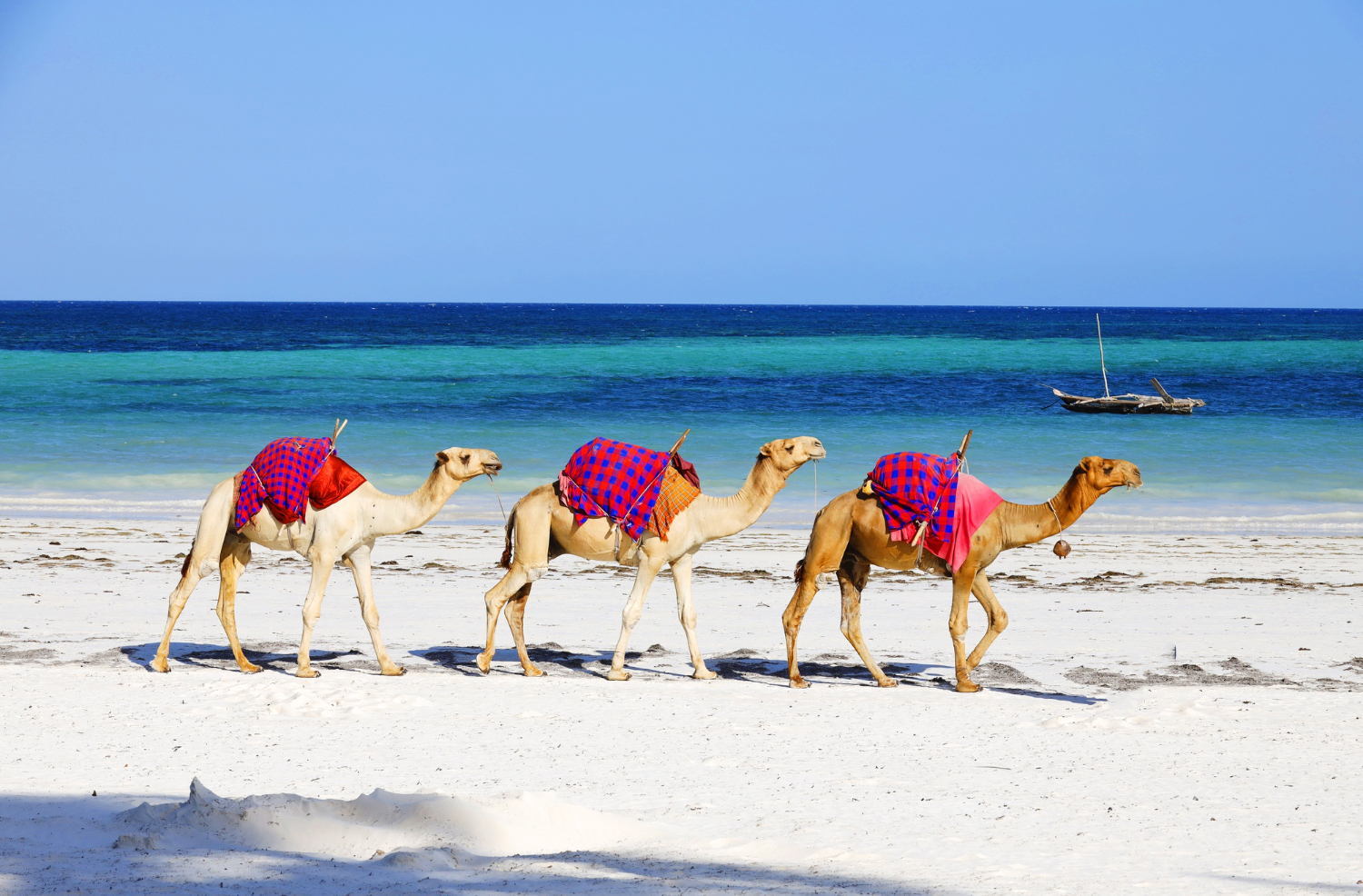
Diani Beach runs for 17 kilometres south of Mombasa along Kenya’s South Coast, and it represents the Indian Ocean coastline at its most complete: pale coral sand, leaning palms, and water that moves from shallow turquoise to deep open blue beyond the protective reef. The Likoni Ferry crossing from Mombasa is unexpectedly one of the coast’s more involving travel experiences, brief and vivid, and sets the tone for a distinct arrival.

The reef beneath the surface is ecologically more significant than the beach above it. Coral gardens, seasonal whale sharks, and a fragile dugong population make the marine environment a serious destination in its own right. Most visitors who arrive for the sand end up spending as much time below the waterline as above it, moving through reef corridors with dive operators, drifting over coral in glass-bottomed boats, or paddling the mangrove channels that line the coast’s southern edge. Wasini Island, a short boat trip south, offers dolphin watching, Swahili ruins, and a seafood lunch that ranks among the most pleasurable day trips on the Kenyan coast. The Colobus Conservation Centre on the South Coast road rehabilitates the Angolan colobus monkey, adding a conservation dimension that most beach destinations cannot match.
Diani is accessible year-round. The dry seasons of January to March and June to October offer the most settled beach conditions and the clearest visibility for diving and snorkelling.
A coastline is not passive. It supports multiple worlds at once.
4. Lake Nakuru National Park
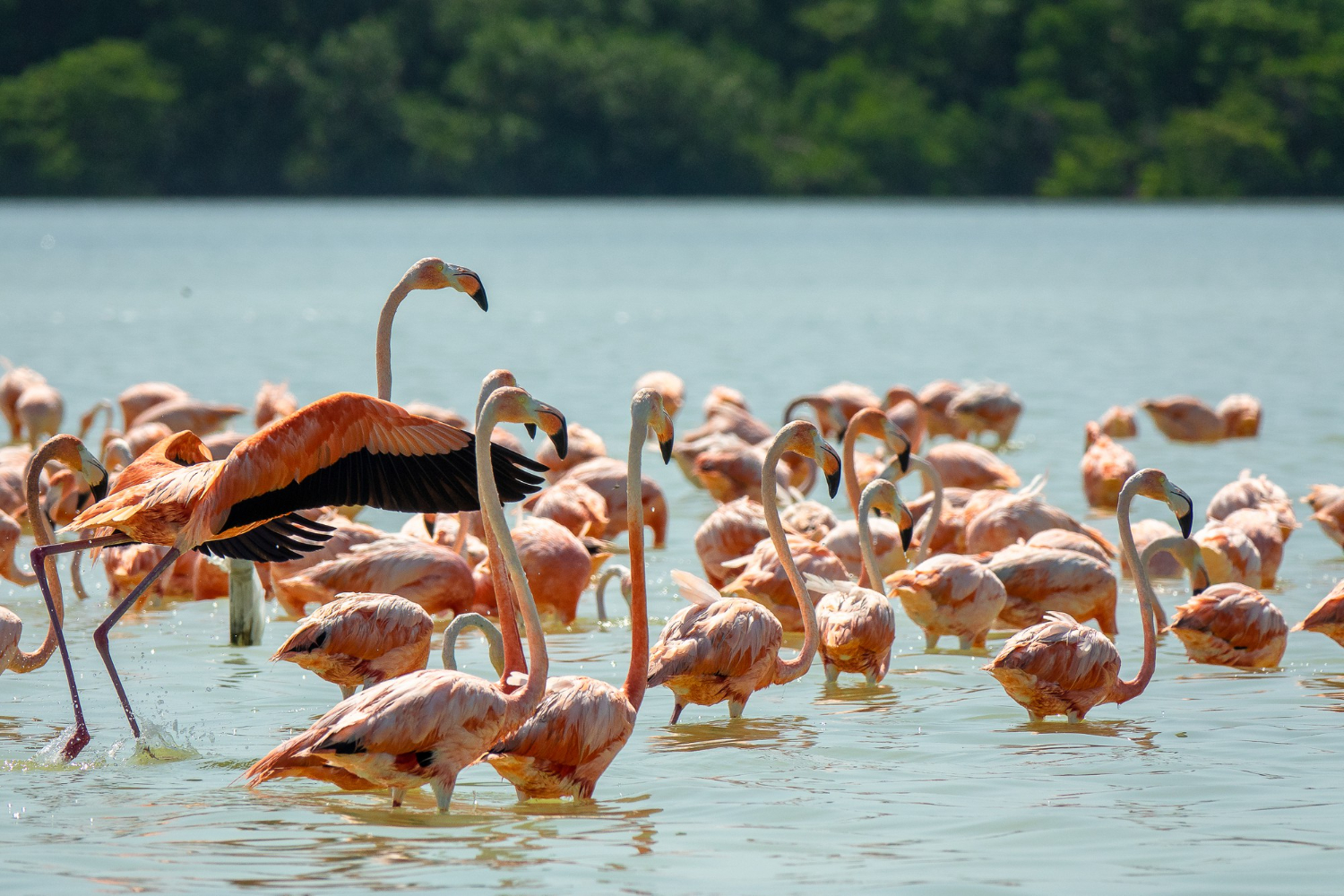
Lake Nakuru’s international reputation was built on a single image: a million flamingos turning its alkaline shoreline an unbroken shade of pink. That image is now historical. Between 2010 and 2022, the lake nearly doubled in surface area as rainfall increased and deforestation accelerated runoff into the basin. The rising fresh water diluted the salinity that the flamingos’ food source requires, and the birds relocated to other Rift Valley lakes with more stable chemistry.
What the park retains is considerable. The fenced rhino sanctuary supports both black and white rhino populations with documented success, and Rothschild’s giraffe, relocated from western Kenya, moves reliably through the parkland alongside lions, leopards, and hyenas. Over 400 bird species remain, making the lake one of the more productive birdwatching environments in the Rift Valley regardless of flamingo numbers; African fish eagle and Goliath heron are consistent presences. Baboon Cliff on the park’s western rim offers an elevated panoramic perspective of the lake and surrounding woodland that ground-level drives cannot replicate. At 164 kilometres from Nairobi, the park is manageable as a day trip, though an overnight stay allows for both morning and evening game drives when the light and wildlife activity are at their best.
Lake Nakuru is a park in transition. A conservation story is not only what succeeds. Sometimes it is what adapts.
5. Nairobi National Park
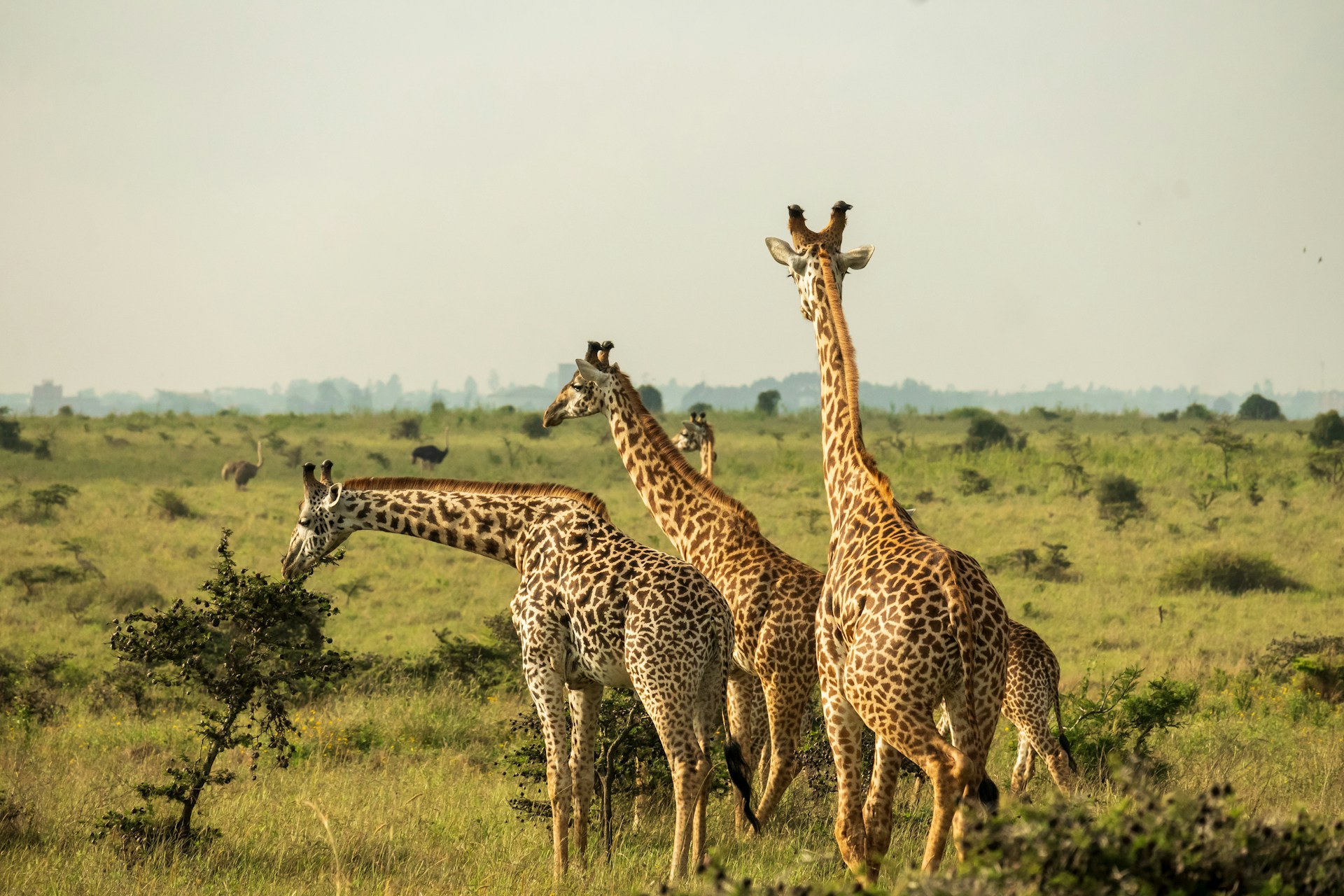
Nairobi National Park is the only functioning national park in the world that shares a boundary with a capital city. Lions, leopards, rhinos, giraffe, buffalo, and cheetah operate within 117 square kilometres, with the Nairobi skyline visible from multiple points inside the park. The sight of giraffe moving across open grassland with office towers behind them is not a cliché. It is a genuinely instructive image about what Kenyans have chosen to protect.
Established in 1946 as Kenya’s oldest national park, the reserve has an unfenced northern boundary that allows seasonal wildlife movement from the Athi-Kapiti plains. That corridor has been progressively narrowed by urban expansion, and its long-term viability is under real pressure from infrastructure development.
A morning game drive followed by lunch in the Karen district offers something no other city on earth provides. Within the same district, the Giraffe Centre allows visitors to hand-feed endangered Rothschild’s giraffe from an elevated platform at eye level, making it one of the more unexpectedly intimate wildlife encounters in East Africa. The Karen Blixen Museum, occupying the farmhouse and gardens of the Out of Africa author with the Ngong Hills visible behind it, is worth an hour for the quality of the light and the gardens alone, regardless of familiarity with the book. The park sits roughly seven kilometres from the city centre, making a half-day visit practical even within a tight itinerary.
Nairobi gathers this combination within a single city: a national park, a wildlife trust, a restaurant culture, and a literary history embedded in its suburbs. That is not something any other capital on earth provides, and it should not be taken for granted.
6. Samburu National Reserve
Samburu lies 320 kilometres north of Nairobi, accessible by a half-day road drive or a short domestic flight from Wilson Airport. The overland route is worth considering: the ecological transition from highland green to semi-arid scrub is visible from the road and gives the reserve a geographical context that arriving by air removes. The reserve covers 165 square kilometres along the Ewaso Ng’iro River, whose permanent flow sustains a ribbon of riverine forest that functions as the ecological spine of an otherwise spare environment.
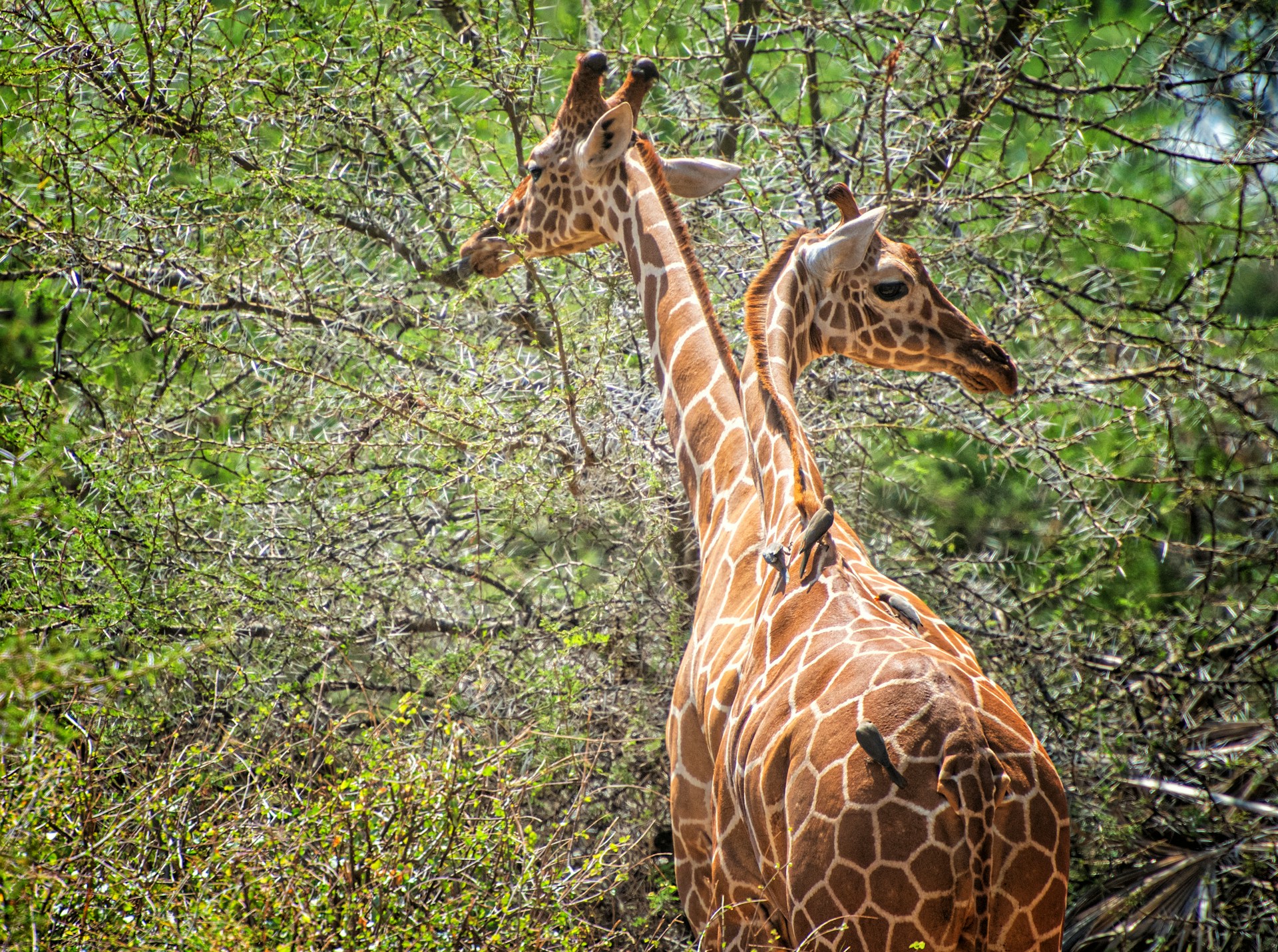
The reserve is defined by its Samburu Special Five: the Grevy’s zebra, reticulated giraffe, Beisa oryx, gerenuk, and Somali ostrich. All five are adapted to arid conditions and found in very few places outside northern Kenya. The Grevy’s zebra is classified as globally endangered. The gerenuk requires no direct water intake at all. Save the Elephants has been conducting long-term research here since the 1990s, and that institutional presence gives Samburu an intellectual depth that purely scenic destinations cannot offer.
The Samburu people, a semi-nomadic pastoralist community closely related to the Maasai, maintain a living cultural presence across the land surrounding the reserve. Their elaborate beadwork, age-based social structures, and cattle-centred economy are not performed for visitors. They are the ongoing reality of a community that has organised itself around this landscape for generations. Cultural visits to Samburu villages, offered through most camps and lodges in the area, provide a context for the reserve that no game drive alone can supply.
The Big Five are also present in Samburu, which means a visitor leaves having encountered both the ecological rarities of the arid north and the animals that define African wildlife globally.
In Samburu, you are in northern Kenya. The air is drier, the light is harder, and the landscape makes no concessions to comfort. That is precisely why it stays with you.
7. Lamu Old Town
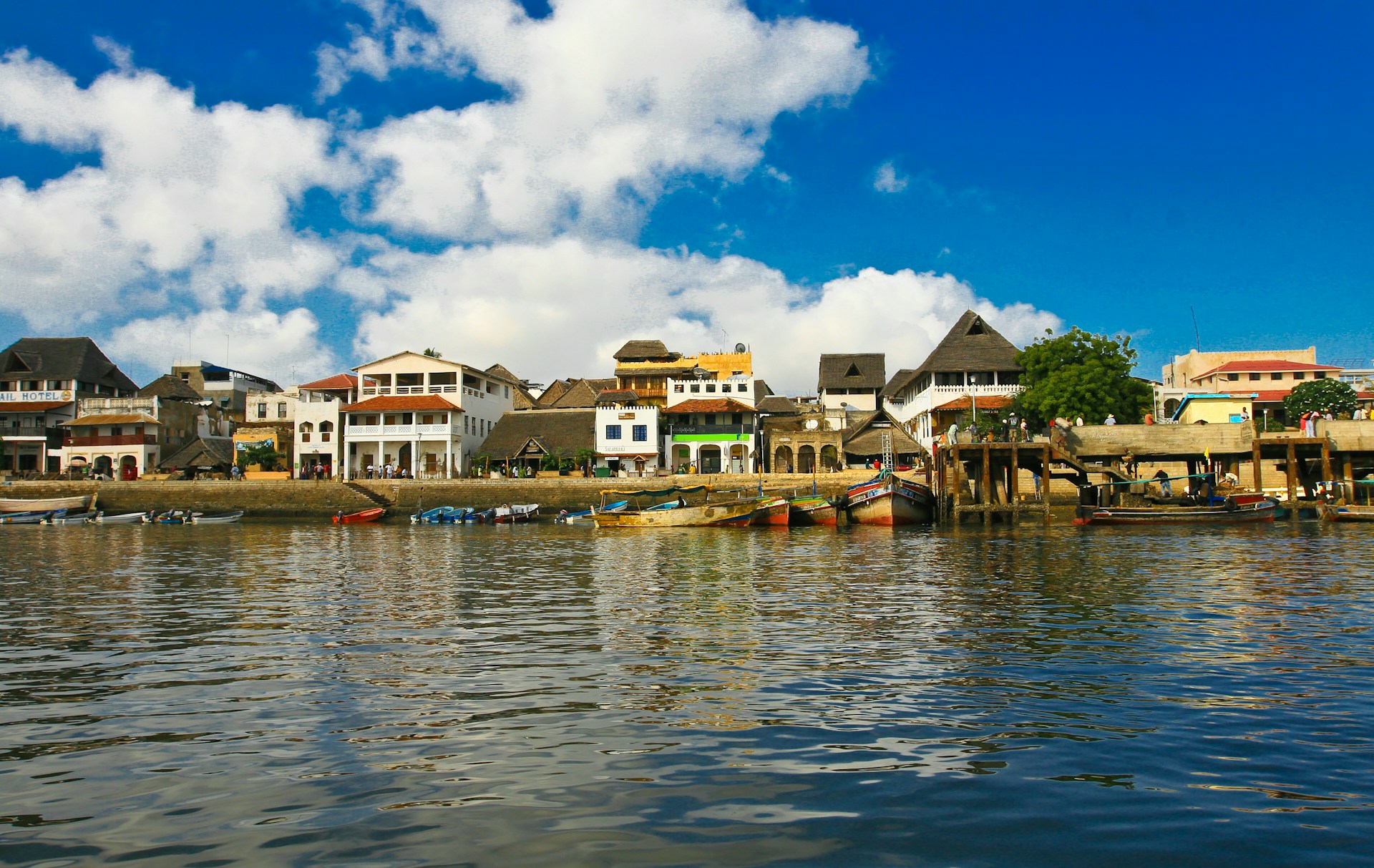
Lamu Old Town is a Swahili settlement that has been continuously inhabited for over seven centuries and awarded UNESCO World Heritage Site status in 2001. The designation captures the architectural fact. The more important truth is that Lamu Old Town is not preserved. It is lived in. The same streets that dhow captains navigated in the fourteenth century are still used daily by residents, children, and donkeys carrying goods between buildings.
The town developed as a node on the Indian Ocean trading network connecting East Africa to Arabia, India, and Persia. Every significant contact is visible in the architecture: carved wooden doors with influences from Oman, inner courtyard houses designed for ocean ventilation, mosques operating continuously since the fifteenth century. This is not curated heritage. It is the accumulated consequence of sustained civilisational activity. The Lamu Museum on the waterfront, the oldest in Kenya, documents that history through navigational instruments, ceremonial objects, and architectural records.
The annual Lamu Cultural Festival each November brings dhow racing, Swahili poetry performances, and traditional music to the island’s waterfront, drawing visitors from across the world for events the island performs as much for itself as for its audience. Shela, several kilometres south along the island’s eastern shore, offers an uninterrupted beach without the density of the old town and a quieter version of the same Swahili world. Access is by flight from Nairobi or Mombasa to Manda Island airstrip, followed by a short boat crossing to the waterfront.
The waterfront promenade at sunset, when dhows return and the light sits orange across the channel, costs nothing and requires only the willingness to stop moving for an hour. Speed disappears here. In its place, something rarer arrives.
8. Hell’s Gate National Park
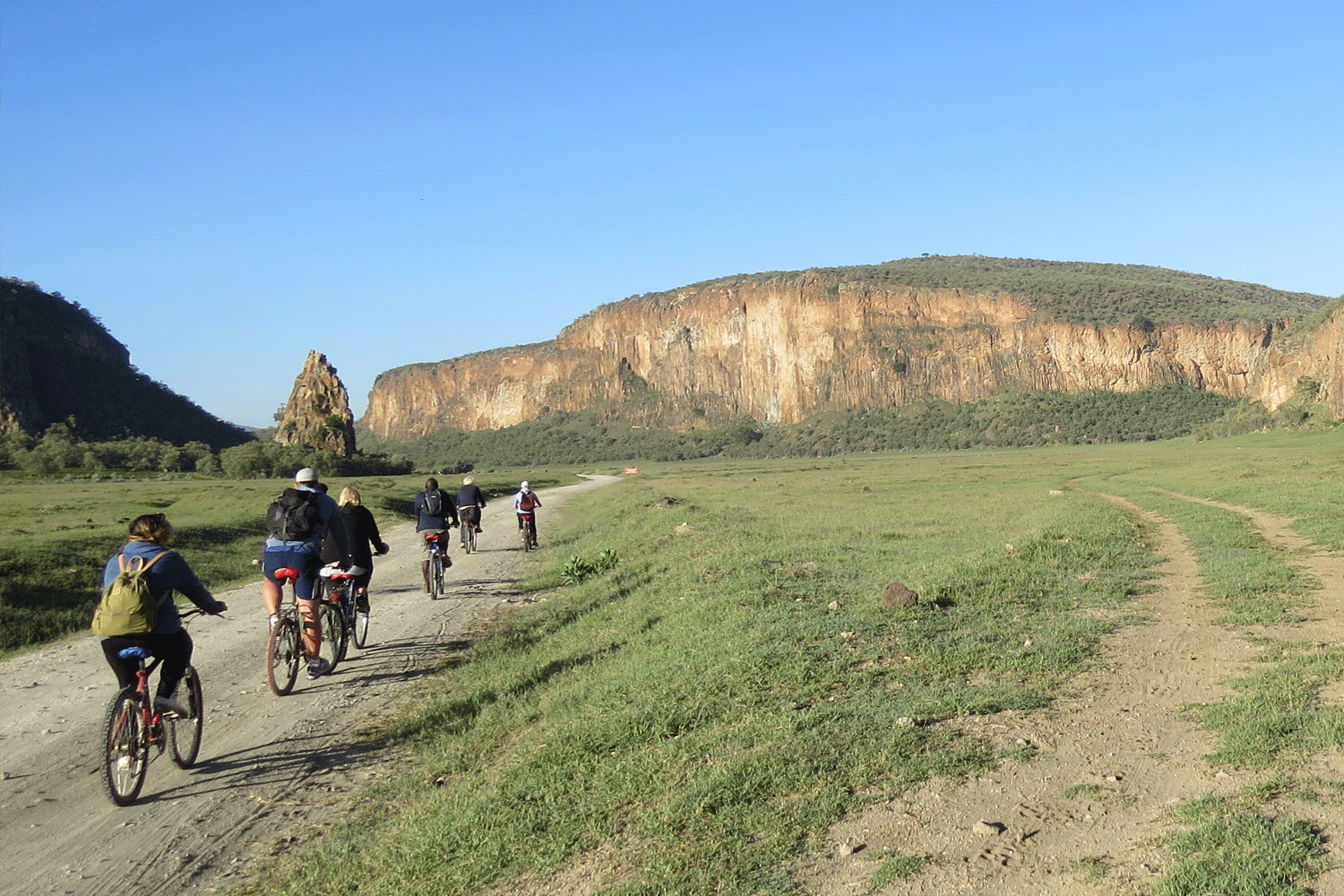
Hell’s Gate does something no other significant national park in Kenya does: it lets you walk freely, without escort, through open grassland where giraffe and zebra move at close range. The absence of lions makes this possible. It is also what makes Hell’s Gate structurally distinct from every other wildlife area in the country.
The 68 square-kilometre park sits between Lake Naivasha and Mount Longonot in dramatic Rift Valley geology. Fischer’s Tower and Central Tower, volcanic rock columns rising starkly from the plains, define the skyline. The gorge descends through ochre and rust-coloured stone past natural hot springs and steam vents; access is occasionally restricted after heavy rain and is worth confirming at the gate before planning the route.
The Olkaria Geothermal Station, the first geothermal power facility in Africa, operates within the park boundary, and the adjacent Olkaria Geothermal Spa offers natural mineral pools fed directly by the earth’s heat, making for an unusual way to end a day of hiking or cycling. Cycling past grazing giraffe and then alongside industrial power infrastructure on the same track is a juxtaposition Kenya alone can provide.
What changes when you walk through wildlife rather than observe it from a vehicle is not the wildlife. It is you.
Kenya’s tourist destinations shift register from here, moving from active landscapes into conservation frontlines, urban complexity, and highland wilderness.
9. Sheldrick Wildlife Trust (Nairobi)
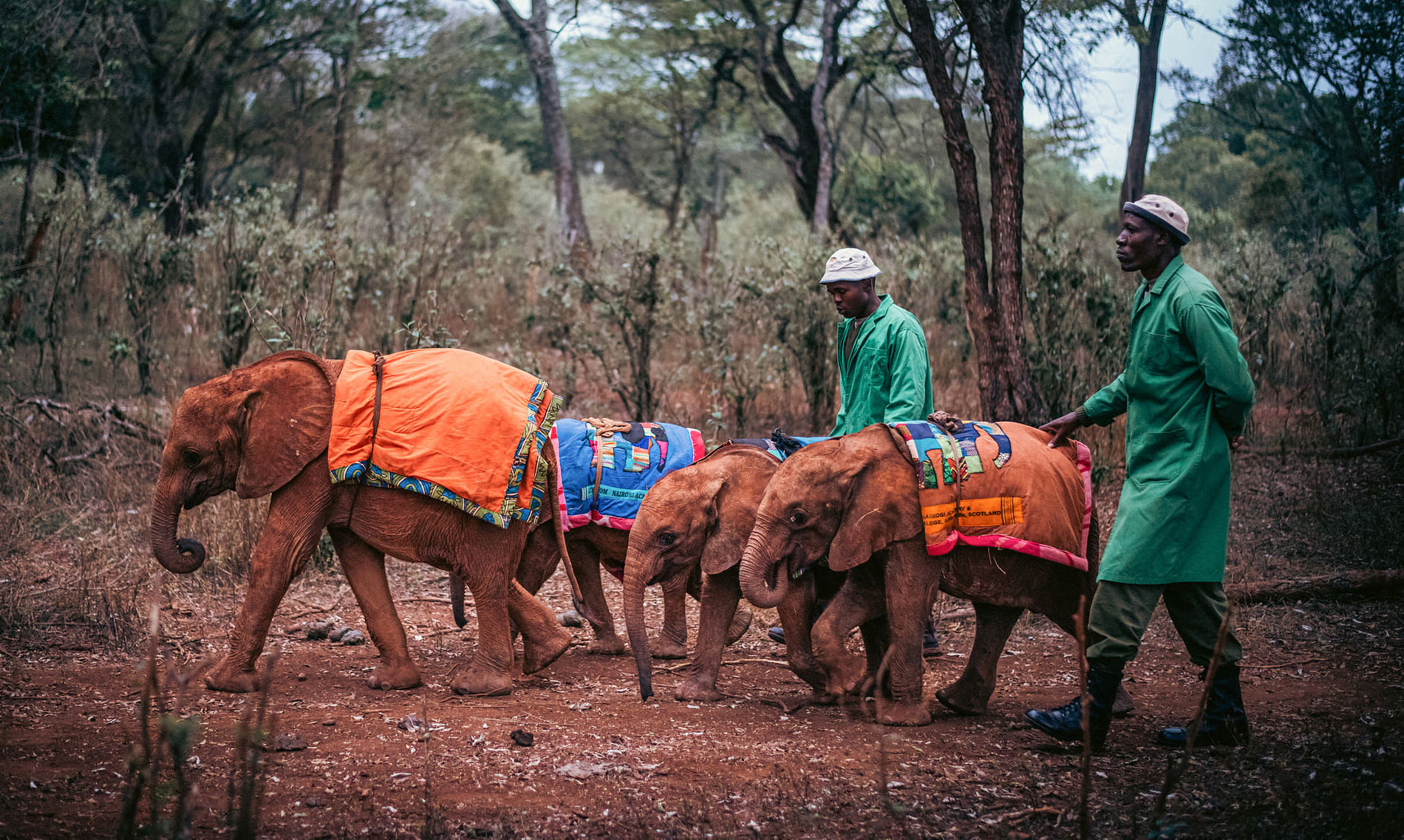
The David Sheldrick Wildlife Trust has operated adjacent to Nairobi National Park since 1977, doing one specific thing: hand-rearing elephants and rhinos orphaned primarily by poaching, and returning them to wild populations when they are capable of surviving independently. The Trust did not invent this work. It refined the methods to a standard that became the global reference for elephant orphan rehabilitation.
Infant elephants are more dependent than most people realise. They require a specific formula of coconut milk and other nutrients at precise intervals, physical warmth from keepers who sleep beside them through the night, and continuous social contact to prevent psychological deterioration. Without all three, they do not survive. The Trust has managed this successfully for hundreds of animals over nearly five decades. Its public visiting hours allow observation of the daily mud bath, which is not a performance but a supervised feeding session. The educational presentation is direct: the animals are there because poaching continues and because it is preventable.
Visitors leave better informed than they arrived. That is the appropriate measure of a conservation facility.
10. Ol Pejeta Conservancy
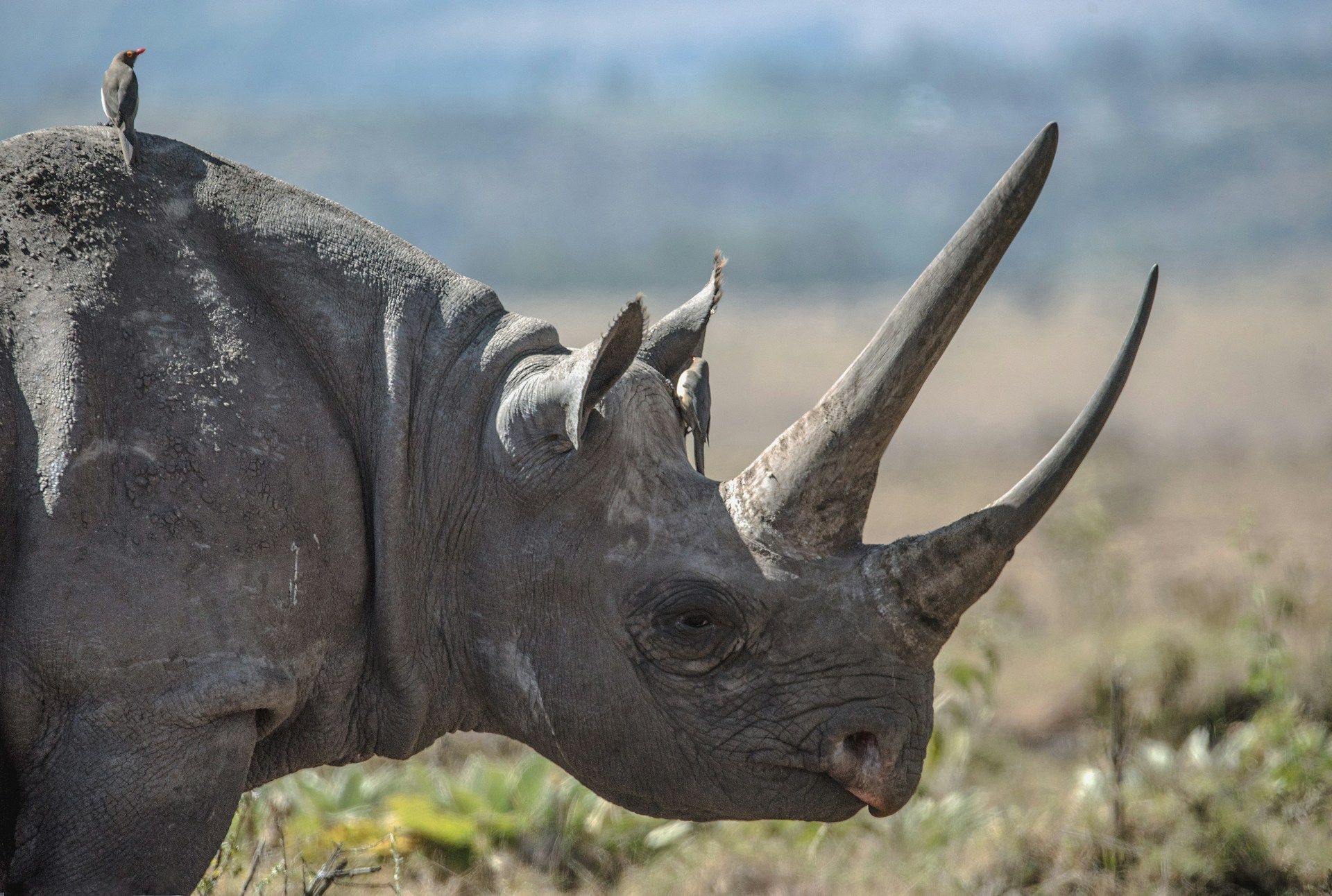
Ol Pejeta covers 360 square kilometres of savannah in Laikipia County, 200 kilometres north of Nairobi, with Mount Kenya on the eastern horizon. It supports the Big Five and holds the largest black rhino population in East Africa. None of this is the reason it occupies a singular position in global conservation.
Ol Pejeta is home to Najin and Fatu, the last two northern white rhinoceroses on earth. Both are female. The last male, Sudan, died here in 2018. The subspecies is now functionally extinct in the wild. Its only possible continuation depends on a laboratory programme, conducted with European research institutions, attempting to implant viable embryos into southern white rhino surrogates. The process is proceeding. The outcome is not guaranteed.
Visiting the northern white rhino enclosure is not comfortable in the way most wildlife tourism is comfortable. You are looking at the end of something. Ol Pejeta presents that fact without melodrama. The conservancy also holds the only chimpanzee sanctuary in Kenya, operated with the Jane Goodall Institute.
Beyond game drives, Ol Pejeta offers lion tracking with collared prides, guided rhino monitoring walks on foot, and the opportunity to run with rangers at dawn, all of which place the visitor inside the operational reality of conservation rather than at its edge. The conservancy is located 200 kilometres north of Nairobi, approximately three hours by road, and is most practically combined with a Mount Kenya or Samburu itinerary.
Ol Pejeta asks its visitors to look at what is actually there.
11. Tsavo National Park
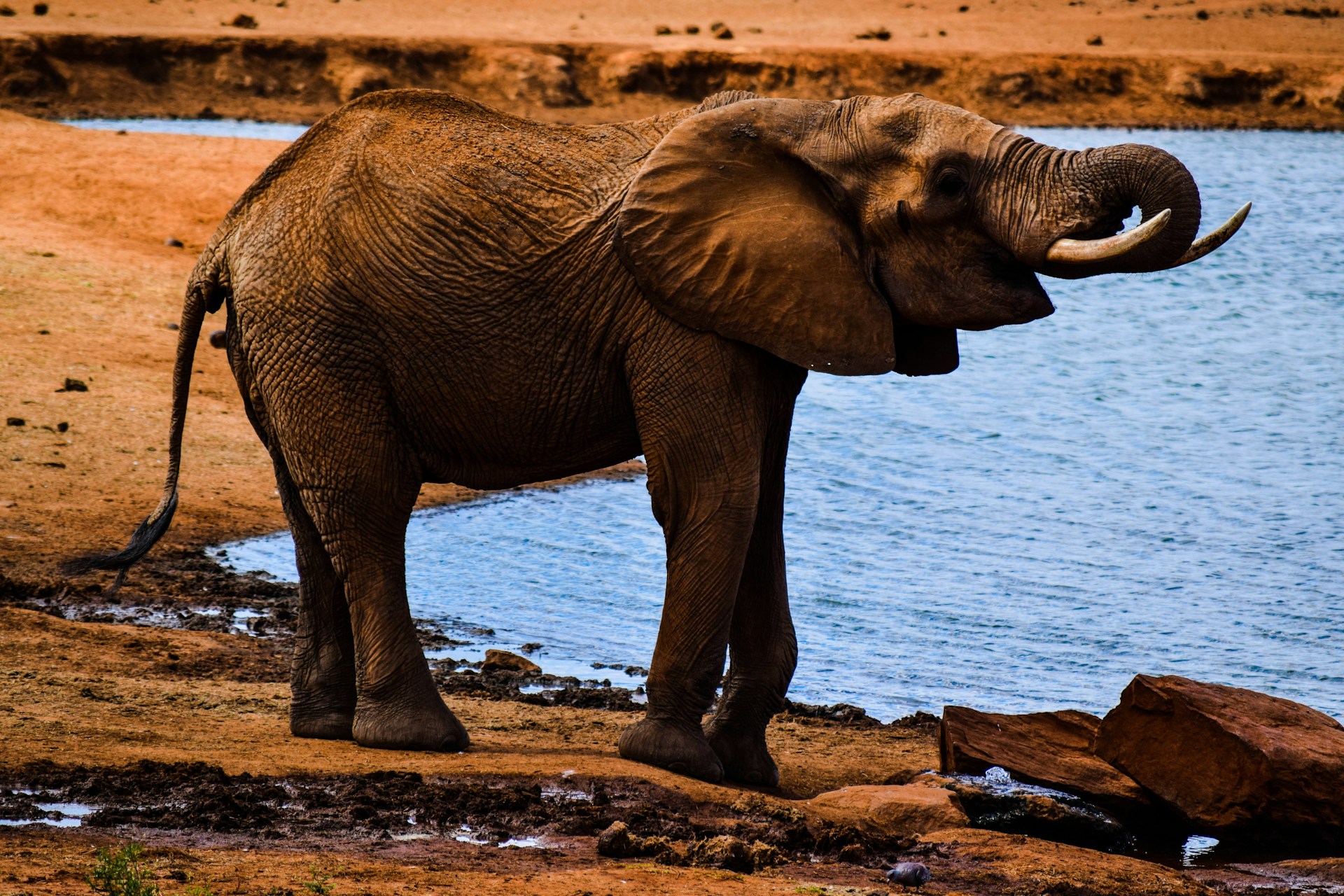
Tsavo is the largest national park in Kenya and one of the largest wildlife areas in the world. Tsavo East and Tsavo West together cover approximately 22,000 square kilometres, bisected by the Nairobi to Mombasa highway, and the scale is the defining experience. Tsavo does not concentrate wildlife into viewable corridors. It distributes it across a landscape the size of a small country.
Tsavo East is open and ancient, defined by its red elephants, animals that are physiologically identical to any other African elephant but perpetually coated in iron-oxide soil from dust-bathing. The Yatta Plateau, at 290 kilometres, is the longest lava flow in the world. Tsavo West is greener, more rugged, and anchored by the Mzima Springs, which produce millions of gallons of clear fresh water daily and support hippos visible through underwater viewing chambers. In 1898, two maneless male lions preyed on railway workers constructing the Uganda Railway bridge over the Tsavo River, killing dozens of people over several months in what became one of the most documented encounters between humans and wild predators in colonial Africa. Patterson himself claimed 135 victims, a figure disputed by later scientific analysis, but the incident’s reality and its effect on the construction project are not in question.
Tsavo’s position between Nairobi and Mombasa makes it the most naturally structured park for combining a Kenya safari with a beach stay: Diani Beach on the South Coast lies less than two hours from the park’s eastern boundary. The combination of several nights in Tsavo followed by several days on the Indian Ocean is one of the most complete travel structures Kenya offers, requiring no backtracking or long internal flights.
Practically, Tsavo is also one of Kenya’s most accessible parks for the independent traveller. Accommodation ranges from simple self-catering bandas to well-appointed lodges, at price points that are generally lower than the Mara or Amboseli. Vehicle and crowd density is a fraction of the more famous parks. A full day in Tsavo East without encountering another tourist vehicle is not unusual, and for the visitor who finds the organised choreography of high-traffic safari destinations limiting, that solitude is the primary attraction rather than an inconvenience.
Some places reveal themselves slowly. Tsavo does not reveal itself at all. You simply come to understand that you are inside it.
12. Mount Kenya
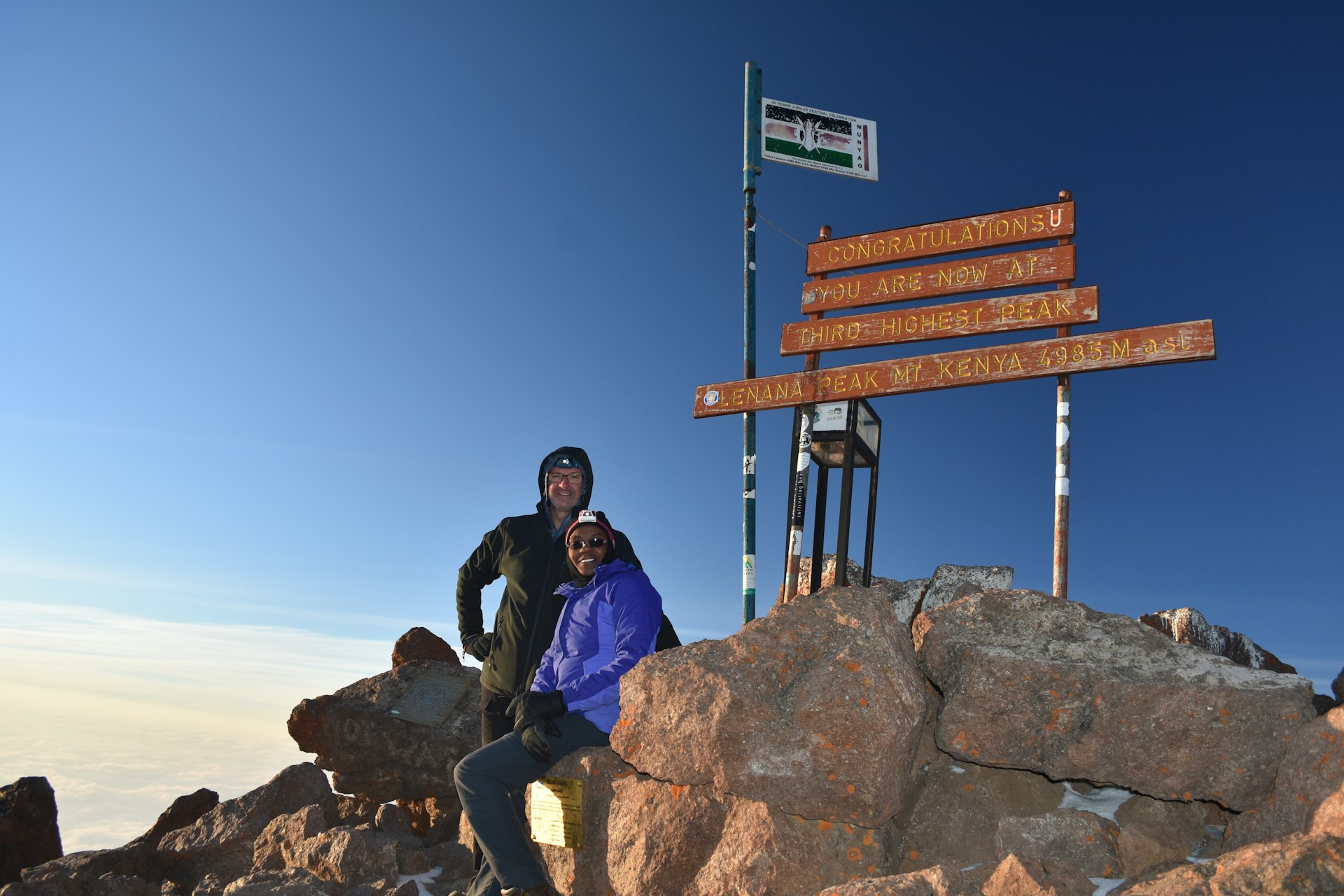
Kenya takes its name from this mountain, and the Kikuyu, Meru, and Embu peoples who have lived on its slopes for centuries treated it as sacred ground, the residence of Ngai, the supreme deity of Kikuyu cosmology. That relationship between landscape and identity is not historical. It is ongoing.
At 5,199 metres, Mount Kenya is Africa’s second highest peak. Unlike Kilimanjaro’s single volcanic cone, it is a complex massif of multiple peaks connected by high moorland and glaciated ridges, offering trekking routes of varying difficulty. The Sirimon, Chogoria, and Naro Moru routes each pass through distinct ecological zones: montane forest, bamboo, moorland, and finally the glaciated upper reaches where giant lobelias and groundsels reach several metres in height. Nothing in the botanical experience of lowland Africa prepares a visitor for a lobelia the size of a tree.
The broader Laikipia Plateau surrounding Nanyuki has become one of Kenya’s most rigorous conservation landscapes, and the mountain and the plateau together form a northern circuit worth planning as a dedicated itinerary. The best trekking seasons follow the dry windows, January to March and July to October, when trails are most passable and summit visibility is clearest. Nanyuki, the primary base town, is approximately three hours by road from Nairobi or accessible by daily scheduled flights.
The mountain named a nation. It continues to justify that honour on every route that ascends it.
13. Lake Naivasha
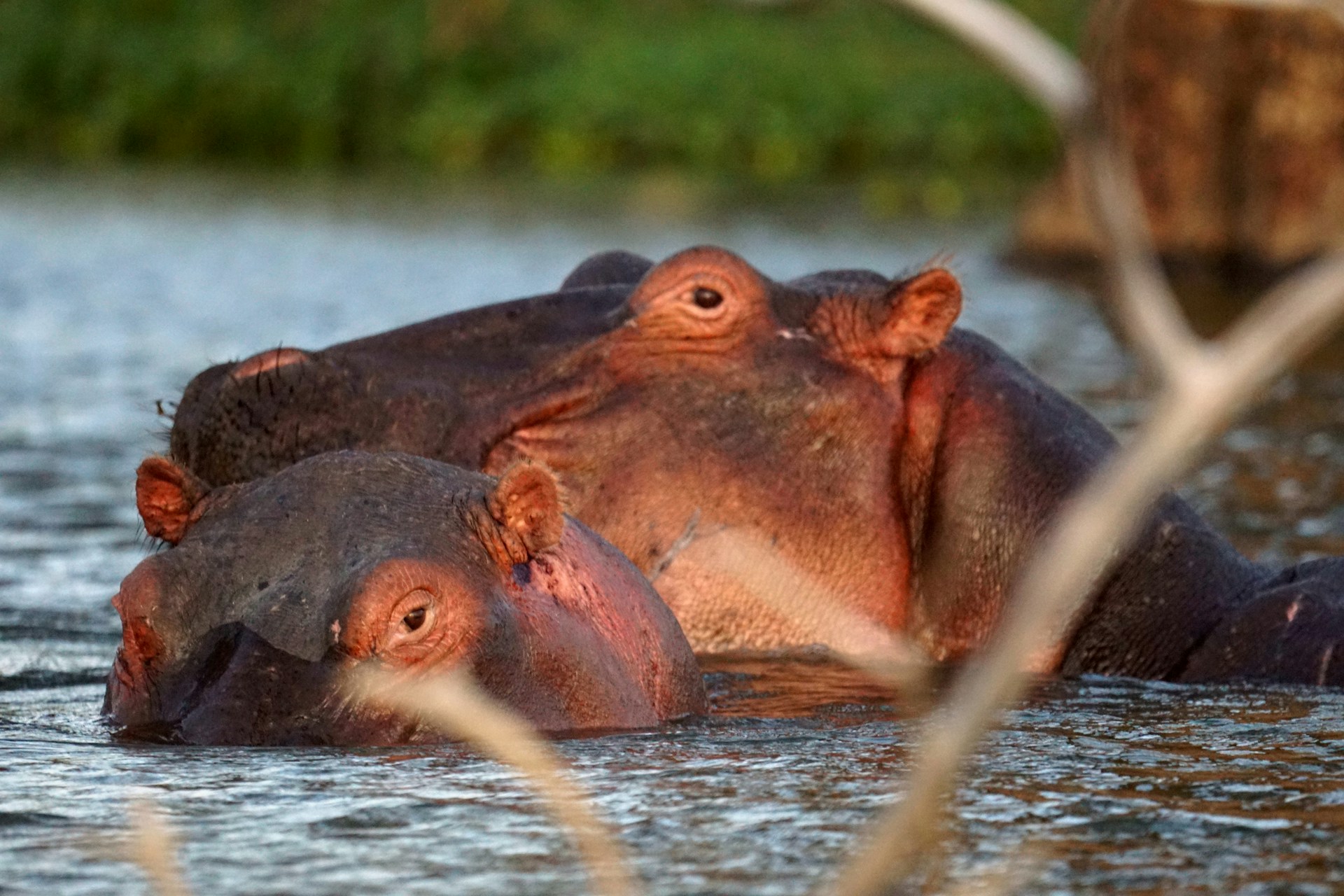
Lake Naivasha is the only large freshwater lake in Kenya’s Great Rift Valley, a distinction that makes it ecologically unusual in a system of alkaline and soda lakes. The Maasai named it Enaiposha, meaning “that which heaves,” referencing the sudden storms that rise unpredictably across its surface. That instability has proved prescient in ways its originators could not have anticipated.
The lake has been the centre of Kenya’s cut-flower industry since the 1970s. At peak extraction, flower farms drew millions of cubic metres of water annually, lowering levels and degrading the papyrus wetlands that form the lake’s natural filtration system. Since 2010, the lake has swung in the opposite direction, expanding by over 50 per cent as Rift Valley rainfall increased, flooding farms and displacing hippo populations onto narrower margins. The tension between agricultural extraction and ecological stability remains unresolved.
For visitors, the lake offers hippo boat trips, a walking safari on Crescent Island where no predators are present, and immediate proximity to Hell’s Gate National Park, making the two destinations a natural combination in a single day. Elsamere, the former lakeside home of Joy Adamson, author of Born Free, now operates as a conservation centre and museum on the southern shore, with afternoon teas on the garden terrace and resident colobus monkeys in the trees overhead. The lake sits 90 kilometres north-west of Nairobi, roughly an hour and a half by road.
Naivasha is never simply what it looks like. Look closer and it becomes one of Kenya’s most instructive landscapes.
14. Lamu Island
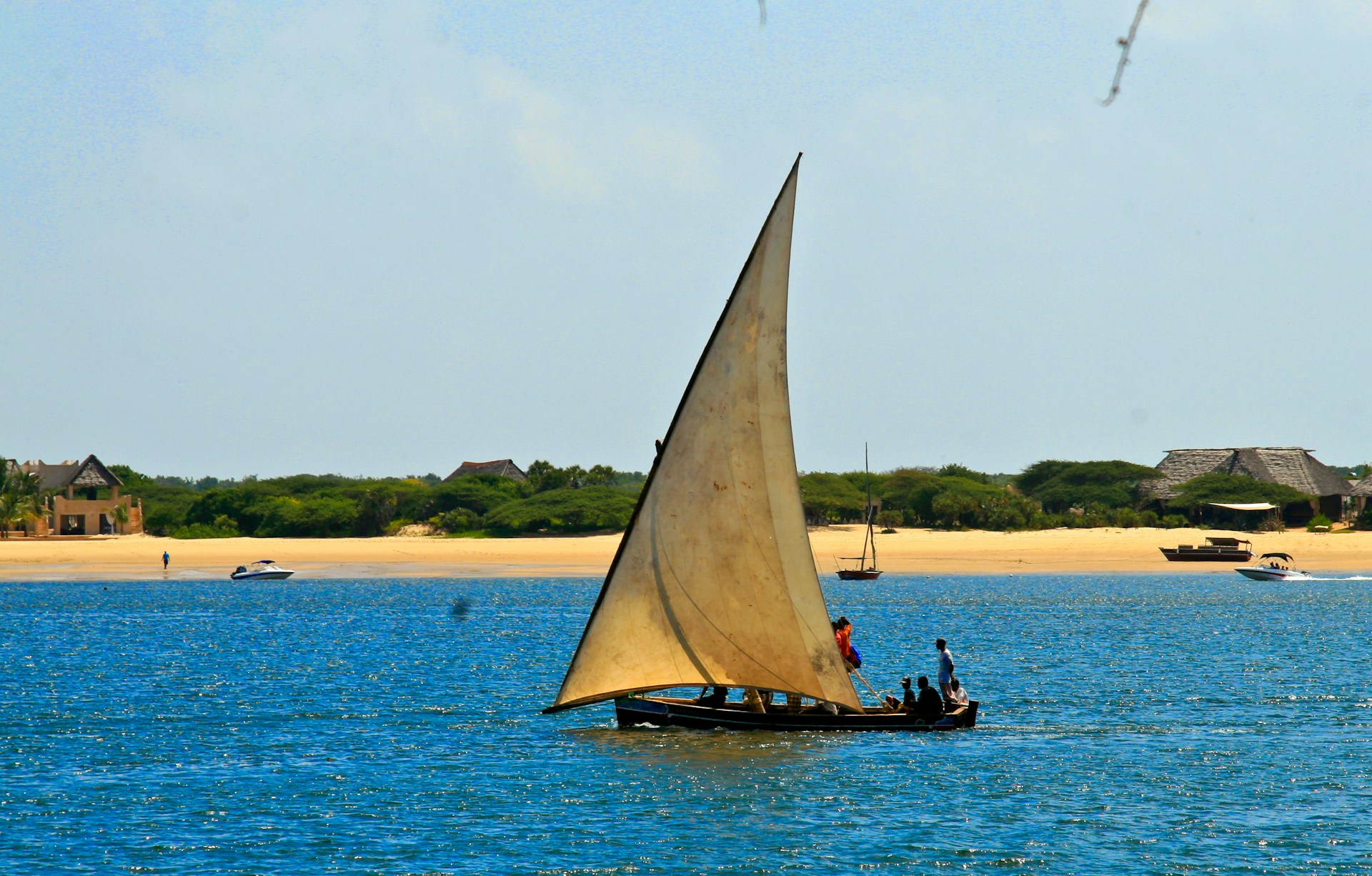
The first thing you notice on Lamu Island is the absence of engines. There are no cars. There have never been cars. The lanes were built for people and donkeys, and that is still what moves through them, not because of a preservation order, but because nothing about the island’s structure has ever required anything faster.
Beyond the main settlement, Shela offers a quieter alternative: less densely built, fronted by an uninterrupted beach running for kilometres along the eastern shore without the development pressure that has consumed comparable coastline elsewhere. The island’s Swahili cultural inheritance runs through everything: its architecture, its food, its ritual calendar, its language. Together they represent what seven centuries of Indian Ocean trade between Africa, Arabia, India, and Persia produced without collapsing into any single one of them.
The food on Lamu Island is worth travelling for in its own right. Freshly caught seafood grilled over charcoal, pilau rice fragrant with spices that arrived by dhow long before their names entered any European cookbook, and biriani prepared in the clay pot tradition that the Kenyan coast has maintained without interruption: these are dishes with genuine provenance, served in small restaurants along the waterfront at prices that have not yet adjusted to international demand. Dhow sailing trips across the channel, particularly at sunset when the light turns the water copper and the town quietens behind you, offer a perspective on the archipelago that walking its streets alone cannot provide.
Speed disappears on Lamu Island. That is its most dependable gift to the visitor willing to accept it.
What Planning a Kenya Journey Actually Requires
Kenya is logistically accessible in ways that its scale might not immediately suggest. The country operates on East Africa Time and is served internationally through Jomo Kenyatta International Airport in Nairobi. Most nationalities now process an Electronic Travel Authorisation online ahead of arrival, and the system has simplified considerably in recent years. Yellow fever vaccination documentation remains a requirement for travellers arriving from or transiting through countries carrying transmission risk.
Timing is the most consequential practical decision a visitor makes. Kenya has two dry seasons, January to March and June to October, during which wildlife is most visible, roads are most passable, and the overall travel experience is most straightforward. The Great Migration river crossings at the Maasai Mara peak between July and October, and accommodation in the Mara books out months in advance during this window. The long rains fall between March and May; the short rains in November and December. Both wet seasons bring greener landscapes and fewer tourists, which has its own appeal for experienced travellers, but road conditions in remote areas can become difficult and some camps close for maintenance.
Within the country, a network of domestic flights connects Nairobi with the Mara, Amboseli, the coast, Lamu, Samburu, and Nanyuki, making multi-destination trips practically manageable even for those with constrained time. Tsavo and Samburu, less congested than the Mara, afford more booking flexibility. The Kenyan shilling is the local currency. Mobile money infrastructure, particularly M-Pesa, is embedded so deeply in the Kenyan economy that the country has become a global reference point for digital financial inclusion, and some rural areas operate almost entirely on this basis.
None of this is unusual for a country that has been receiving serious international visitors for generations. What distinguishes the Kenya journey is not the ease of arrival but what the country does with your attention once you are inside it.
How Kenya Compares and Why That Question Matters
For travellers weighing Kenya against other African destinations, two comparisons arise with enough frequency to be worth addressing directly.
The Maasai Mara is often discussed alongside Tanzania’s Serengeti, since both form part of the same ecosystem and share the same migration. What separates them is experience, not ecology. The Serengeti offers vastness and remoteness across an area significantly larger than the Mara. The Mara compresses that same ecological drama into a smaller, more immediately observable space. What feels expansive in the Serengeti feels immediate in the Mara. Neither is superior; they are different expressions of the same biological system, and a traveller with time to visit both will find that each teaches the other.
Lamu is frequently placed beside Zanzibar as a comparison for East African coastal heritage. The contrast is instructive. Zanzibar has developed into a commercially layered destination with an international airport, substantial hotel infrastructure, and a tourism economy that has reshaped significant parts of Stone Town’s daily life. Lamu has resisted that scale, not through policy but through geography. There is no airport on the island, no road access of consequence, and no structural incentive toward the development that has transformed Zanzibar. The result is a destination where heritage is intact rather than restored, and where the visitor adjusts to the place rather than the place adjusting to the visitor.
These comparisons are not about ranking. They reveal how similar foundations, shared ecosystems and shared cultural origins, produce different outcomes depending on scale, history, and the nature of intervention. Kenya contains both the Mara and Lamu. Understanding where each sits in a broader African landscape is part of understanding what Kenya actually offers.
What Kenya Gives You and What to Take Home
Kenya’s particular gift to the traveller is density. Among all tourist destinations in Kenya, the full range is the most compelling argument.
Within a country of 580,000 square kilometres, you can witness the largest wildlife migration on earth, stand beneath Africa’s second highest mountain, walk through a millennium of Swahili civilisation, dive coral reefs on the Indian Ocean, and observe the last two northern white rhinoceroses alive, all within a single well-planned trip. Few travel itineraries in the world offer a comparable range.
The experiences Kenya offers are not manufactured. They are the product of genuine ecology, living culture, and landscapes shaped over geological and human time. A sunrise game drive in the Maasai Mara, watching a cheetah move across amber grassland before the tourist vehicles arrive, is not reproducible anywhere else. Neither is an afternoon drifting past hippo pods on Lake Naivasha, an evening walking the carved-door streets of Lamu Old Town, or the physical recalibration of cycling through Hell’s Gate with giraffe moving freely on either side.
Beyond the experiences themselves, Kenya offers substantial practical value at every level of travel. Accommodation ranges from world-class luxury tented camps and lodge destinations to well-run mid-range options, with genuine choices for every budget. Kenyan cuisine deserves particular attention. Along the coast, Swahili cooking has absorbed centuries of Indian Ocean influence, producing a table of grilled seafood, coconut rice, biriani, and tamarind-spiced stews that ranks among East Africa’s most rewarding culinary traditions and has no real equivalent elsewhere on the continent. Markets in Nairobi, Mombasa, Lamu, and the safari towns offer Maasai beadwork, hand-carved soapstone, kikoi fabric, hand-thrown pottery, and single-origin coffee grown in Kenya’s highland farms, which consistently rank among the finest coffee-producing regions on the continent.
There is also something less tangible but equally real to take home: the understanding that comes from witnessing a living ecosystem, a functioning ancient culture, and a conservation effort at genuine human scale, all within the span of one journey. Every tourism spend in Kenya directly supports the conservation programmes, community livelihoods, and anti-poaching operations that make those experiences possible in the first place. Choosing Kenya is a decision that repays itself across every dimension: in memory, in perspective, and in the knowledge that the journey contributed to something worth preserving.
Kenya repays attention. The more deliberately you travel through it, the more precisely it returns the investment. A landscape does not merely host life. It quietly instructs it.