




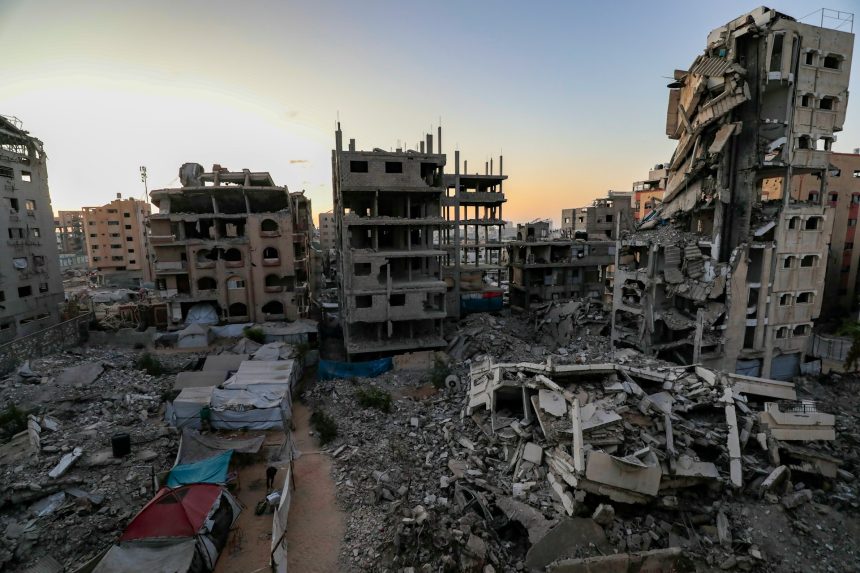
The world is diminishing. Not slowly, not quietly, and not in ways that can be explained away with the comfortable language of political analysis. It is diminishing the way a person does once they decide that truth is no longer worth the effort. What we are witnessing is not merely conflict. It is the abandonment of conscience, dressed in the language of righteousness and wrapped in the flags of powerful nations.
Nobody seems willing to agree with anyone any more. War in the east. War in the west. War in the north and war in the south. Nations compete not merely for security but for supremacy. Large nations press their weight upon smaller ones, while smaller nations refuse the humiliation of submission. The result is predictable. Pressure produces conflict, and conflict produces suffering. Each morning you wake up and read the news, and what greets you defies belief. Not because such things have never happened in history, but because they are happening now, under our noses, in real time, reported and live-streamed and still, somehow, unstoppable.
The conflicts are not difficult to name. Israel and Gaza. Lebanon. The widening confrontation between the United States, Israel, and Iran, a theatre in which supreme leaders fall to foreign airstrikes and entire nations mourn while retaliatory strikes cross borders. Iran’s proxies, Hezbollah and Islamic Jihad, remain deeply entangled in the same web of hostility. Propaganda moves in every direction, every day. Governments speak. Media outlets broadcast. Political voices circulate competing narratives. The ordinary citizen is left asking a troubling question: which story is true? Information is abundant. Certainty is scarce.
At the end of every argument, the outcome looks painfully similar. Children suffer and adults die, while the decisions that destroyed them were made far from the rubble by those who will never come within range of the consequences. That is the nature of the world we inhabit: survival of the fittest elevated to a governing principle, enthroned on an altar of lies and deliberate deception. It is only God who is pure, while the architects of human suffering claim they act in good faith.


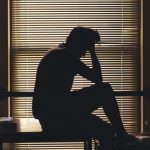
Sometimes the mind drifts toward a quieter wish. A world where everything is at peace with itself. No fighting, no quarrelling, no grumbling; peace and peace everywhere. When will truth become the supreme authority over mankind? When will that day come?
The Geography of War
History has already shown humanity where this road leads. The twentieth century delivered two world wars that killed more than eighty million people and reduced entire cities to ash. Nations promised that such devastation would never be repeated. Institutions were created, treaties were signed, and the phrase “never again” entered the global vocabulary. Yet less than a century later, the same impulses have returned, wearing different uniforms but carrying the same ambitions.
The consequences are not historical abstractions. They are present and visible, distributed unevenly across every region of the world.
Just as many of us did not choose the nation into which we were born, we did not choose this moment in history. But what we witness every day is pathetic and genuinely regrettable. Before we speak of distant wars, we must acknowledge what lies closer to home. In Nigeria, kidnapping has become a structured national industry. Boko Haram has terrorised communities for more than a decade. Armed herdsmen continue to carry out their brutality largely unchecked. Hired assassinations of political figures are reported with chilling regularity. Police and other law enforcement agencies, rather than protecting ordinary citizens, have themselves become instruments of violence and suppression in far too many instances. Political opponents are arrested, locked away without trial, silenced for the crime of speaking plainly. Certain individuals have appointed themselves political kings, unelected lords who rule through intimidation and reward loyalty with patronage. Corruption and greed have persuaded officials to surrender their integrity to immorality, and sycophants surround every seat of power. Similar patterns appear across many African countries.



Sudan stands as one of the most devastating examples of what happens when the world looks away. What began as an internal power struggle has consumed more than 150,000 lives, displaced millions, and produced a food crisis of catastrophic proportions, with credible estimates placing the death toll far higher still. Cities fell after prolonged sieges. Families survived on whatever the earth offered when food ran out. Doctors fled as hospitals burned. The international community, for the most part, filed reports. There is a particular moral injury in watching an entire population disappear into suffering while the world’s attention drifts elsewhere. In the Democratic Republic of the Congo and in Somalia, war is not a political emergency so much as it is an enduring condition. The Middle East bleeds continuously.
Within Europe, Russia’s invasion of Ukraine has persisted for years, consuming a staggering human toll on both sides, making this one of the deadliest conflicts on European soil since the middle of the last century. The UN has played its own role in the fog surrounding this conflict, with accusations of propaganda and favouritism colouring its responses from the earliest months of the war. Europe’s collective response, measured against the scale of destruction, has been like smoke rising from melting ice: visible, inconclusive, and ultimately too thin to matter where the heat is fiercest.
Everywhere, the smaller nations refuse to accept being demoted by the larger ones, and the larger ones use that refusal as justification for further pressure. It is supremacy by another name. The geography changes. The impulse does not. Nations rise against nations: trade wars, economic wars, political wars, religious wars, ethnic wars, one after another, without pause.
But war is never fought only on the ground. It is also fought in the mind. And it is on that second battlefield, the one made of narratives and manufactured certainty, where the current era has become most dangerous of all.
Propaganda and the Paralysis of Truth
What makes this era particularly disorienting is not the violence itself. History carries enough of that. What makes it disorienting is the volume and velocity of competing narratives, each claiming authority, each dressed in the appearance of fact. Truth has always been a casualty of war. What is new is the industrial scale at which its replacement is manufactured and distributed.
Today propaganda moves at the speed of algorithms. Social media platforms have become theatres of influence. Governments deploy coordinated messaging campaigns. Automated accounts repeat selected narratives until those narratives appear widely accepted. A short video clip can reshape global perception before verification even begins. Images circulate without context. Emotion travels faster than evidence. When that gap widens far enough, perception begins to replace reality.
When nations go to war, one side describes its actions as eliminating an existential threat and another calls the same actions a war crime. Both speak with absolute conviction. Both circulate footage. Both offer witness testimony. And the rest of the world sits in front of its screens, unable to determine with any certainty where the truth lives. When you look deep down at most of what the actors of war declare publicly, very little of it is close to the truth. They are after resources, power, and strategic dominance. The public framing is almost always something else entirely.


This is the deeper wound that propaganda inflicts. It does not merely distort a single event. It corrodes the capacity for shared reality over time, until ordinary people can no longer agree on what is happening in the world, let alone what ought to be done about it. A civilisation that cannot agree on truth cannot govern itself wisely.
The United Nations and the Limits of Power
The United Nations was created to prevent exactly these kinds of catastrophes. Yet the institution that exists today operates, in too many crises, like a bulldog without teeth. It barks. Nothing more. Under its watch, international law has been tested and found optional. Countries that once observed boundaries and protocols now discard them when inconvenient, knowing that consequences will be slow or absent.
The truth is starker than diplomatic language permits: the UN is, in practice, the sum of its most powerful members. The United States is the UN. Russia is the UN. China is the UN. The United Kingdom, France, and NATO are the UN. Those who have the military capability to invade other nations and silence them are the UN. Global authority follows power more closely than principle. The institution reflects their interests and protects their preferences. What it does not reliably do is protect the weak.
Look at Cuba, under prolonged geopolitical pressure with no remedy. Look at Sudan, consumed by catastrophe while the world convened briefings. Look at what unfolds daily in the Democratic Republic of the Congo and Somalia. If Boko Haram has operated for more than a decade with near-total impunity across parts of Nigeria, then it has, in a sardonic but accurate sense, become the governing authority of its own territory. It operates, issues demands, and continues, while the formal institutions of international order meet and deliberate.
None of this erases the genuine humanitarian relief the UN has delivered to millions in refugee camps and crisis zones across the world. But humanitarian mercy and political accountability are not the same function, and it is the latter where the institution consistently fails. A system designed to restrain chaos often moves at the speed of procedure, while violence moves at the speed of power.
Who Profits When the World Burns
There is a question I cannot stop returning to. Why do nations develop weapons of mass destruction? For what actual purpose? Why start a war whose beginning is cheap and whose end is always catastrophic beyond reckoning? Why not engage in intensive dialogue and compromise? Why war?
The honest answer, when examined long enough, is not a political one. It is a moral one. Every month of extended conflict is another month of supply contracts, manufacturing orders, and profitable logistics. Global military expenditure has reached an all-time recorded high, climbing to $2.7 trillion in 2024, a figure that has risen for ten consecutive years and shows no sign of reversing. The lives lost on both sides do not appear on the balance sheets of those transactions. They appear only as statistics in humanitarian reports, briefly mourned and quickly filed away, while thousands more go six feet down the grave. And one must ask honestly: where are the humanitarian organisations before the outbreak of war?
Just imagine if so much energy, funding, and intelligence had been channelled into dialogue instead. Would these wars have started at all? No. They would not. But certain people needed them to start. And certain people needed them to continue. War destroys cities, yet it also sustains industries built upon its continuation.
Before the Russia-Ukraine war, there was dialogue, but not enough. The war started and descended into chaos. Lives were lost on both sides across years of sustained conflict while many nations profited handsomely. The old, the weak, children: they paid the price. The same dynamic repeated itself between Israel and Gaza, and it repeats itself now in the confrontation with Iran, in which the elimination of Iranian leadership including their Supreme Leader did not end the cycle but accelerated it. Meanwhile, lives that cannot be recovered are paying dearly for it.
You might say a particular nation has venomous, dangerous leadership. Of course. That may well be true. But does it follow that thousands of lives should be lost for it? These are lives that can never be restored, gone and gone forever. Is there no alternative? No table where dialogue becomes possible? I do not really understand why we have arrived at this point, and I need wisdom in that regard. People suffer, displacement occurs, thousands die, and happily, someone somewhere becomes bloody richer. What the architects of war are most often after, beneath the ideological framing, is economic power: your oil, your earth minerals, your money, your gold. The religious or political justification is assembled afterwards, to make people obedient and willing to march toward deaths that serve someone else’s interest.
The Weaponisation of Faith
We claim to be religious. Christianity, Islam, Hinduism, and so many other traditions across the world. But truly, have we been fair to nature? Have we been fair to the purpose for which God created us? Every day, nations rise against nations, bending the rules to suit their civilisation and defecating on humanity, while the religion that is supposed to be a template of holiness, a faith watchdog of harmony, has in far too many cases become an evil temple of perversion that preaches death to those who refuse to join. Many of these traditions now operate as shrines of deception, promoters of bad doctrine, instruments of tyranny and domination. Their preaching is, in too many cases, nothing more than instruction in how to subdue others under authority, whether within their own borders or beyond them.
What strikes me most deeply, however, is this: almost none of us chose our religion. We were born into it. Geography chose our faith before we were old enough to question the choice. If you were born in northern Nigeria, you likely became Muslim. In southern Nigeria, Christians, Muslims or traditionalists. If you were born in China, you automatically became Buddhist or non-religious. In India, you became Hindu.
The family’s belief handed down in childhood becomes your custom, your tradition, your deepest sense of identity, not because you examined it and selected it, but because it was the water you swam in from your first breath.
We have been programmed to believe in heaven and hellfire in the same way that we were programmed into our faiths by the accident of where we were born.
How does this become war? How does this turn into an animist or a traditionalist being killed for what their geography gave them? I believe it is an inferiority complex, not genuine conviction, that drives this impulse. People who are genuinely secure in their beliefs do not need others to validate those beliefs through compulsion. Confidence persuades. Insecurity coerces.
And then there is the most extraordinary claim of all: that one can fight for God. How can someone think that he knows it all, that he can decide for God, that he knows the mind of God? God, by any serious theological reckoning, created heaven and earth, all matter and all energy, every element in the universe. He sees in absolute darkness. He knows what you will become twenty years before you do. He commands, according to every major faith tradition, legions of the most powerful heavenly beings in existence. Who would dare battle with Him if He chose to act? Nobody. And yet, the argument goes, He requires your military campaign on His behalf?
The agendas that claim divine authorisation are, without exception, man-made agendas. They are politically and financially driven imperatives dressed in theological clothing, because theology is the one costume that historically makes people obedient and willing to die for those who profit from their obedience. Religion becomes the instrument through which the author becomes powerful, the tribe becomes dominant, the nation becomes justified in its conquest. And in the process, real people are impoverished, displaced, enslaved, and killed. That is it. That is the whole of it.
God Is Not Sleeping
At times, it looks as if God is absent from all of this. It does not feel that way to me. There is a distinction between absence and restraint. He has granted us free will, the capacity to choose even when our choices are catastrophic, on the understanding that after death there will be accountability. The evildoers of our time appear to operate with different conclusions about what follows death, or perhaps with none at all. Those who commit great harm often behave as though history ends with them.
What if there is nothing called hellfire? What if there is nothing called heaven? The man who manufactures weapons that kill children does not appear to lose sleep over it. The politician who orders the arrest of a critic does not appear to fear consequences. The armed militia that destroys livelihoods does not appear to believe in any reckoning that would reach them. And so they continue.
But God is not sleeping. He is watching over us all. Accountability delayed has never meant accountability cancelled. Who can save this world? Who is that person who can save us from all that is going on in every corner of every country? Political killings, hired assassinations, kidnapping, corruption, the suppression of the weak: who? The complainers and critics of bad governance are being jailed without trial. If you speak plainly about what a government is doing wrong, you become their enemy. They arrest you, lock you away, and call it order. That is what is happening in nearly every nation of the world.
What is certain is this: either we ourselves destroy this world that God made so beautiful, or one day, as it is written in the holy books of every tradition I know, He will bring it to a close on His own terms. The beauty of this earth was never ours to waste. We were placed here as caretakers, and we have behaved as conquerors. That inversion, from caretakers to conquerors, may be the most honest summary of what has gone wrong.
A Prayer for a World That Still Has Beauty in It
I want to believe another world is possible. Not utopia, not naive idealism, but a world where the table of dialogue is chosen before the field of battle. Where truth has enough value that it becomes inconvenient to abandon. Where the life of a child in Gaza, or in Kyiv, or in Maiduguri, or in Tehran, or in El Fasher, is accorded the same weight as the strategic calculations of those who have never been within range of the explosions their decisions cause. Where the old and the weak are not left suffering while others cash out. Where children do not die so that some manufacturer somewhere becomes bloody richer.
The world is still extraordinarily beautiful. It contains cultures of remarkable depth, languages that carry centuries of wisdom, communities capable of extraordinary generosity even in conditions of extreme hardship. Humanity has not lost its capacity for kindness. What it has lost, in far too many places, is the courage to let that kindness govern the decisions that matter most. The world does not collapse suddenly. It erodes quietly when power replaces wisdom and propaganda replaces truth. Civilisations rarely fall in a single moment. They decay slowly when truth becomes negotiable.
When human institutions fail, the human heart often turns toward prayer.
Oh dear Lord, I pray this day: let there be peace all over the world. Take away our agony, take away our differences. Are you not our differences? Help us to smoothen our way. I pray for those who are gone untimely, that you should accept them into your kingdom. And in the reverse, let there be peace all over the world. Peace in Nigeria, peace in Sudan, peace in Ukraine, peace in Arabia, peace in Russia, peace everywhere in Tokyo, everywhere in the world, let there be peace. This I ask for this morning, O Lord. Thank you, Father. Amen.
When will truth become the supreme authority over mankind? I do not know. When will that day come? I keep asking. But I believe the question must be kept alive, passed forward, refused burial. It is one of the few acts of resistance left to those of us who still believe this world was made for something better than what we are making of it. The world began to diminish when it decided that truth was negotiable. It will only recover when truth is restored to the centre of how we govern ourselves and treat one another. When power becomes the only language a nation speaks, it has already begun the process of forgetting what it was built for. Something in the moral architecture of existence insists that this cannot be the final word. I hold onto that. Barely, some mornings. But I hold onto it.