





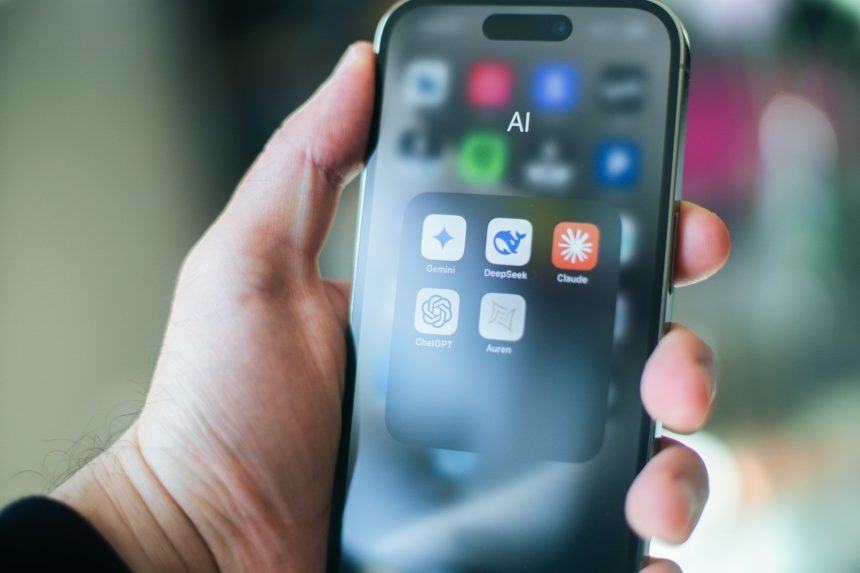
There is a quiet revolution in the way people move through their days, and it is running on a device most of them rarely set down. According to GSMA Intelligence data cited by DataReportal, there are now 5.78 billion unique mobile phone users worldwide. That figure represents more than seven in ten people on earth. The applications installed on those devices have become the primary interface through which people shop, bank, communicate, and organise their lives. Businesses that ignore this are not simply behind the curve. They are operating in a different era altogether.
The shift from desktop to mobile was never going to be a gentle transition. It is, at its core, a transformation in human behaviour, and businesses that understand it as such rather than as a purely technical migration are the ones drawing the clearest strategic advantage from it.
From Awareness to Loyalty: Where Apps Sit in the Customer Journey
Websites are visited. Apps are inhabited. The difference matters more than it appears. Websites offer search visibility, serve as institutional anchors, and reach users in the earliest stages of discovery. But the depth of the customer relationship is forged elsewhere: in apps, where habits form, preferences are remembered, and loyalty is established.
The scale of global app adoption confirms this preference. Sensor Tower’s 2025 State of Mobile report records that apps incorporating artificial intelligence features alone were downloaded 17 billion times in 2024, representing approximately 13 per cent of all app downloads that year. This points to a total download volume comfortably exceeding 130 billion on the Apple App Store and Google Play combined, with substantially higher numbers when third-party Android platforms, particularly in China, are factored in. Users return to apps because they remember preferences, reduce friction, and increasingly anticipate needs before they are stated. The website introduces; the app cultivates.

For businesses, this distinction matters because it clarifies where resources are best invested and what success should be measured against. A brand’s reach may originate online, but its retention lives in the app.
Personalisation Has Moved Beyond the Preference Menu
The personalisation available within today’s mobile apps bears little resemblance to the early iterations of the concept, which amounted to little more than remembering a username and suggesting a product category. Modern apps process behavioural signals continuously. Artificial intelligence and machine learning do the labour, adjusting content, notifications, and product recommendations in real time, responding to context, location, time of day, and patterns drawn from previous sessions. The adjustment is invisible. The effect is not.
This shapes outcomes commercially because personalisation, when executed well, functions as a form of respect for the user’s time. A notification that arrives at the right moment with genuinely relevant content is experienced very differently from one that interrupts with generic information. The former builds trust; the latter erodes it. Timing is not a feature. It is the product. Apps that have mastered this distinction tend to hold users longer, convert at higher rates, and generate lower churn. The technology is sophisticated. The underlying logic is human.
Research published by mobile analytics firm Localytics found that apps using artificial intelligence-driven personalised alerts record retention improvements of up to 2.5 times compared to those using standard broadcast notifications. That is a quantifiable return on what often appears to be a qualitative investment.
Related Articles



Monetisation Has Grown More Nuanced
The business model evolution within mobile apps is one of the more underappreciated stories in digital commerce. The premise that free-to-download means low revenue is long obsolete. Subscription tiers, in-app purchases, and contextually embedded advertising now form monetisation architectures that are both profitable and, when done well, non-disruptive. Sensor Tower data shows that global in-app purchase and subscription revenue reached $150 billion in 2024, up 13 per cent on the prior year, with growth outpacing mobile gaming, reflecting the expanding commercial ambitions of non-game app categories.
Users do not resist paying. They resist being interrupted. Most products get this wrong. An advertisement that arrives at the wrong moment causes more brand damage than it recovers in revenue. The discipline of knowing when to ask, how much to ask for, and in what context has become a core competency for product teams across industries.
Streaming services, fitness platforms, and productivity tools have all demonstrated that users are willing to pay recurring fees for genuine utility. The mobile app, once considered a marketing supplement, is now a primary revenue channel in its own right.
Commerce Has Found Its Most Efficient Surface
Mobile commerce did not grow because people preferred it. It grew because it works better. Mobile now drives 57 per cent of global ecommerce transactions, generating approximately $2.07 trillion in revenue worldwide in 2024, according to Statista. One-click purchasing, biometric authentication, and digital wallets such as Apple Pay, Google Pay, and their regional equivalents have removed the friction that historically caused users to abandon transactions midway through.
The gap between app and mobile browser performance is measurable and consistent. Research from Button and Criteo independently records that mobile shopping apps convert at approximately three times the rate of their mobile website counterparts, with users also browsing more products per session and abandoning fewer carts. The explanation is structural rather than incidental: an app is a contained environment, purpose-built for the shopping journey, while a mobile website competes with browser tabs, notifications, and every other distraction on the device.
Augmented reality product previews, which allow users to visualise furniture in their homes or test a shade of paint against their walls before purchasing, represent one of the more telling examples of how mobile capability has outpaced what a website can credibly deliver. These are not novelty features. For categories where the gap between expectation and product reality drives returns, they carry measurable commercial value.
Communication That Arrives at the Right Moment
Push notifications, in-app messaging, and integrated chat tools have fundamentally altered the rhythm of business communication. The challenge, however, is one that many businesses still underestimate: the line between helpful and intrusive is narrower than it appears, and crossing it repeatedly drives uninstalls faster than most other failure modes.



Businesses that use these channels with precision, sending notifications that are contextually earned rather than algorithmically scheduled, tend to sustain higher engagement over longer periods. The technical capability to reach a user at any moment does not mean that every moment is worth reaching for. Discipline in communication strategy is, increasingly, a competitive differentiator.
But this assumes connectivity. In many markets, that assumption fails.
Offline Functionality and the Reliability Premium
The scale of disconnection is substantial. The GSMA’s State of Mobile Internet Connectivity 2024 report notes that 3.1 billion people remain unconnected to mobile internet even though coverage is technically available to 96 per cent of the global population. In sub-Saharan Africa, where mobile penetration is growing rapidly even as network quality develops unevenly, the GSMA records that more than two-thirds of smartphones used to access the internet are 3G-capable at best, limiting both speed and reliability.
Apps that function meaningfully without an active connection offer something websites structurally cannot: reliability in imperfect conditions. In Nigeria, where mobile money platforms such as OPay and PalmPay have scaled to tens of millions of users, the ability to initiate transactions and check balances without a stable data connection is not a premium feature. It is what makes a product usable in the first place. Reliability builds trust faster than innovation.
A banking app that can calculate loan details offline, a retail app that saves a cart for synchronisation once connectivity resumes, or a productivity tool that allows document editing without a live connection speaks directly to users whose digital access is neither constant nor fast. In markets where this describes a significant portion of the user base, offline functionality is not an enhancement. It is a baseline expectation.
The centre of the customer relationship has shifted. Not incrementally, but completely.
The App as Brand Architecture
There is a dimension to this discussion that resists easy quantification. Multiple analytics sources, including eMarketer, consistently record that users spend approximately 88 to 90 per cent of their mobile screen time inside apps rather than in a browser. An app is therefore not simply a transaction channel. It is a curated environment that a brand controls, and one that a user may inhabit for significant portions of their day. Every interaction within it is an opportunity to reinforce or undermine the brand’s core proposition.
The quality of an app’s design, its responsiveness, the language it uses, and the coherence of the experience it delivers across different functions all contribute to a cumulative impression that shapes how users feel about the brand itself. The mobile app gives businesses a degree of environmental control over the customer experience that neither a website nor a physical store can fully match. The brand does not just appear in the app. In a real sense, the app is the brand.
The businesses that grasp this, and invest accordingly, are not simply building software. They are constructing the most direct relationship they have ever had with the people they serve.

