




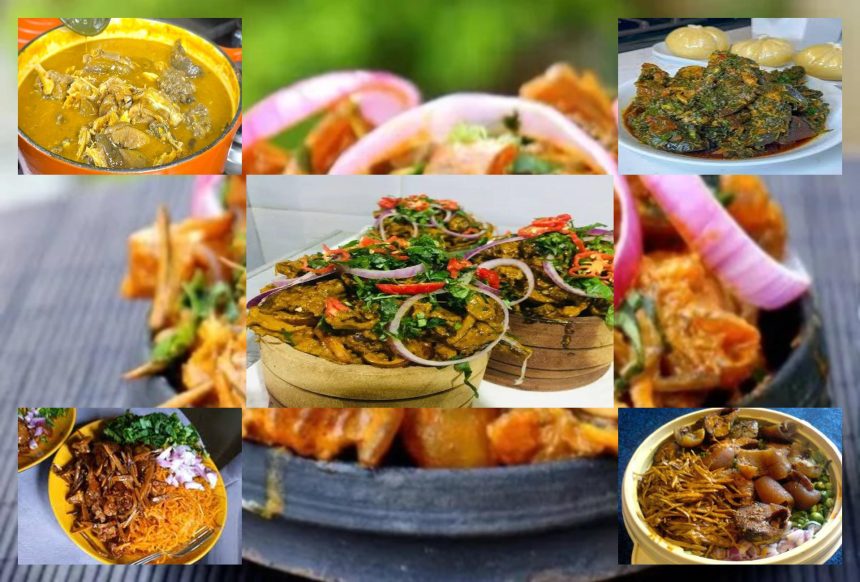
Igbo cuisine does not announce itself. It does not rely on spectacle. It reveals itself in the cooking.
Food in Igbo culture is not merely sustenance. It is continuity. It carries memory, marks celebration, and quietly reinforces identity across generations and across the distances that migration creates.
If you are searching for the best Igbo recipes, the deeper question is this: which dishes have endured, and why do they still matter in modern kitchens across eastern Nigeria and beyond? What follows presents a selection of essential Igbo dishes, explains how they are prepared, and clarifies what each one represents in everyday life.
The Igbo people of eastern Nigeria are spread primarily across Anambra, Enugu, Imo, Abia, and Ebonyi states. Yam sits at the centre of their food culture, celebrated annually at the New Yam Festival and prepared in more forms than most cuisines manage with any single ingredient. Palm oil provides the base note for most soups and stews. Dried crayfish and stockfish contribute the umami depth that makes Igbo broths taste as though they have been simmering for hours. At a family gathering in Enugu or Nnewi, the meal is not announced. It is simply ready, and people come to sit.


Ofe Egusi (Egusi Soup)
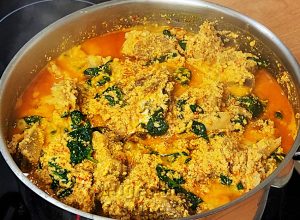
Among the best Igbo recipes, egusi soup is widely recognised but often misunderstood. Its strength is not popularity but structure. Ground melon seeds are fried in palm oil until they turn golden and fragrant, forming a dense, nutty base that absorbs flavour rather than merely carrying it. The result is a soup that is both substantial and controlled, working equally well with pounded yam, fufu, eba, or semo without losing its identity in any of them.
Ingredients (serves 4–6)
- 300g ground egusi (melon seeds)
- 500g assorted meat (beef, tripe, or offal of choice)
- 150g stockfish, soaked and cleaned
- 150ml palm oil
- 2 tablespoons ground crayfish
- 2 stock cubes
- 2 scotch bonnet peppers, blended
- 1 medium onion, finely chopped
- Salt to taste
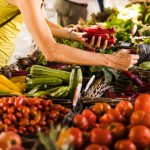
- 2 large handfuls of ugu (fluted pumpkin leaves) or bitter leaf, shredded
Preparation
Season and boil the meat with onion, one stock cube, and salt until tender. Reserve the stock. Heat the palm oil in a wide, heavy pot over medium heat. Add half the chopped onion and fry briefly until softened. Add the blended peppers and fry for five to seven minutes until the raw smell clears. Mix the ground egusi with a small amount of water to form a paste, then drop spoonfuls into the oil. Fry the egusi without stirring for about five minutes, then stir and fry for a further five minutes. Add the meat stock gradually, stirring to incorporate, then add the cooked meat, stockfish, ground crayfish, and remaining stock cube. Allow to simmer on low heat for fifteen to twenty minutes, stirring occasionally to prevent sticking. Add the shredded vegetables in the final five minutes. Taste and adjust seasoning before serving. This is not a dish you rush. It rewards attention.
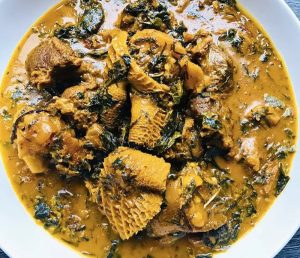
Ofe Onugbu (Bitterleaf Soup)
The name is the first thing that confuses newcomers. Bitterleaf soup is not bitter. The leaves are washed and wrung thoroughly before cooking, drawing out the bitterness until what remains is a clean, slightly vegetal flavour that cuts through the richness of the broth. Igbo cooking does not remove complexity; it manages it. Cocoyam paste thickens the soup naturally. Seasoning is measured, not excessive. This is a celebration soup. It appears at weddings, funerals, and title-taking ceremonies, which is not coincidence but recognition of its particular labour and depth. In many homes, this is the dish that signals proper cooking has been done. It is not fast food. It requires patience. That requirement is precisely why it retains its value.
Related Articles
Ingredients (serves 4–6)
- 400g fresh bitter leaf, thoroughly washed and squeezed
- 400g assorted meat (beef, goat, or offal of choice)
- 150g stockfish, soaked and cleaned
- 3 medium cocoyams, boiled and pounded to a smooth paste
- 150ml palm oil
- 2 tablespoons ground crayfish
- 2 scotch bonnet peppers, blended
- 1 medium onion, chopped
- 2 stock cubes
- Salt to taste
Preparation
Season and boil the meat with onion, one stock cube, and salt until tender. Add the soaked stockfish partway through and allow it to cook through. Reserve the stock. Heat palm oil in a pot and fry the blended pepper with onion for five to six minutes. Add the meat stock, cooked meat, stockfish, crayfish, and stock cubes, and bring to a gentle simmer. Drop the pounded cocoyam in small balls into the simmering soup. This is the thickener that gives ofe onugbu its distinctive body. Stir gently until the cocoyam dissolves into the broth. Add the prepared bitter leaf and cook for ten to fifteen minutes. The soup should be thick, not watery. Adjust salt and serve hot.
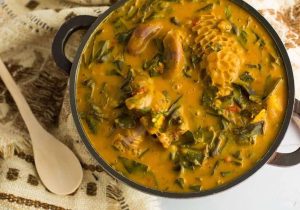
Ofe Oha (Oha Soup)
Oha leaves are soft, slightly silky, and carry a flavour that sits somewhere between mild bitterness and fresh earthiness. They are torn by hand rather than cut with a knife, since slicing bruises them and flattens their flavour. The distinction matters. Oha soup is particularly popular in Enugu State, where the oha tree grows most abundantly, and it shares the cocoyam-thickened base of ofe onugbu.
Ingredients (serves 4–6)
- 2 large handfuls of fresh oha leaves, torn by hand
- 500g assorted meat (goat, beef, or chicken work well)
- 150g stockfish, soaked
- 3 medium cocoyams, boiled and pounded
- 150ml palm oil
- 2 tablespoons ground crayfish
- 2 scotch bonnet peppers, blended
- 1 medium onion, chopped
- 2 stock cubes
- Salt to taste
Preparation
Season and boil the meat with the chopped onion, one stock cube, and salt until tender. Add the soaked stockfish partway through and allow it to cook through. Reserve the stock. Heat the palm oil in a wide pot over medium heat. Add the remaining onion and fry until softened, then add the blended peppers and fry for five to six minutes until the raw smell clears. Pour in the meat stock, then add the cooked meat, stockfish, ground crayfish, and remaining stock cube. Bring to a gentle simmer. Drop the pounded cocoyam into the soup in small pieces, stirring until it dissolves fully into the broth. The soup should thicken steadily. Add the torn oha leaves and cook for no more than five to seven minutes. Oha leaves darken quickly, and overcooking flattens their flavour. The finished soup should carry a bright, slightly green presence. Serve with pounded yam or fufu.
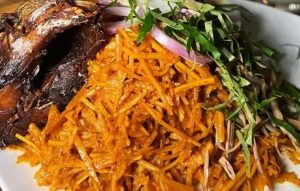
Abacha (African Salad)
Abacha disrupts expectations. It is assembled rather than cooked, and served at room temperature, yet carries the kind of layered flavour that is usually associated with long preparation. The base is dried, shredded cassava that has been soaked in water to rehydrate. Into this goes palm oil worked with potash (akanwu, a natural alkaline salt) to produce a vivid orange emulsion, ugba (fermented oil bean seeds, also known as ukpaka), crayfish, onion, garden eggs, and utazi leaves for slight bitterness. It is traditionally offered to guests in Igbo homes before a main meal, a gesture that says: you are worth the effort of something specific. It belongs as much to roadside gatherings as it does to family settings, and this accessibility should not be mistaken for simplicity.
Ingredients (serves 4)
- 300g dried abacha (available in Nigerian food shops), soaked in cold water for 10–15 minutes and drained
- 150ml palm oil
- 1 small piece of potash (akanwu), dissolved in half a cup of water, strained
- 100g ugba (fermented oil bean), washed and drained
- 2 tablespoons ground crayfish
- 1 medium onion, thinly sliced
- 2 garden eggs, thinly sliced
- Small handful of utazi leaves, shredded
- 1–2 stock cubes, ground to powder
- Salt and pepper to taste
- Optional: sliced ponmo (cow skin) or smoked fish
Preparation
Pour the palm oil into a bowl and add the potash water a little at a time, stirring continuously. The mixture will thicken and turn a bright, opaque orange. Add ground stock cubes, crayfish, salt, and pepper to the oil mixture and stir well. Add the drained abacha and mix thoroughly until every strand is coated. Add the ugba, onion, garden eggs, and utazi leaves, folding gently to distribute. Add any protein at this stage. Taste and adjust. Abacha is served at room temperature and improves slightly if left to rest for ten minutes before serving, as the flavours settle and deepen.
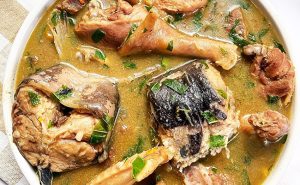
Ofe Nsala (White Soup)
Ofe nsala presents a different philosophy. It excludes palm oil entirely. The colour is pale, almost cream, and the broth is built from raw yam used as a thickener rather than cocoyam. Nothing is hidden. Yam is pounded into a paste and introduced gradually; too much produces heaviness; too little results in a thin, incomplete dish. Fresh catfish is the traditional protein, and utazi leaves provide the distinctive slightly bitter finish that prevents the soup from tasting flat. It demonstrates that restraint can still produce depth. It is a dish associated with special occasions and with the postpartum period, when new mothers in Igbo communities are traditionally served warming, nourishing food during the omugwo, the postnatal care period.
Ingredients (serves 4)
- 1 large fresh catfish, cleaned and cut into portions
- 150g raw yam, peeled and pounded or blended to a paste
- 1 handful utazi leaves, shredded
- 2 tablespoons ground crayfish
- 2 scotch bonnet peppers, blended or roughly pounded
- 1 medium onion
- 2 stock cubes
- Salt to taste
- Optional: goat meat or oxtail alongside or instead of catfish
Preparation
Season the catfish portions with salt, a stock cube, and a little pepper. Handle catfish with care during cooking, as it breaks apart easily. In a pot, bring about 600ml of water to a simmer. Add the onion, remaining stock cube, blended pepper, and ground crayfish. Add the catfish and cook on medium heat for ten minutes. Remove the fish carefully and set aside. Stir the pounded yam into the broth gradually, ensuring no lumps form. The soup should thicken to a light, flowing consistency. Return the fish to the pot and add the utazi leaves. Simmer for five minutes. Serve with pounded yam.
Nkwobi
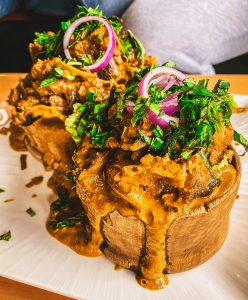
Nkwobi is not everyday food. It is deliberate. It is built around cow foot, cooked until very tender and coated in a warm, potash-stabilised sauce seasoned with utazi, onion, and crayfish. When prepared with goat head instead, it becomes isi ewu. The sauce defines the dish. It must be thick, cohesive, and properly emulsified. Excess oil signals poor execution. Insufficient binding weakens the identity.
It is a social dish, served in a mortar-shaped wooden bowl and eaten at the end of an evening rather than the beginning. In beer parlours across eastern Nigeria and in Igbo diaspora restaurants from Lagos to London, nkwobi carries a particular ceremonial quality, less a meal than a statement of occasion.
Ingredients (serves 4)
- 800g cow foot (oxtail or tripe also work), cleaned and pre-boiled until very tender
- 150ml palm oil
- 1 small piece of potash, dissolved in half a cup of water, strained
- 2 tablespoons ground crayfish
- 1 handful utazi leaves, shredded
- 1 medium onion, sliced into rings
- 2 stock cubes
- Salt and scotch bonnet to taste
Preparation
Season and cook the cow foot with onion, one stock cube, and salt until very tender. The meat should yield to light pressure but hold its shape. In a wide pan, warm the palm oil on low heat and do not allow it to smoke. Add the strained potash water gradually, stirring to emulsify. Add ground crayfish, ground pepper, and a crumbled stock cube. Stir until the sauce is uniform and thick. Add the cooked cow foot and toss through the sauce until every piece is coated. Add the utazi leaves and onion rings, folding them in gently. Serve warm in a bowl, garnished with additional onion rings and utazi.
Okpa (Bambara Nut Pudding)
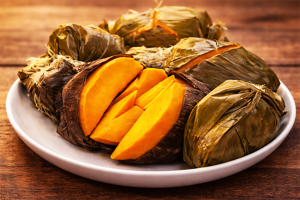
Okpa represents efficiency without compromise. It is not a soup, not a stew, and not a side dish. It is a complete meal in itself, and one of the few Igbo preparations that requires neither a swallow nor an accompaniment to feel finished.
Made from Bambara nut flour mixed with palm oil, crayfish, pepper, and water, then wrapped in banana leaves or nylon pouches and steamed, okpa is commonly eaten as breakfast or a quick midday meal. In Enugu, it functions almost as a daily staple, widely available in the morning and often sold out before midday. That consistency of demand reflects something real about its quality.
Ingredients (serves 4)
- 400g Bambara nut flour (okpa flour)
- 100ml palm oil
- 2 tablespoons ground crayfish
- 2 scotch bonnet peppers, blended
- 1 stock cube, crumbled
- Salt to taste
- Warm water, added gradually to achieve a thick, pourable batter
- Banana leaves or heat-resistant pouches for wrapping
Preparation
Combine the okpa flour, ground crayfish, blended pepper, stock cube, and salt in a bowl. Add warm water gradually, mixing continuously until a smooth, thick batter forms. Add the palm oil and mix well until fully incorporated. The batter should be dense but pourable. Scoop portions into banana leaf parcels or pouches, seal tightly, and arrange in a steamer. Steam for forty-five to fifty minutes. The finished okpa should be firm yet yielding when pressed, with a rich, slightly dense interior. Serve warm. It needs nothing else.
A Note on Serving and Accompaniments
Igbo soups are almost always served with a swallow. Pounded yam (ji utara) is the most prestigious pairing, followed by eba (made from garri), fufu (cassava), and semo. The swallow is pulled into small balls, dipped into the soup, and eaten without cutlery in traditional settings. Each soup pairs differently: ofe nsala and ofe oha suit pounded yam best; ofe egusi carries enough body to work with eba; abacha, nkwobi, and okpa stand entirely on their own. Palm wine, if available, remains the most culturally resonant accompaniment to the richer dishes.
Why These Recipes Endure
These dishes persist because they solve real problems. They nourish efficiently, scale for families, and adapt without losing identity. Modern eating patterns increasingly favour convenience. Speed often replaces craft. Imported food habits reshape preferences, particularly in urban environments across Nigeria. Change is inevitable. The issue is continuity. Without deliberate preservation, coherence is lost.
What makes Igbo cooking worth learning, whether you grew up in Enugu or are encountering it for the first time, is that every dish has a logic. Nothing in these recipes is arbitrary. The potash in abacha and nkwobi is not decoration; it transforms the palm oil into something it could not become alone. The cocoyam in ofe onugbu is not just a thickener; it changes the texture of the entire soup. Understanding that logic is what moves cooking from repetition into craft.
Final Thought
Food remains one of the few daily practices where identity is expressed without declaration.
Not every tradition survives pressure from modern systems. Many fade gradually. Igbo cuisine has remained relevant because it continues to meet real needs.
It feeds people properly. That alone justifies its preservation.