




Vision loss is often imagined as sudden, dramatic, and immediately noticeable. Glaucoma defies this expectation. It advances without pain in most cases, without obvious warning, and without giving second chances. By the time vision loss becomes apparent, extensive and irreversible damage has already occurred.
This is glaucoma’s evolutionary advantage—not biological evolution, but the advantage of operating beneath human awareness. It exploits how we perceive risk: we respond to pain, to visible threat, to immediate danger. Glaucoma triggers none of these instincts. It simply advances, quietly, until damage becomes irreversible.
Globally, glaucoma affects approximately 80 million people, with nearly half unaware of their condition. It remains one of the leading causes of irreversible blindness worldwide. Unlike many eye conditions, the vision it takes cannot be restored. Yet it is also one of the most preventable causes of blindness when detected early and managed properly. This is the paradox: a disease that causes profound loss could be stopped, if only it announced itself before damage became permanent.
The tragedy of glaucoma is not its complexity, but its invisibility.


Risk increases with age, rising steadily after 40. People of African descent face particularly elevated vulnerability, developing the disease 4-5 times more frequently, at younger ages, and with more aggressive progression than those of European ancestry. In sub-Saharan Africa, where prevalence rates are among the highest globally, access to screening and treatment remains severely limited.
Despite these realities, awareness and routine screening remain dangerously low, allowing the condition to progress unnoticed in millions of people who could have protected their sight.
What Glaucoma Really Is
Glaucoma is not a single disease but a group of eye conditions that damage the optic nerve, the structure responsible for transmitting visual information from the eye to the brain. When the optic nerve is compromised, vision gradually deteriorates, beginning at the edges of the visual field and moving inward.
Unlike other damaged tissues in the body, the optic nerve cannot regenerate. Nerve fibres, once lost, are lost permanently. This is why early detection matters so profoundly—glaucoma writes in permanent ink.
In many cases, optic nerve damage is linked to elevated intraocular pressure, the pressure created by fluid within the eye. However, glaucoma is not simply a problem of high pressure. Some people with elevated pressure never develop glaucoma, while others develop optic nerve damage despite normal pressure levels. This complexity is one reason the disease often goes undetected.
What makes glaucoma particularly dangerous is that central vision is usually preserved until the later stages. A person may read, drive, and function normally while losing peripheral vision slowly over years, unaware that anything is wrong.
How Eye Pressure Becomes a Problem
To understand glaucoma requires understanding a simple but critical imbalance. The eye produces fluid continuously, a clear substance known as aqueous humour that nourishes internal structures and maintains the eye’s shape. Under normal conditions, this fluid drains at the same rate it enters, maintaining stable pressure through a microscopic drainage system located at the angle where the iris and cornea meet.
Glaucoma develops when this drainage system fails to keep pace with fluid production. The result is a gradual or sudden buildup of pressure within the eye, which places stress on the optic nerve. Over time, this stress leads to irreversible nerve damage.
The manner in which drainage fails determines the type of glaucoma a person develops.
The Major Types of Glaucoma
Glaucoma’s different forms share one outcome—optic nerve damage—but arrive through different routes. Understanding which type matters because detection urgency, treatment approach, and progression speed vary substantially.
Primary open-angle glaucoma is the most common form. The drainage angle appears open and structurally normal, but the drainage system becomes inefficient. Pressure rises slowly, and symptoms are typically absent until significant vision loss has occurred. This form often progresses unnoticed for years.
Angle-closure glaucoma is less common but far more acute. The drainage angle becomes physically blocked, often suddenly, causing a rapid increase in eye pressure. A man in his sixties watches television in dim lighting. Suddenly, sharp pain radiates through his right eye. Vision blurs. Nausea follows. He sees rainbow halos around lights. Within an hour, the pressure in his eye has spiked to dangerous levels. This is angle-closure glaucoma—rare, but when it occurs, every minute matters. Immediate treatment is essential to prevent rapid vision loss.
Ocular hypertension refers to elevated eye pressure without detectable optic nerve damage or vision loss. While not glaucoma itself, it significantly increases the risk of developing the disease and requires close monitoring.
Normal-tension glaucoma occurs when optic nerve damage develops despite eye pressure remaining within normal limits. Reduced blood flow to the optic nerve or increased nerve sensitivity may play a role. This form highlights why pressure alone cannot be used to rule out glaucoma.
Secondary glaucoma develops as a result of another condition or external factor, such as eye injury, inflammation, prolonged steroid use, or systemic diseases like diabetes. Treating the underlying cause becomes an essential part of management.
Congenital or developmental glaucoma is rare and present from birth, caused by abnormal development of the eye’s drainage system. Early diagnosis is crucial to preserve vision in affected children.
Who Is Most at Risk
Although glaucoma can affect anyone, certain factors significantly increase vulnerability. Risk factors cluster around three main dimensions: biological inheritance, acquired conditions, and demographic realities.
Age and genetics matter most. After 40, risk rises steadily, doubling approximately every decade. By age 80, roughly ten percent of people will have some form of the disease. A family history of glaucoma multiplies risk several-fold, confirming the genetic component.
Ethnicity further shapes vulnerability. People of African descent face 4-5 times higher risk than those of European ancestry, often developing the disease younger and with more aggressive progression. Hispanic populations also face elevated risk, particularly later in life.
Acquired factors include chronic eye inflammation, prolonged corticosteroid use, thin corneas, and diabetes. These conditions do not cause glaucoma directly, but they create environments where the disease finds easier footing.
A forty-year-old woman learns her father has been diagnosed with glaucoma. She schedules her first comprehensive eye exam in a decade. The optometrist finds elevated pressure and early optic nerve changes. Treatment begins immediately. Her sister, who decides to wait until something feels wrong, is diagnosed five years later with moderate vision loss already present.
Importantly, the absence of symptoms provides no reassurance. Glaucoma respects no one’s sense of wellbeing.
Why Glaucoma Is Often Discovered Too Late
Glaucoma is rarely painful in its early stages. This is not a design flaw. It is the disease’s most effective weapon.
Humans respond to pain. We seek help when something hurts, bleeds, or disrupts function. Glaucoma operates beneath these thresholds entirely. Vision loss begins at the periphery, where the brain compensates unconsciously.
A woman drives the same route to work daily, turning her head slightly more at intersections without realizing why. Her family notices no change. She feels no discomfort. At a routine eye exam years later, prompted only by difficulty reading small print, the optometrist discovers advanced glaucoma. Sixty percent of her peripheral vision is already gone. She had no idea.
The only symptom of early glaucoma is the absence of symptoms. This is precisely why it succeeds.
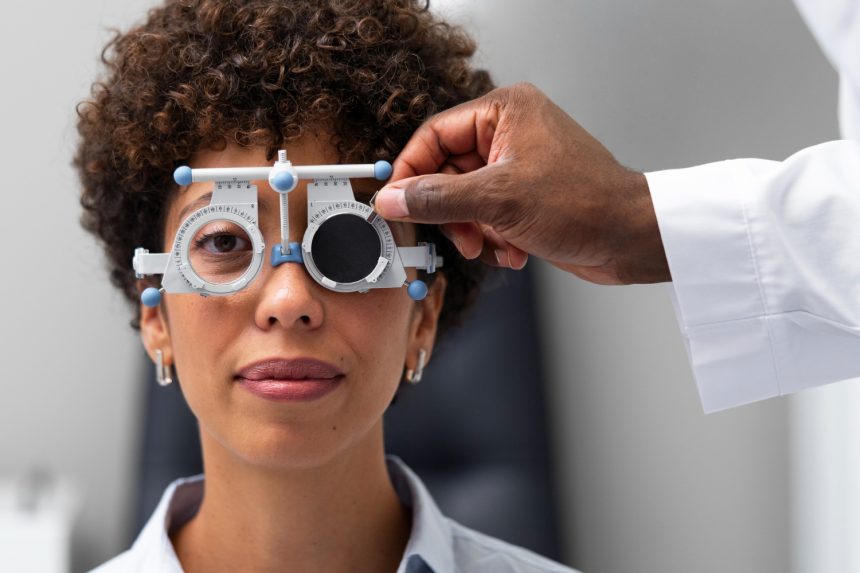
Detection requires deliberately looking for trouble before trouble announces itself. Routine comprehensive eye examinations, including intraocular pressure measurement, optic nerve evaluation, and visual field testing, remain the only reliable method. Yet studies suggest that up to 50% of people with glaucoma in developed countries remain undiagnosed. In regions with limited healthcare infrastructure, this percentage rises substantially.
In Nigeria, barriers to early detection compound quickly. Comprehensive eye examinations cost between ₦10,000 and ₦25,000, not including treatment if glaucoma is found. For families managing school fees, rent, and food expenses, preventive eye care competes with immediate survival needs. Optometric services concentrate in urban centres, leaving rural populations without convenient access.
Cultural attitudes toward eye health add further delay. Many Nigerians seek care only when vision problems interfere with work or daily function. “It’s just aging” or “My eyes are tired” often replace medical consultation. The logic feels sound: if vision still functions, why spend limited resources investigating?
By the time vision loss becomes undeniable, optic nerve damage is often extensive. Intervention at this stage can only slow further deterioration, not restore what has been taken. The disease that steals sight silently can only be stopped by looking for it deliberately.
Living With Glaucoma: The Challenge of Preventing What You Cannot Feel
Glaucoma cannot be cured, but it can be controlled. Treatment focuses on lowering intraocular pressure to slow or halt further optic nerve damage. For most people, this means daily eye drops, sometimes multiple types, applied at specific times, for the rest of their lives.
Here lies the psychological challenge: daily medication against a threat you cannot see or feel.
Consider the reality. A man diagnosed with early glaucoma begins treatment immediately. His vision remains unchanged. He experiences no symptoms before treatment. He experiences no symptoms after treatment. The medication stings slightly. It causes redness. Occasionally, systemic side effects emerge: fatigue, changed heart rate, respiratory effects.
Daily eye drops feel like prevention against nothing. This is why prevention fails—it demands discipline against an invisible threat.
Missing a few doses produces no immediate consequence. Vision does not blur overnight. Pain does not follow. But pressure rises silently, and optic nerve fibres die quietly, one by one, irreversibly. By the time missed medication reveals its effect through vision loss, months or years of damage have accumulated.
Consistency matters profoundly in glaucoma management, yet consistency is precisely what asymptomatic chronic disease undermines. Missed medications, skipped follow-up appointments, and treatment fatigue allow progression to resume, silently, exactly as it did before diagnosis.
Research shows that medication adherence in glaucoma hovers around 50-70% long-term. The gap between knowing what prevents blindness and actually doing it daily reflects a deeper human struggle: we protect ourselves least against dangers we cannot feel approaching.
With early detection and disciplined treatment, many people with glaucoma retain functional vision throughout their lives. Success in glaucoma feels like nothing is happening. This absence of drama is both the goal and the challenge.
Conclusion: The Preventable Tragedy
Glaucoma represents one of the most preventable tragedies in modern eye health, not because treatment fails, but because detection does.
The disease exploits a fundamental truth about human behaviour: we protect ourselves least against threats we cannot feel. Pain triggers action. Visible damage prompts urgency. Glaucoma offers neither. It simply advances, silently, asking for vigilance against nothing apparent.
This is why regular eye examinations matter so profoundly, especially for those over 40, those with family history, and those of African descent. Detection requires deliberately looking for trouble before trouble announces itself. Vision lost to glaucoma cannot be recovered, but vision protected through this single uncomfortable discipline—acting without immediate reassurance—can last a lifetime.
Glaucoma persists not because it is unstoppable, but because it asks us to act preventively against an invisible threat. The silence of glaucoma is precisely why it demands attention.