




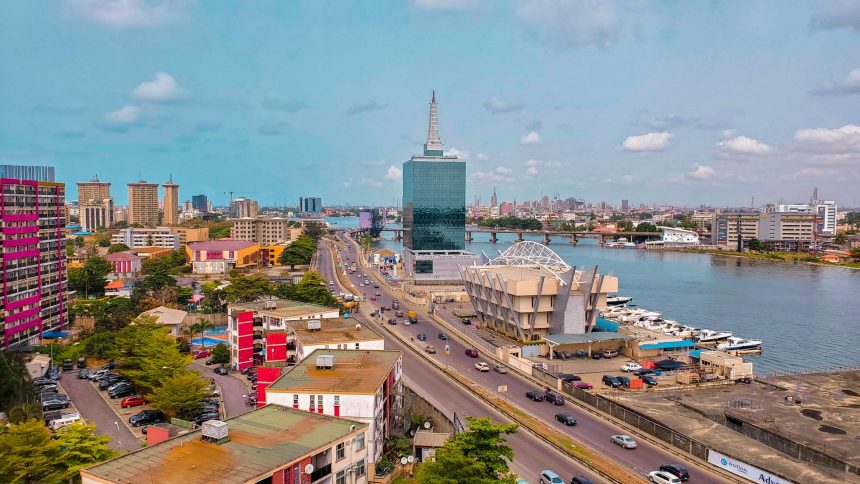
Nigeria is most often encountered through compression, reduced to headlines that prioritise urgency over structure. Security challenges dominate reporting. Currency fluctuations attract market commentary. Oil production frames economic relevance. These descriptions are not false, but they are incomplete. They capture pressure points without examining the structures beneath them.
What is less visible is the operational capacity underneath. Not aspiration or potential, but functioning systems, measurable outputs, and resources that compound over time rather than extract value once. This is not reputational management. It is analytical correction. Nigeria possesses economic, cultural, demographic, and institutional resources that operate on longer timescales than news cycles. Understanding these resources matters for anyone evaluating long-term investment, regional influence, or future-facing markets.
Figures cited reflect the best available estimates from industry reports, national statistics, and platform disclosures, which vary in methodology and scope. What follows is documentation, not promotion.
Geography That Enables Scale, Not Spectacle
Nigeria’s physical landscape is more diverse than its international reputation suggests. Mangrove forests in the Niger Delta transition to rainforest belts in the south, savannah grasslands across the middle belt, and semi-arid zones in the north. Highlands rise in Plateau State and Cross River State. A long Atlantic coastline anchors maritime trade through major ports at Lagos, Port Harcourt, and Calabar.


This diversity matters economically. Agricultural production specialises regionally according to climate and soil conditions. Cocoa, palm oil, and rubber thrive in southern states. Rice, millet, and livestock dominate northern regions. Cassava, yams, and maize grow across multiple zones. This diversification reduces dependence on single crops and creates multiple supply chains operating simultaneously.
Coastal access provides maritime trade capacity connecting Nigeria to global shipping routes. Inland transport corridors link landlocked neighbours like Niger and Chad to these ports, positioning Nigeria as a regional logistics hub. The country’s geography supports not just domestic commerce but trans-regional trade flows.
Unlike smaller markets dependent on single cities or narrow corridors, Nigeria’s internal scale allows businesses to grow without crossing borders. Companies can pilot products in one region, adjust based on local response, and expand to others whilst remaining within familiar regulatory and cultural territory. For investors, this creates risk distribution across locations and phased expansion opportunities that reduce capital exposure. Few African markets offer this internal variety at comparable scale.
People as Enduring Capital
Nigeria’s most consistent asset is its people. The population exceeds 230 million, with median age under 20. This is often framed as risk. It is more accurately described as latent capacity. Nigerian professionals operate at high levels across global industries, from technology and finance to medicine, design, engineering, and research. The diaspora has become a conduit rather than a drain, transferring skills, networks, and capital back into domestic systems.



What distinguishes Nigerian human capital is not only technical ability, but adaptive intelligence. Nigerians routinely operate in environments that demand creativity, problem-solving, and resilience. These traits translate well into entrepreneurship, innovation, and leadership under uncertainty. For investors, this means access to a workforce capable of building systems, not merely executing instructions. Teams improvise, localise, and scale under imperfect conditions, a critical advantage in emerging markets.
Culture as Economic Infrastructure
Nigeria’s cultural diversity is frequently presented as complexity. In practice, it functions as infrastructure. With more than 250 ethnic groups and layered traditions, Nigerian society has developed fluency in coexistence, negotiation, and cultural translation. This fluency appears directly in business. Markets are relational. Trust develops over time. Context shapes consumption and adoption patterns.
The economic implications are visible in Nigeria’s creative industries. Afrobeats has become Nigeria’s most significant non-oil cultural export, rivalling traditional commodity sectors in global reach and revenue. The genre now reaches audiences in over 180 countries. Streaming platforms report that royalties paid to Nigerian artists more than doubled between 2023 and 2024. Artists like Burna Boy, Wizkid, and Davido sell out global venues from London’s O2 Arena to New York’s Barclays Center. Estimates place the economic contribution of Afrobeats in the multi-billion-dollar range.
The significance lies not in celebrity but in infrastructure development. International record labels established Nigerian operations in the early 2000s. Local labels emerged alongside them. Digital platforms created distribution without requiring traditional gatekeepers. Artists now reach global audiences from Lagos studios, generating revenue streams that bypass conventional export channels. Capacity increases over time rather than depleting with extraction.
Nollywood operates at similar scale. Producing well over 1,500 films annually, the Nigerian film industry ranks among the world’s largest by output. Industry estimates place revenue in the several-hundred-million-dollar range, with content reaching viewers across Africa and increasingly through international streaming platforms. Netflix features Nigerian productions in its global catalogue. Titles like Blood Vessel and Ijogbon have entered international top-10 rankings, demonstrating commercial viability beyond niche markets.
Fashion follows the same pattern. Nigerian designers appear on Paris runways. Lagos Fashion Week attracts international buyers. Collaborations with luxury houses are becoming routine rather than exceptional. According to national statistics, the creative sector contributes approximately ₦1.97 trillion to GDP annually, with growth accelerating in recent years. This expansion occurred during a period when oil revenue remained volatile, demonstrating economic diversification in practice rather than aspiration.
These industries demonstrate what happens when Nigerian talent gains access to global distribution. Cultural assets compound. They grow more valuable as skills, networks, and reputation accumulate, functioning independently of commodity cycles.



Technology and Digital Leapfrogging
Nigeria’s technology ecosystem has matured decisively. Lagos ranks as one of the fastest-growing technology ecosystems globally by recent valuation growth. Ecosystem analyses estimate current valuation exceeding $15 billion, representing more than tenfold increase since 2017. The designation reflects not just current size but acceleration rate. Nigeria hosts the majority of Africa’s technology unicorns, including Flutterwave, OPay, Moniepoint, Interswitch, and Jumia.
Fintech dominates for structural reasons. Nigeria’s large unbanked population created market opportunity. High mobile penetration provided distribution infrastructure. Regulatory frameworks, whilst imperfect, allowed experimentation. The results are measurable. Nigeria processes mobile and digital transactions at volumes comparable to mid-sized global economies. Platforms like Moniepoint have redefined point-of-sale infrastructure across retail environments. Flutterwave and Paystack handle cross-border transactions for merchants across Africa. These systems operate at scale, processing millions of daily transactions with reliability comparable to established global platforms.
This digital acceleration builds on existing entrepreneurial density. Nigeria’s informal economy, often portrayed as a weakness, is better understood as evidence of market penetration. Millions of Nigerians run micro and small enterprises supplying goods, services, and logistics across cities and rural areas. Formalisation is increasing as fintech, digital payments, and mobile connectivity structure what already exists.
Consider a market trader in Lagos operating a textile stall. Previously dependent on cash transactions and personal networks for supplier credit, she now accesses mobile banking, digital inventory management, and algorithmic lending through her smartphone. Her working capital constraints ease. Her supplier relationships expand beyond immediate geography. Her business scales incrementally without requiring traditional bank infrastructure. This is not hypothetical. It is occurring across thousands of micro-enterprises daily, creating aggregate economic activity that formal statistics only partially capture.
Investors entering Nigeria are not creating demand from scratch but providing infrastructure for established economic activity. This reduces market education costs and accelerates adoption. Lagos now hosts over 2,000 startups across fintech, agritech, healthtech, and e-commerce. The ecosystem attracted approximately $400 million in 2024 despite global venture capital contraction. This capital flows from established investors including Google, Visa, and major venture funds rather than speculative sources. Their participation signals confidence in underlying fundamentals rather than short-term opportunity.
Beyond Lagos, technology hubs and training centres operate in Port Harcourt, Kano, Kaduna, Ibadan, and Enugu. Local talent pools supply technical skills. Diaspora networks provide international connections. The system is becoming self-reinforcing.
Nigeria functions as a proof market. Solutions that work under its conditions tend to travel well across Africa and other emerging economies. Products proven in Nigeria carry validation for broader regional deployment.
Demographics as Market Architecture
Nigeria’s population scale creates domestic markets comparable to regions elsewhere. Projections suggest growth approaching 400 million by mid-century. Approximately 3.5 million young people enter the workforce annually. The critical word regarding demographic advantage is potential. Employment generation and skills alignment remain challenges. Countries that failed to create productive opportunities for youth populations experienced social instability rather than economic growth.
However, the demographic structure itself represents market architecture. A large, young, increasingly educated population creates consumer demand for digital services, financial products, entertainment, and basic goods at continental scale within a single country. This scale allows businesses to achieve profitability domestically before expanding regionally.
Urban concentration amplifies this effect. Lagos, with a population in the tens of millions, functions as a testing ground for products and services before wider deployment. Success in Lagos often translates to viability across West Africa. This geography reduces market entry complexity for companies targeting African growth. Revenue stabilises earlier. Unit economics become clearer. Risk disperses across a broad consumer base.
Nigeria’s cultural composition adds another dimension. Business culture reflects society’s fluency in negotiation and context-awareness. Transactions are relationship-driven. Trust develops over time. This cultural literacy creates strong domestic markets and accelerates adoption when products align with social patterns. Investors who understand culture as market intelligence rather than background complexity find Nigeria unusually responsive.
With the African Continental Free Trade Area taking shape, Nigeria’s position strengthens further. Its manufacturing, logistics, and services sectors stand to benefit from reduced trade barriers across the continent. Investors entering Nigeria gain access not only to its domestic market but to a gateway into a broader continental economy of 1.3 billion people. Scale reduces fragility, allows businesses to absorb shocks, and sustains long-term growth trajectories.
Diaspora as Capital and Credibility Network
Over 17 million Nigerians live abroad, concentrated in the United Kingdom, United States, and Canada. This diaspora remits $20-25 billion annually, exceeding oil export revenue in several recent years. Remittances now constitute approximately 6% of GDP, providing foreign exchange stability and supporting millions of households.
The financial flows operate beyond consumption. Diaspora investment in real estate, agriculture, and technology startups is increasing. Professional networks connect Nigerian entrepreneurs with international expertise, capital sources, and market access. Diaspora members serve as bridges between Nigerian opportunities and global systems, functioning as both capital sources and credibility networks.
Recent policy initiatives aim to formalise these flows through specialised investment vehicles, renewable energy funds, and infrastructure bonds. Early results suggest growing diaspora interest in structured investment rather than solely household remittances. This shift could channel significant capital toward productive sectors.
Nigerian professionals in medicine, engineering, academia, and technology sectors maintain connections to home whilst building credibility in foreign institutions. These networks create reputational capital that counters negative media framing and provides direct channels for partnership development. The diaspora represents patient funding aligned with long-term development rather than short-term extraction.
Resources Beyond Oil
Nigeria’s global identity remains tied to oil and gas. This obscures a broader resource base with substantial underdeveloped potential. Solid minerals including tin, columbite, coal, limestone, and gold exist across multiple states but remain largely unexploited at commercial scale. Agricultural land suitable for processing, storage, and export operations extends far beyond current utilisation. These are not failures. They represent deferred opportunity.
Renewable energy potential stands out particularly. Nigeria’s climate provides year-round solar irradiation suitable for distributed power generation. Given persistent electricity challenges, solar capacity offers both infrastructure solution and investment opportunity. Agricultural processing represents similar potential. Nigeria produces significant raw agricultural output but captures minimal value through processing, packaging, and export-ready products. Building this capacity addresses both domestic consumption needs and export market access.
Tourism and hospitality sectors remain largely untapped. Nigeria possesses cultural heritage sites, natural landscapes, and urban attractions that could support substantial tourism development. Current infrastructure limitations constrain growth, but these limitations also define the investment opportunity. Capital deployed toward hospitality, eco-tourism, and cultural tourism enters markets with minimal existing competition and substantial latent demand.
As global capital shifts toward sustainability, diversification, and impact alignment, Nigeria’s non-extractive resources gain relevance. Value increases when capacity compounds. Industries that grow through skill development, infrastructure, and market access offer durability beyond commodity cycles.
What This Means for Investment Consideration
Nigeria is not frictionless. Infrastructure challenges are genuine. Power supply remains inconsistent. Logistics costs are elevated. Regulatory complexity creates operational overhead. These factors are not disputed.
However, investment decisions rest on return potential relative to risk, not absence of challenge. Nigeria offers specific advantages: demonstrated capacity to build global-scale creative industries, functioning technology ecosystems with proven exits, massive domestic market supporting rapid scaling, geographic diversity enabling phased expansion, and capital flows from multiple sources including diaspora, international investors, and domestic accumulation.
The creative economy demonstrates what happens when Nigerian talent accesses global distribution. Afrobeats artists compete directly with international acts. Nollywood content ranks alongside global productions. This success occurred without substantial government support, suggesting capacity that could scale with improved enabling conditions.
Technology investments have generated actual unicorns, not aspirational projections. Fintech companies process real transaction volumes. E-commerce platforms serve genuine consumer demand. These businesses operate at profitability or clear paths to profitability rather than pure growth plays.
Market scale provides cushion. A domestic base exceeding 230 million creates viability before regional expansion. Success probability increases when initial markets are large enough to support sustainable business models. Nigeria’s population density, urbanisation patterns, and income growth trajectories create this foundation.
Geographic diversity, cultural fluency, and resource endowment add layers of opportunity beyond the technology and creative sectors that dominate current headlines. Agricultural processing, renewable energy deployment, logistics infrastructure, and tourism development represent substantial markets that remain in formation stages.
Investors examining Nigeria should assess operational questions. Can businesses navigate power reliability issues through backup systems? Do logistics costs still allow profitable unit economics? Can regulatory complexity be managed through local partnerships? These are solvable problems with defined cost structures. Investors who understand trajectory rather than perfection find Nigeria navigable.
Successful engagement rarely takes the form of remote capital deployment. It is typically partnership-driven, staged, and locally embedded. Investors who treat Nigerian operators as co-builders rather than execution layers navigate complexity faster and compound advantage more reliably. Policy consistency remains uneven. Reforms occur in bursts rather than smooth arcs. Markets adapt faster than institutions, though institutions do move. This dynamic requires patience and operational flexibility, but it also creates advantage for those willing to engage on appropriate timescales.
The Question Is Operational, Not Conceptual
Nigeria’s advantages are not cosmetic. They are structural.
They lie in systems that function under pressure, people who adapt and build, culture that accelerates adoption when respected, and scale that absorbs experimentation. They lie in assets that compound quietly whilst narratives lag behind reality. Creative industries function. Technology platforms process real volumes. Markets exist. Capital flows. The challenges are executional rather than fundamental.
The alternative assessment is comparative. Which other markets offer this combination of creative export dominance, technology momentum, demographic scale, geographic diversity, and capital connectivity? The answer set is limited. Nigeria sits alongside a handful of other high-population emerging markets with distinct competitive advantages in specific sectors.
The narrative gap between crisis headlines and operating reality creates opportunity for those who examine underlying assets. Nigeria will not present itself through promotional clarity. Understanding what works requires looking past immediate turbulence to identify resources that compound over decades rather than quarters.
These resources are documented, measurable, and increasingly validated by commercial outcomes. They operate despite challenges, not because challenges have been resolved. This is the actual opportunity: assets with demonstrated performance operating in an environment most external observers find difficult to evaluate accurately. For overseas investors willing to engage seriously, Nigeria offers something increasingly rare in global markets. Room to build, room to grow, and room to shape systems alongside a population already doing the hard work of progress.