




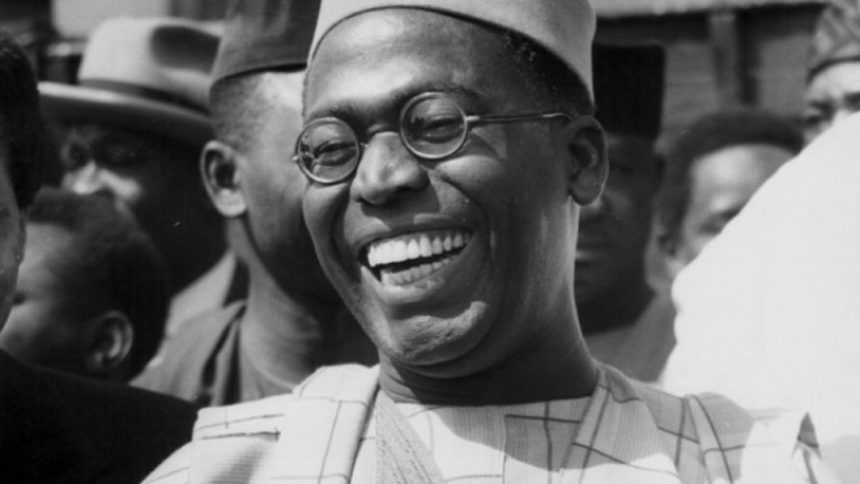
When Nigeria’s first qualified lawyer returned from England in 1879, he carried more than legal credentials. Chief Sapara Williams brought proof that colonial barriers to African professional advancement could be crossed, not merely protested. He was among the earliest in what would become a sustained pattern, one enabled by specific conditions: proximity to Lagos’s colonial infrastructure, access to missionary education, and traditional authority structures flexible enough to incorporate new forms of status. His achievement established possibilities that would define Yoruba contributions to Nigerian nation-building for the next century.
The list of Yoruba pioneers reads like a roll call of Nigerian institutional development. Yet these achievements deserve examination beyond simple chronology. They reveal how one ethnic group, positioned at the intersection of pre-existing social organisation and colonial opportunity, shaped the professional architecture of modern Nigeria whilst maintaining cultural distinctiveness.
This concentration of achievement reflected structural advantages as much as cultural attributes. Lagos emerged as colonial administrative and commercial capital, placing Yoruba communities at the intersection of traditional authority and colonial infrastructure. Missionary schools established in southwestern Nigeria during the mid-nineteenth century created early access to Western education without requiring complete cultural abandonment. The Yoruba political structure, characterised by urban centres and hereditary kingship, provided frameworks for incorporating professional credentials into traditional status systems. These conditions created pathways to professional advancement that other Nigerian communities would access later and with greater difficulty.
The Medical Vanguard
Medicine attracted some of the earliest Yoruba professional pioneers, partly because colonial administrators recognised that African doctors could survive conditions that killed European physicians. Dr Nathaniel Thomas King, who qualified in 1874 from King’s College London, became the first Nigerian to practise modern medicine in his homeland. His father, Reverend Thomas King, had worked alongside Bishop Ajayi Crowther translating the Bible into Yoruba, establishing an intellectual lineage that merged religious scholarship with scientific advancement.



The medical profession continued drawing Yoruba talent throughout subsequent generations. Dr Elizabeth Abimbola Awoliyi, née Akerele, became Nigeria’s first female physician in 1910, decades before most African nations produced their first female doctors. Professor Theophilus Ogunlesi made history in 1965 as Nigeria’s first professor of medicine at the University of Ibadan, simultaneously building teaching infrastructure whilst training the physicians who would lead Nigerian healthcare for half a century.
Perhaps most remarkably, Emmanuel Olatunde Odeku emerged as Africa’s first neurosurgeon trained in the United States, pioneering neurosurgery across the continent before his death in 1974. These medical pioneers did not simply replicate Western training. They confronted distinctively African health challenges whilst establishing institutions that would outlast their individual careers.
Legal Foundations
Chief Sapara Williams’ 1879 qualification as Nigeria’s first lawyer established legal practice as a pathway to influence that combined British credentials with indigenous authority. He served as the Lodifi of Ilesa, demonstrating how professional achievement could reinforce rather than diminish traditional standing. His younger brother, Dr Oguntola Sapara, pursued medicine with equal distinction, suggesting that professional advancement often ran through families with educational access.
The legal profession produced particularly notable female pioneers. Stella Thomas qualified in 1935 as Nigeria’s first female lawyer, then became the nation’s first female magistrate in 1943. Folake Solanke later achieved distinction as Nigeria’s first female Senior Advocate, wearing the silk gown that marked elite legal status. These women navigated double barriers of gender and colonial restriction, establishing precedents that expanded possibilities for subsequent generations.



Sir Adetokunbo Ademola served as Nigeria’s first indigenous Chief Justice from 1958 to 1972, presiding over the judiciary during the critical period spanning independence and civil war. His tenure established judicial independence as a principle worth defending even when political pressures mounted.
Educational and Intellectual Leadership
Canon Josiah Jesse Ransome-Kuti released Nigeria’s first music album in 1878, nearly forty years before most African nations possessed recording technology. His final album appeared in August 1921, with his works now preserved at the British Museum. Yet his influence extended beyond music. As grandfather to Fela Anikulapo-Kuti and great-grandfather to Wole Soyinka, he established a lineage that would shape Nigerian artistic and intellectual life across multiple generations.
That intellectual heritage found its apex when Professor Wole Soyinka received the Nobel Prize for Literature in 1986, becoming the first African laureate in that category. Soyinka’s achievement validated decades of Yoruba literary production whilst demonstrating that African writers could meet global standards on their own terms.
Mrs Funmilayo Ransome-Kuti, Canon Ransome-Kuti’s daughter-in-law, became the first woman to drive a car in Nigeria, though her greater significance lay in political activism and women’s rights advocacy. She challenged colonial authority and traditional gender restrictions simultaneously, proving that modernisation need not require cultural capitulation.
Engineering, Accounting, and Industrial Development
Olayinka Herbert Macaulay qualified in 1894 as Nigeria’s first trained engineer, studying both engineering and architecture in England. He later transitioned to politics, forming the Nigerian National Democratic Party in 1923 and subsequently helping establish the National Council of Nigeria and Cameroons. His career trajectory illustrated how professional training often served as foundation for political leadership.
Chief Akintola Williams became Nigeria’s first Chartered Accountant in 1919, then founded Akintola Williams and Company in 1952, establishing the template for indigenous professional service firms. His achievement proved that Nigerians could master technical professions requiring rigorous examination standards.
Chief Adeola Odutola emerged as Nigeria’s first industrialist and founding President of the Manufacturers Association of Nigeria. His rise demonstrated that industrial capitalism could take root in African soil when combined with entrepreneurial vision and technical competence.


Athletic and Cultural Firsts
Sport and media infrastructure became tools of post-colonial identity formation, and Western Nigeria invested strategically in both. The Western Nigerian Television Service, established in Ibadan in 1959, became Africa’s first television station at a moment when broadcasting technology could shape regional identity and project political authority. This was not accident but policy, reflecting Chief Obafemi Awolowo’s regional government investment in cultural infrastructure as political consolidation.
Teslim Olawale Balogun became the first Nigerian to play professional football abroad, representing Peterborough United, Skegness Town, Queens Park Rangers, and Holbeach United between 1955 and 1958. His career opened pathways that thousands of Nigerian footballers would follow, establishing sport as legitimate professional aspiration beyond educational or medical routes.
Shooting Stars Sports Club of Ibadan won the African Winners’ Cup in 1976, becoming the first Nigerian club to claim continental honour. This achievement reflected decades of systematic investment in sporting infrastructure that other Nigerian regions would later attempt to replicate. Rashidi Yekini, from Kwara State, scored Nigeria’s first World Cup goal against Bulgaria at USA 1994, crystallising football development that had begun generations earlier.
These sporting achievements mattered beyond athletic excellence. They demonstrated regional capacity to build institutions that could compete internationally whilst creating alternative routes to recognition for those without access to university education.
Educational Institutions
The University of Ibadan holds distinction as Nigeria’s first university, whilst CMS Grammar School, Lagos, established in 1859, remains Nigeria’s oldest secondary school. St Thomas Primary School, originally the Nursery of the Infant Church founded in Badagry in 1843, represents Nigeria’s earliest documented primary education institution.
These schools did not simply replicate British educational models. They created hybrid institutions that taught Western curricula whilst maintaining connection to indigenous culture and language.
Understanding the Pattern
Beyond geographical and educational access, the concentration of achievement reveals something important about colonial systems themselves. Professional credentials offered one of few pathways through which Africans could claim authority that colonial administrators grudgingly respected. Law and medicine particularly provided technical knowledge that Europeans could not easily dismiss as primitive or inferior.
Yoruba art and craftsmanship, recognised globally for bronze casting and textile production, established cultural confidence that eased adoption of new skills. The challenge was not learning European techniques but maintaining authority whilst doing so.
Contemporary Relevance
These pioneer achievements established institutional foundations that persist decades later. Nigerian universities, hospitals, legal practices, and businesses still operate within frameworks these early professionals created. Their example demonstrated that professional competence could coexist with cultural identity, that modernisation need not require wholesale cultural abandonment.
Yet the concentration of achievement within one ethnic group also established patterns that would complicate Nigerian national integration. When professional advancement appeared disproportionately available to particular groups, it created resentments that political entrepreneurs later exploited.
The challenge remains distinguishing legitimate celebration of achievement from ethnic chauvinism. These pioneers deserve recognition not because they were Yoruba, but because they built institutions that transcended ethnic particularity. Their medical schools trained doctors from across Nigeria. Their legal precedents applied regardless of litigants’ origins. Their businesses employed workers without ethnic restriction.
A Foundation, Not a Conclusion
The Yoruba pioneers established that Nigerians could master professions previously monopolised by Europeans. They proved that African institutions could maintain standards without simply mimicking colonial models. They demonstrated that traditional authority and professional competence could reinforce rather than contradict each other.
Their greatest legacy lies not in ethnic pride but in institutional examples. When Dr King established his medical practice, he created a template other communities could follow. When Chief Sapara Williams opened his law office, he demonstrated that legal services need not remain European monopoly. When Mrs Ransome-Kuti drove her car, she challenged assumptions about women’s capabilities that extended beyond any single ethnic group.
These achievements matter because they expanded possibilities for all Nigerians, not merely for Yoruba communities. They established that competence transcends ethnicity, that institutions outlast individuals, and that pioneers create pathways others can follow.
The question today is not whether these achievements deserve recognition, but whether contemporary Nigeria can build on foundations these pioneers established whilst avoiding the ethnic exclusivity that undermines national cohesion. That remains unfinished work.