




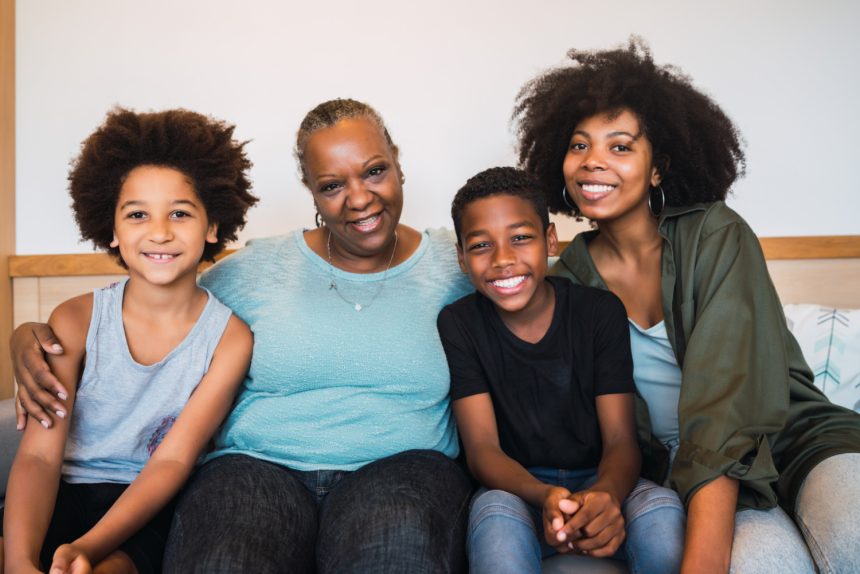
A grandmother reaches across the dinner table to correct her grandson’s table manners, using a tone his mother deliberately avoids. The mother catches her father’s eye, a silent negotiation passing between them about whether to intervene. The child absorbs both the correction and the tension, learning something about authority and family hierarchy that neither generation intended to teach.
These small moments reveal how grandparents occupy a position in families that is simultaneously central and peripheral. They are not primary decision-makers in their adult children’s households, yet their presence, opinions, and patterns of relating shape those households in ways both visible and hidden. This dual status creates a particular form of influence that operates across generations, affecting not just the relationship between grandparent and grandchild but the entire system of family relationships.
The influence grandparents exert is rarely simple or unidirectional. A grandmother who provides regular childcare changes family dynamics differently than one who offers occasional financial support. A grandfather who questions his son’s parenting approach creates different tensions than one who remains diplomatically silent. The effects of these various forms of engagement ripple through families in ways that often become fully apparent only when viewed across time.
Understanding how grandparents shape family dynamics requires looking beyond the direct grandparent-grandchild relationship to examine the more complex ways generational presence alters family systems. Grandparents influence family dynamics not only through what they say but through how families organise themselves around them. When a grandmother criticises how her daughter disciplines her children, when a grandfather’s health needs reshape family priorities, when extended family gatherings revolve around grandparents’ expectations, these moments reveal the mechanisms through which one generation continues to influence the next even after formal authority has passed.


The Architecture of Influence
Grandparents influence family dynamics through several overlapping roles, each creating different patterns of effect. The most visible role is practical support. Grandparents who provide regular childcare do not simply offer convenience. They become structural elements in how the family functions. Parents make employment decisions based on grandparent availability. Daily routines align with grandparent schedules. Children develop attachment relationships with grandparents that rival parental bonds in intensity if not in primacy.
This practical involvement creates power that extends beyond the immediate arrangement. A mother who relies on her mother for childcare three days per week cannot easily dismiss that grandmother’s opinions about screen time or discipline. The dependence creates leverage that may never be explicitly invoked but shapes conversations nonetheless. The grandmother may genuinely intend no manipulation, but the structural reality of the arrangement affects how family decisions are negotiated.
Financial support operates similarly but often more invisibly. Grandparents who help with house deposits, pay for grandchildren’s education, or provide emergency funds when cars break down or medical bills arrive are not simply being generous. They are creating ongoing relationships of obligation and gratitude that affect family dynamics long after the specific transaction. A young couple who received substantial financial help from one set of grandparents often finds themselves navigating expectations about holiday visits, childcare arrangements, or life choices with those grandparents having implicit priority.
Emotional influence functions differently but no less powerfully. Grandparents who maintain close emotional relationships with grandchildren affect how those children understand family, aging, and intergenerational connection. A child who spends significant time with grandparents who read to them, teach them family history, or share their own childhood stories develops a sense of continuity and belonging that shapes identity formation. This influence operates through presence and attention rather than authority.



However, emotional closeness also creates complications. When grandchildren become confidants for grandparents, when they absorb grandparents’ grievances about the middle generation, or when they experience grandparents’ declining health, these experiences shape not just the grandparent-grandchild relationship but the entire family dynamic. A teenager who knows her grandmother is unhappy with her mother’s career choices carries that knowledge into her relationship with her mother, whether or not it is explicitly discussed.
The role of values transmission deserves particular attention. Grandparents often function as carriers of family culture, transmitting stories, traditions, and moral frameworks that parents may take for granted or actively try to modify. When a grandfather insists on saying grace at family meals despite his children’s lack of religious practice, when a grandmother teaches grandchildren recipes and cooking methods from her own childhood, these acts are not merely nostalgic. They are assertions of continuity that can either reinforce or complicate parents’ own approaches to raising children.
The Generational Echo
Perhaps the most profound way grandparents influence family dynamics is through what might be called the generational echo. The parenting patterns grandparents used with their own children do not simply disappear when those children become parents themselves. They persist, sometimes through replication, sometimes through deliberate rejection, but always as a reference point against which current parenting is understood.
A mother who felt her own mother was too controlling often makes parenting choices explicitly in opposition to that memory. She may prioritise her children’s autonomy in ways that would not have occurred to her without that negative reference point. Yet in doing so, she remains influenced by her mother’s approach, defining herself against it rather than independently of it. Her children grow up in a household shaped by their grandmother’s influence even if that influence operates primarily through absence.
The opposite pattern occurs just as frequently. Parents replicate their own parents’ approaches because those feel natural, because they worked well enough, or because no compelling alternative presents itself. A father who helps his children with homework in the patient, methodical way his own father helped him is transmitting not just study skills but an entire model of parent-child interaction. His children experience their grandfather’s influence filtered through their father’s embodiment of it.
This transmission becomes more complex when parents disagree about what patterns to replicate or reject. A couple where one person comes from a family that expressed affection openly whilst the other comes from a more reserved family must navigate these different templates whilst grandparents remain living examples of the competing approaches. Family gatherings become implicit comparisons. Children observe and absorb the differences, forming their own sense of what families should be.
The involvement of grandparents in discipline decisions particularly reveals these dynamics. When grandparents undermine parents’ disciplinary choices, they are not just disagreeing about a specific incident. They are asserting that their model of appropriate child-rearing should continue to govern. The conflict is rarely about whether a particular behaviour should be corrected. It is about whose understanding of childhood, obedience, and parental authority prevails.
The Geography of Proximity
Physical proximity dramatically shapes how grandparents influence family dynamics. Grandparents who live nearby exert daily influence through their availability and involvement. They drop by unannounced, participate in routine childcare, attend school events, and become woven into the fabric of family life. Their preferences, needs, and expectations are constantly present factors in family decision-making.
Distance creates different dynamics. Grandparents who live far away influence families through absence as much as presence. Children who see grandparents only during holidays or summer visits develop different relationships characterised by intensity during visits and relative disconnection between them. Parents navigate less day-to-day interference but may feel more guilt about the distance or more pressure to make visits successful. For families separated by continents rather than cities, these dynamics intensify further, with time zones, travel costs, and immigration policies adding layers of complexity to maintaining connection.
Technology has complicated these patterns without eliminating them. Video calls allow grandparents to maintain connection across distance, but the quality of that connection differs from physical co-presence. A grandmother who reads bedtime stories over video call to her grandchild provides continuity but cannot offer the physical comfort of her actual presence. The connection is real but also mediated, creating a particular kind of relationship that previous generations did not navigate.
The decision about where to live often becomes a negotiation that reveals the influence grandparents have on family dynamics. Young couples who choose to live near one set of grandparents rather than the other are making a decision with lasting implications. They are prioritising one model of family structure, one set of expectations, and one pattern of support over another. The choice affects not just logistics but the entire emotional and practical landscape of family life.
The Modern Context
Several contemporary realities have intensified the complexity of grandparent influence. Increased longevity means grandparents remain active in family life for longer periods, sometimes spanning decades. A woman may simultaneously be a grandmother to teenagers and a great-grandmother to infants, occupying multiple generational positions at once. The extended duration of these relationships creates more opportunities for both support and friction.
Economic pressures have made many families more dependent on grandparental support than previous generations. Rising housing costs, childcare expenses, and educational fees mean young families often require financial help that earlier generations managed without. This economic dependence shifts power dynamics, giving grandparents influence that might not have existed in more economically secure times.
Divorce and remarriage have complicated grandparent relationships in ways that require ongoing negotiation. When parents separate, questions arise about grandparental access, divided loyalties, and the role of step-grandparents. A paternal grandmother may lose daily contact with her grandchildren after her son’s divorce, fundamentally altering her ability to influence family dynamics. Alternatively, she may become a source of stability for children navigating parental separation, increasing her influence during a period of family restructuring.
Cultural shifts around authority and deference affect how younger generations receive grandparental input. In contexts where elder respect is deeply embedded, grandparents may expect and receive significant deference in family decisions. In more individualist contexts, grandparental advice may be appreciated but not considered binding. These differing expectations create tension when family members hold incompatible assumptions about generational authority. Respect does not require surrendering parental authority. The challenge lies in honouring elders whilst maintaining the boundaries necessary for functional households. This negotiation becomes particularly complex in multi-generational households where grandparents, parents, and children share the same physical space, making boundaries both more necessary and more difficult to establish.
The rise of dual-income households has increased reliance on grandparental childcare in many families. This practical reality gives grandparents daily influence over children’s routines, discipline, and development. Parents who work full-time whilst grandparents provide childcare must negotiate the tension between gratitude for support and concern about differing approaches. The arrangement requires ongoing communication about boundaries, methods, and values in ways that make implicit family dynamics explicit.
The Burden of the Middle Generation
Those positioned between grandparents and grandchildren occupy particularly complicated terrain. They must simultaneously honour their parents whilst establishing their own parental authority. They navigate their parents’ expectations whilst trying to meet their children’s needs. They manage their parents’ aging whilst raising their own children. This multi-directional pull creates stress that affects entire family systems.
The middle generation often finds itself translating between generational worldviews. They explain to their children why grandparents say or do things that seem strange or outdated. They explain to their parents why contemporary parenting approaches differ from previous methods. This translation work is rarely recognised as labour but significantly affects family dynamics by either facilitating understanding or allowing misunderstanding to fester. When this ongoing mediation goes unacknowledged, it often leads to quiet resentment that erodes relationships slowly rather than dramatically.
When grandparents need increased care due to age or illness, the middle generation must often provide it whilst still caring for their own children. This compression of caregiving responsibilities affects not just practical logistics but emotional capacity. Parents stretched between caring for aging parents and young children have less bandwidth for either relationship. Children observe these competing demands and form understandings about family obligation, aging, and the costs of intergenerational loyalty.
The question of inheritance looms over many of these dynamics, though it is rarely discussed directly. Adult children aware that they may eventually inherit from their parents must navigate the tension between gratitude for past support, hope for future inheritance, and genuine relationship. Grandchildren who learn that their education or future security depends partly on grandparental resources develop particular relationships to those grandparents, whether or not money is explicitly discussed.
Why Patterns Persist
Understanding how grandparents influence family dynamics matters because it illuminates how family patterns transmit across generations. The ways parents were raised continue to shape how they raise their own children, creating continuities and discontinuities that extend beyond individual choice. A grandmother’s anxiety about safety, formed in her own childhood during wartime, may shape how her daughter approaches risk with her children, who in turn develop their own relationship to safety that they will carry into another generation.
These patterns persist partly through identification and partly through reaction. Children internalise their parents’ approaches even when they consciously reject them. The very act of rejection keeps the pattern present, if only as negative reference. True independence from family patterns is rarer than people imagine.
Most families navigate between continuity and change rather than achieving complete transformation.
The influence grandparents exert also matters because it affects children’s development beyond parental control. Parents who carefully consider their own approaches may not account for how grandparental involvement introduces different models of relationship, authority, and care. A child raised by parents who practice gentle discipline but cared for regularly by a grandmother who uses traditional methods develops in the presence of both approaches. The contradiction is not necessarily harmful, but it shapes the child’s understanding of authority in ways neither generation fully recognises.
Navigating Boundaries and Grandparent Influence
The families who navigate grandparental influence most successfully are often those who can acknowledge it without either resenting it or being controlled by it. They recognise that grandparents will have opinions, that those opinions come from their own experiences and values, and that honouring those opinions does not require obeying them. This recognition allows for relationship without enmeshment, connection without control.
Healthy grandparent involvement tends to share certain characteristics. It respects parents’ final authority on major decisions whilst offering support and perspective. It provides help without creating dependence or obligation that feels coercive. It allows grandchildren to form their own relationships with grandparents without triangulating them into adult conflicts. Most importantly, it operates through explicit communication rather than assumptions about what roles and boundaries exist.
Warning signs of problematic dynamics often appear in patterns rather than single incidents. Grandparents who consistently undermine parental decisions in front of children, who use financial support as leverage for compliance, or who expect their needs to take priority over the immediate family’s functioning are creating dynamics that require attention. Similarly, parents who cannot accept any grandparental input, who use children as weapons in conflicts with grandparents, or who expect unlimited grandparental support without reciprocal respect create their own problems.
The language families use to navigate boundaries matters less than the clarity with which those boundaries are established. Some families operate successfully with direct statements: “We appreciate your input, but this is our decision.” Others prefer gentler approaches: “We are trying something different with this generation.” What matters is that parents communicate their expectations and grandparents receive them, even when disagreement persists. The goal is not always agreement but mutual understanding of where authority lies.
However, achieving this balance requires ongoing negotiation that many families never quite master. The pull of obligation, the weight of history, the power of dependence, and the genuine love that exists across generations create a complicated landscape that defies simple resolution. Families continue across time, carrying forward both gifts and burdens from previous generations, creating new patterns that the next generation will navigate.
The Unresolved Inheritance
Grandparents influence family dynamics not through dominance but through presence. Their expectations, needs, support, and histories become part of the environment in which families function. This influence is neither entirely positive nor entirely negative. It is simply structural, a consequence of families existing in time with relationships that span generations.
Grandparents do not need to be living to influence family dynamics. Their patterns, stories, expectations, and absences continue to shape how families function long after they are gone. A parent who makes decisions based on what their deceased mother would have wanted is still influenced by that mother. A child who grows up hearing stories about grandparents they never met absorbs those grandparents’ presence through narrative.
The question is never whether grandparents influence family dynamics. They always do, through presence or absence, through support or conflict, through approval or criticism. The more interesting question is how families understand and navigate that influence, making space for connection whilst establishing necessary boundaries, honouring continuity whilst allowing for change.
Families do not escape generational influence. They learn to shape it.