




Examining the informal systems, social networks, and adaptive strategies that sustain people when formal economic structures fail
When inflation erodes savings overnight, when currency values swing unpredictably, when employment becomes provisional rather than permanent, people do not simply collapse into chaos. They adapt. They build systems. They create networks of mutual support that operate beneath the surface of formal economic structures, often invisible to those who design policy or write economic forecasts.
Economic instability creates pressures that formal institutions cannot always address, and communities respond by developing resilience mechanisms that function alongside, or sometimes in spite of, official systems. Understanding these mechanisms matters because they reveal something fundamental about how people actually navigate uncertainty, not how economic models suggest they should. This gap between lived economic reality and institutional assumptions explains why well-intentioned policies often fail whilst seemingly informal systems endure.
In unstable economies, resilience emerges less from formal institutions and more from cultural adaptation, informal finance systems, diversified income strategies, and social capital that functions as economic infrastructure. These are not temporary coping mechanisms awaiting replacement by proper economic structures. They are sophisticated adaptive systems refined across generations, deserving recognition as legitimate economic intelligence.


The Architecture of Informal Economic Resilience
Economic resilience in unstable environments rarely resembles the financial planning advocated in stable economies. The advice to maintain six months of savings in a high-yield account assumes currency stability, reliable banking systems, and predictable inflation. When these conditions do not exist, survival strategies take different forms.
In Nigeria, as in many economies marked by currency volatility and institutional uncertainty, resilience often manifests as diversification across multiple domains simultaneously. A single household might generate income from formal employment, informal trading, agricultural production, and remittances. This is rational risk distribution.
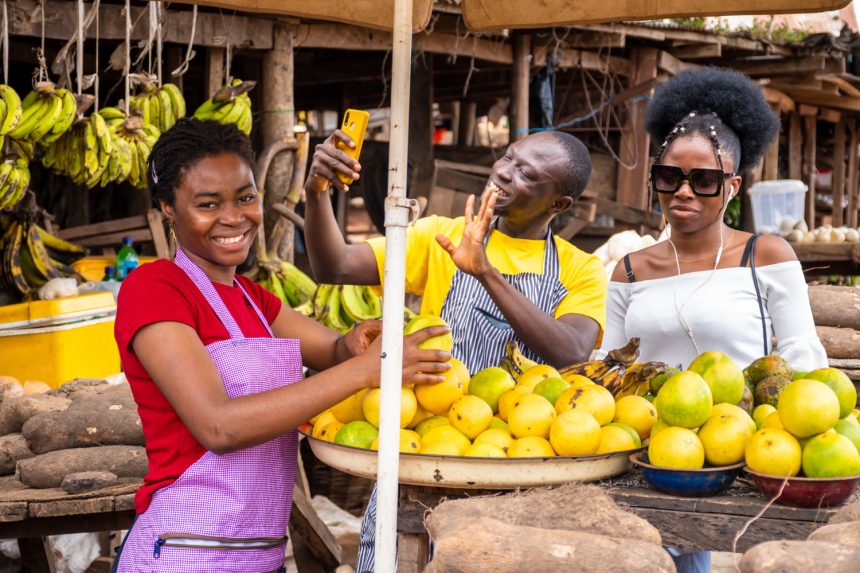
When the naira devalues sharply, as it has repeatedly over the past decade, traders adjust prices multiple times within a week, sometimes within a day. This is real-time currency risk management performed without spreadsheets or financial software, but with no less sophistication. Market vendors tracking exchange rate movements, calculating profit margins mentally, and adjusting inventory decisions accordingly are conducting economic analysis as complex as any corporate treasury function.
When one income stream falters, others compensate. When currency devalues, assets held in different forms provide hedges. When formal employment contracts, informal networks expand. This constant rebalancing requires sophisticated economic thinking, even if it occurs without formal economic training.
Related Articles

The mechanisms are pragmatic rather than ideological. They emerge from repeated experience with instability, refined across generations until they become embedded cultural knowledge. Similar patterns appear across contexts where currency collapse or chronic inflation create comparable pressures: Argentina’s informal dollar markets, Lebanon’s diaspora-dependent household economics, Venezuela’s parallel pricing systems developed during hyperinflation.
Social Capital as Economic Infrastructure
Perhaps the most significant resilience mechanism in unstable economies is the transformation of social relationships into economic infrastructure. Where formal credit systems are unreliable or inaccessible, informal lending networks emerge. Where insurance markets fail to serve ordinary people, collective contribution systems provide risk pooling.
These are structured economic arrangements with clear expectations, enforcement mechanisms, and social consequences for non-compliance. A rotating savings and credit association, known in Nigeria as “ajo” or “esusu”, operates with the precision of any financial institution, just without the physical infrastructure or regulatory framework.
Participants contribute fixed amounts on agreed schedules. Each member receives the pooled amount in rotation. Trust is enforced through social pressure, reputation systems, and the mutual dependence that makes defection costly in ways that extend beyond financial loss. Betraying such trust damages relationships that provide value in multiple domains, making the social cost of default often higher than in formal credit systems where anonymity provides cover.
This social capital functions as infrastructure because it enables economic activity that would otherwise be impossible. A market trader can access capital to expand inventory. A family can meet sudden medical expenses. A student can pay school fees. All of this happens through networks that require no buildings, no written contracts, no regulatory approval.
The efficiency comes from intimacy. Everyone in the network knows everyone else’s circumstances, character, and reliability. Information asymmetry, the problem that plagues formal lending, largely disappears. This is relationship banking at its most literal.
These systems are not perfect. They can exclude outsiders who lack established social connections. They can collapse under extreme economic shocks that overwhelm collective resources. Yet their persistence across contexts and generations suggests they solve problems that formal institutions have struggled to address at similar scale and accessibility.
When fuel subsidy removal in Nigeria triggers sudden price shocks across transportation and goods, these informal credit systems activate immediately. Families draw on accumulated goodwill. Traders extend payment terms to trusted customers. Communities pool resources to help members absorb sudden cost increases. Formal banking systems cannot respond with this speed or granularity.
The scale is significant, with World Bank estimates suggesting that informal sector activity accounts for over 60 per cent of employment in sub-Saharan Africa and similar proportions across much of Latin America and South Asia. These figures likely undercount actual informal economic activity, as measurement systems designed for formal economies struggle to capture transactions that leave no institutional trace.
Adaptive Strategies Over Fixed Economic Plans
Economic planning in unstable environments necessarily differs from planning under stable conditions. Where volatility is high and unpredictability is constant, coping with economic instability requires maintaining optionality and preserving the capacity to pivot rather than following rigid long-term plans.
This manifests in business practices that might appear improvised to outside observers but reflect deep strategic thinking. A small business owner might shift from one product line to another based on currency movements, supply availability, or changing demand patterns. What looks like lack of focus is actually sophisticated market responsiveness.
The same flexibility appears in household economics. Consumption patterns adjust rapidly to price changes. Purchases shift between formal and informal markets depending on relative value. Brand loyalty gives way to price sensitivity when necessary. Luxury purchases concentrate during periods of relative stability and contract during uncertainty.
This adaptive capacity requires constant information gathering and rapid decision-making. It also requires psychological resilience, the ability to accept frequent course corrections without experiencing them as failures. Where economic stability allows for patient capital accumulation and long-term planning, instability rewards those who can reorient quickly whilst maintaining forward momentum.
Street vendors in Lagos switching between selling phone accessories, clothing, and food items based on seasonal demand and import availability are managing portfolio risk through product diversification, responding to market signals with the agility that large retailers cannot match.
The Psychology of Economic Uncertainty
Living with chronic economic uncertainty shapes more than financial behaviour. It shapes expectations, risk tolerance, and the psychological frameworks through which people understand prosperity and security.
In stable economies, security often means accumulation. Building wealth, growing assets, expanding portfolios. The assumption is that value persists, that what you accumulate today will be there tomorrow, likely worth more.
In unstable economies, security more often means velocity and flexibility. The ability to convert assets quickly. Networks that can be activated when needed. Skills that remain valuable across changing conditions. Here, wealth tied up in illiquid forms can become a trap rather than security.
This difference extends to how people think about time horizons. When planning beyond six months feels futile because conditions might completely change, present focus intensifies. This reflects rational adjustment to actual conditions where distant futures are genuinely unpredictable.
Yet this does not mean absence of future orientation. It means future planning takes different forms. Parents still invest heavily in children’s education, recognising that skills and knowledge persist even when material wealth proves ephemeral. Communities still build institutions and infrastructure, just with different assumptions about funding models and sustainability.
The remittance culture prevalent across Nigerian diaspora communities reflects this adapted psychology. Families invest in education precisely because it is portable value that survives currency devaluation. A degree, professional qualification, or developed skill set cannot be inflated away or confiscated. This is long-term thinking adapted to unstable conditions.
The psychological resilience required to function effectively under such conditions sustains economic productivity across generations. Maintaining sound decision-making, preserving family stability, and transmitting adaptive knowledge to children whilst navigating constant uncertainty demands significant mental and emotional resources. This resilience becomes cultural capital, passed from parents to children not through formal instruction but through observed behaviour and lived experience.
Building Bridges Between Formal and Informal Economic Systems
Economic policy designed in stable contexts often fails in unstable environments because it misunderstands or ignores the resilience mechanisms already operating. Imposing regulatory frameworks designed for large institutions on small traders can eliminate the flexibility that allows them to survive volatility. Formalising informal credit systems can destroy the social enforcement mechanisms that made them work.
The informal economy is not separate from or parallel to the formal economy. It is deeply integrated, providing goods and services that formal systems cannot profitably deliver, absorbing labour that formal employment cannot accommodate, creating liquidity in contexts where formal financial systems do not reach. These systems persist not because people reject formal institutions but because transaction costs, regulatory barriers, and trust deficits make formal systems inaccessible or unsuitable for their actual economic activities.
Policies that fail to recognise these functions often create unintended consequences. Crackdowns on informal trading can eliminate income sources for thousands of families without creating alternative employment. Strict enforcement of formal business registration can push activity further underground rather than bringing it into the regulatory fold.
Intelligent policy integration would recognise informal systems as legitimate economic infrastructure requiring support rather than replacement. This approach might involve designing regulatory frameworks that acknowledge the scale at which informal businesses actually operate, rather than imposing standards designed for corporations. It would mean developing hybrid financial products that combine the accessibility of informal credit with some protections of formal banking, rather than trying to eliminate rotating savings associations. Taxation systems would need to accommodate variable income and cash-based transactions, making compliance feasible for small traders rather than only enforcing penalties for non-compliance. Technology adoption could be supported in ways that increase efficiency without destroying the social relationships that make informal systems work. Mobile money platforms in Kenya and Nigeria demonstrate how technology can enhance rather than replace community-based finance when designed with actual user behaviour in mind.
The question becomes how to strengthen existing resilience mechanisms whilst gradually building more robust formal structures, not how to replace informal systems wholesale with institutions designed for different contexts.
Resilience as Cultural Knowledge
The resilience mechanisms that operate in unstable economies are accumulated cultural knowledge, refined across generations, transmitted through practice and observation. A grandmother teaching her daughter to maintain multiple income streams is transmitting economic strategy. A community maintaining rotating credit associations is practising collective finance. A market trader adjusting prices throughout the day based on currency movements is conducting real-time risk management.
This knowledge is adaptive, not static. As conditions change, practices evolve. The social bonds, shared practices, and collective memory that constitute culture provide the foundation for resilience mechanisms that no individual could create alone.
The communities that survive and even thrive through economic instability are not lucky. They are sophisticated. What development economics often dismisses as informal coping is actually economic intelligence grounded in lived conditions rather than abstract models.