




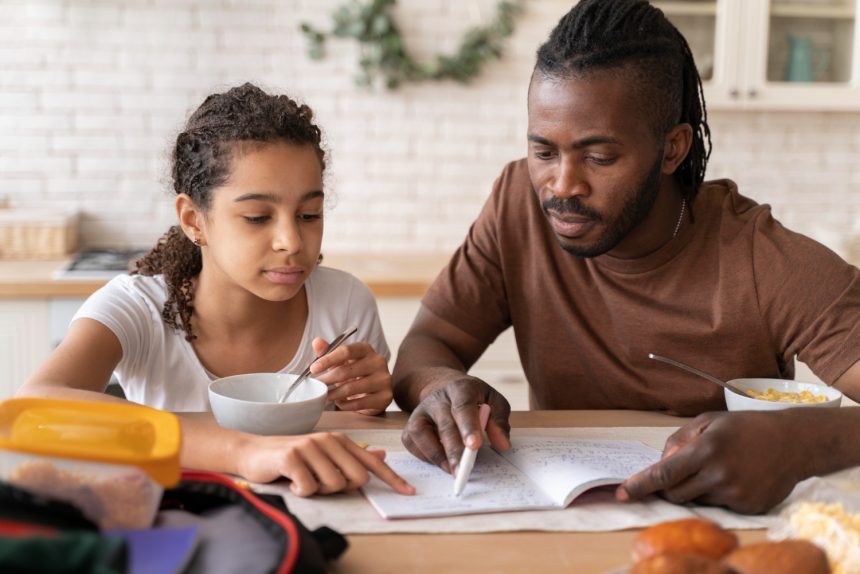
A child sits at the kitchen table reciting multiplication facts. Seven times eight is fifty-six. Seven times nine is sixty-three. The rhythm becomes automatic, the numbers flowing without conscious thought. Ask that same child why seven times eight equals fifty-six, and the fluency disappears. The child knows the answer but cannot explain the relationship. This gap between memorisation and understanding reveals something fundamental about how learning actually works.
Rote memorisation has dominated education for centuries because it produces visible results quickly. Children who can recite facts appear knowledgeable. Tests reward accurate recall. Parents and teachers witness measurable progress. Yet this appearance of learning often masks its absence. A child who memorises historical dates without understanding their significance, who learns mathematical procedures without grasping underlying principles, who repeats scientific terminology without comprehending concepts, has acquired information but not knowledge. The distinction matters because genuine learning requires something rote memorisation cannot provide: the ability to understand, connect, and apply what has been learned. In simple terms, children learn best when they understand concepts deeply rather than memorising facts temporarily.
Understanding how children actually learn requires looking beyond what they can repeat to examine how they form understanding, build connections, and develop the capacity to use knowledge in new contexts. Children learn most effectively when they build understanding through connection, application, discussion, and experience rather than relying solely on rote memorisation. This process is more complex and less linear than simple memorisation. It involves multiple mechanisms working together, creating learning that persists because it is integrated into broader understanding rather than stored as isolated facts.
What Rote Memorisation Actually Does
Rote memorisation involves repetitive practice until information can be recalled automatically. It works through rehearsal, creating memory traces that strengthen with repetition. A child who practices spelling words repeatedly, who chants times tables, who copies vocabulary definitions multiple times is using rote learning. The method is not inherently wrong. It serves specific purposes effectively.


Certain types of knowledge benefit from memorisation. Learning the alphabet requires memorising letter sequences. Reading fluency depends on recognising words automatically. Basic arithmetic facts need to be recalled without calculation. Language learning requires memorising vocabulary before those words can be used meaningfully. In these cases, memorisation creates a foundation that makes subsequent learning possible. The problem arises when memorisation substitutes for understanding rather than supporting it.
The limitations of rote learning become apparent when children encounter situations requiring more than recall. A child who has memorised that water boils at one hundred degrees Celsius but does not understand why cannot predict how altitude affects boiling point. A child who has memorised grammatical rules without understanding their function struggles to apply those rules to unfamiliar sentences. A child who has memorised historical facts without understanding cause and effect cannot analyse new historical situations. Memorisation provides answers but not the ability to reason, connect, or adapt.
Rote memorisation also creates fragile knowledge. Information learned through repetition without understanding is easily forgotten when rehearsal stops. It exists as isolated facts rather than part of an interconnected web of knowledge. When children forget what they have memorised, they have no way to reconstruct the information because they never understood its underlying logic. This fragility explains why students often forget material shortly after examinations despite having memorised it successfully for the test. This is why rote memorisation alone is not enough for long-term learning.
How Understanding Develops
Genuine learning involves constructing understanding rather than storing information. Children learn most effectively when they grasp not just what something is but why it is, how it connects to what they already know, and how it can be applied. This deeper learning happens through several interconnected processes.



Connection-making forms the foundation of real understanding. When children learn new information, they do not simply add it to memory storage. They integrate it into their existing knowledge, forming relationships between new concepts and what they already understand. A child learning about photosynthesis who already understands breathing can connect the two processes, recognising that plants produce what animals need and vice versa. This connection creates understanding that isolated memorisation of photosynthesis steps cannot achieve.
These connections allow children to reason about what they have learned. A child who understands that multiplication represents repeated addition can figure out seven times eight by recognising it means adding eight seven times, even if they have forgotten the memorised answer. A child who understands why certain spelling patterns exist can make educated guesses about unfamiliar words. Understanding provides tools for thinking rather than just answers to recall.
Pattern recognition plays a crucial role in how children develop understanding. Rather than memorising every instance separately, children who learn effectively identify underlying patterns that explain multiple cases. A child learning grammar who recognises the pattern that verbs change form based on tense can apply this understanding to new verbs without memorising each conjugation separately. A child learning mathematics who recognises patterns in number relationships develops number sense that supports problem-solving beyond memorised procedures.
The brain naturally seeks patterns because pattern recognition is efficient. Once children identify a pattern, they can apply it broadly rather than learning each instance individually. However, this only works when children are encouraged to look for patterns rather than simply memorising individual cases. Teaching that highlights patterns and connections supports learning in ways that rote repetition cannot.
Learning Through Experience and Application
Children learn powerfully through direct experience and practical application. Abstract concepts become meaningful when children encounter them in concrete contexts where they can manipulate, experiment, and observe results. A child learning about volume who pours water between differently shaped containers develops understanding that memorising volume formulas cannot provide. A child learning about friction who slides objects across different surfaces builds intuitive knowledge of the concept before encountering the technical term.
This experiential learning works because it engages multiple cognitive processes simultaneously. Children observe, predict, test their predictions, and adjust their understanding based on outcomes. They develop causal reasoning by seeing how one action leads to another. They build mental models of how things work that can be refined and expanded as they learn more. The understanding developed through experience is robust because it is grounded in observed reality rather than abstract information.
Application serves a similar function. When children use what they are learning in meaningful contexts, they develop understanding of why the knowledge matters and how it functions. A child learning fractions who uses them to divide food fairly among friends understands fractions as tools for solving real problems, not just symbols to manipulate. A child learning about ecosystems who observes local wildlife develops concrete understanding that reading about ecosystems in textbooks cannot match.
The key is that experience and application require active engagement rather than passive reception. Children must think, decide, and adjust their actions based on feedback. This active involvement creates learning that persists because it is constructed through the child’s own cognitive effort rather than simply transmitted from teacher to student. At its core, real learning happens when children think, connect, and apply, not when they simply repeat.
The Role of Explanation and Discussion
Children develop understanding through explaining their thinking and discussing concepts with others. When children articulate what they think they know, they discover gaps in their understanding and refine their mental models. A child who attempts to explain why objects fall develops clearer understanding than one who simply memorises that gravity causes falling. The act of explanation requires organising thoughts, identifying relationships, and making reasoning explicit.
Discussion with peers or adults serves similar purposes. When children hear different perspectives or explanations, they encounter alternative ways of thinking about concepts. They must reconcile these different views with their own understanding, a process that deepens learning. A child discussing why seasons occur who hears another child’s explanation might recognise flaws in their own thinking or incorporate useful elements from the other explanation. This collaborative construction of understanding produces learning that individual memorisation cannot achieve.
Questions drive this process. Children who ask why, how, and what if are actively constructing understanding rather than passively receiving information. Their questions reveal what they find confusing and what connections they are trying to make. Adults who respond to these questions by guiding children toward answers rather than simply providing them support the development of reasoning skills alongside content knowledge.
However, this requires learning environments that value understanding over correct answers. When the focus is solely on getting the right answer quickly, children learn to seek answers rather than develop understanding. When errors are treated as learning opportunities rather than failures, children feel safe exploring their thinking and refining their understanding through discussion.
Why Rote Learning Persists
Despite evidence that deeper learning produces better outcomes, rote memorisation remains common in educational settings. Several factors explain its persistence. The most obvious is efficiency in the short term. Rote learning produces measurable results quickly. Teachers can verify that children have memorised content through simple testing. Parents can hear their children recite facts. This visible progress satisfies demands for accountability even when the learning is superficial.
Assessment systems reinforce rote learning. Standardised tests that reward rapid recall of facts rather than demonstrated understanding incentivise teaching methods that prioritise memorisation. When educational success is measured by test scores that assess fact recall, teachers logically focus on ensuring students can recall facts. The system creates pressure to teach in ways that produce high test scores rather than deep understanding, even when educators recognise the limitations of this approach.
Cultural factors also play a role. In contexts where educational tradition emphasises rote learning, both teachers and parents may view it as the proper way to learn. They learned through memorisation themselves and see no reason to change methods. The idea that understanding matters more than recall may seem unfamiliar or even suspicious. Changing these deeply embedded beliefs requires more than pointing to research. It requires experiencing alternative approaches and seeing their results.
Practical constraints matter as well. Teaching for understanding takes more time than teaching for memorisation. It requires smaller class sizes, more individual interaction, and acceptance that learning progresses at different rates for different children. When teachers face large classes, limited resources, and pressure to cover extensive curricula, rote memorisation offers a manageable approach even if it is not the most effective one.
The persistence of rote learning also reflects genuine uncertainty about what methods work best. While research clearly shows that understanding produces better long-term learning than memorisation alone, the specifics of how to teach for understanding across different subjects and contexts remain debated. Teachers may default to memorisation not because they prefer it but because they lack clear guidance on alternative approaches or resources to implement them.
Why Learning Is More Complex Than Memorisation
Understanding how children actually learn requires acknowledging that no single method works for all content or all children. Learning is context-dependent, content-dependent, and child-dependent. Some aspects of learning benefit from memorisation. Others require experiential learning. Many need a combination of approaches.
Basic facts and skills that need to be automatic benefit from memorisation and practice. Children learning to read need to recognise common words automatically. Children learning mathematics need rapid recall of basic arithmetic facts. Children learning to write need certain spellings and grammatical structures to become automatic. In these cases, memorisation serves as a tool that frees cognitive resources for higher-level thinking. The child who must stop to sound out every word cannot comprehend what they are reading. The child who must calculate every basic arithmetic fact cannot solve complex problems.
However, even these foundational skills are learned more effectively when memorisation is combined with understanding. A child who memorises multiplication facts whilst also understanding multiplication as repeated addition learns more robustly than one who memorises without understanding. The memorisation provides speed, but the understanding provides flexibility and the ability to reconstruct forgotten facts.
Complex concepts require approaches that build understanding through multiple methods. Children learning about historical events need factual knowledge of what happened, but they also need to understand why events unfolded as they did, what factors influenced outcomes, and how these events connect to broader patterns. This cannot be achieved through memorisation alone. It requires analysis, discussion, comparison, and the construction of explanatory frameworks.
Different children also learn differently, though not in the rigid categories sometimes promoted. Some children benefit from visual representations. Others prefer verbal explanations. Many need physical manipulation of objects to understand abstract concepts. Effective learning often involves multiple approaches, allowing children to build understanding through whatever combination of methods works for them while also expanding their capacity to learn through different modalities.
What This Means for Learning Environments
Recognising how children actually learn has implications for how learning environments are structured. The most fundamental is that learning must be seen as an active process of construction rather than passive reception of information. Children are not empty vessels to be filled with facts. They are sense-makers who must build understanding through their own cognitive effort.
This suggests that learning environments should create opportunities for children to engage actively with content. They need chances to manipulate materials, test hypotheses, make predictions, and observe outcomes. They need to explain their thinking, discuss ideas with others, and encounter different perspectives. They need to apply what they are learning in contexts that reveal its usefulness and limitations. These activities cannot be replaced by listening to lectures or completing worksheets, though such activities may support learning when combined with more active engagement.
It also suggests that errors should be treated as valuable learning opportunities rather than failures to avoid. When children make mistakes in their reasoning or reach incorrect conclusions, they are revealing their current understanding. Examining why their reasoning led them astray and how it might be refined deepens learning more effectively than simply being told the correct answer. This requires patience and willingness to let children work through confusion rather than rushing to provide correct information.
The role of assessment shifts in this understanding. If learning is about developing understanding rather than accumulating facts, assessment should measure understanding rather than recall. This means asking children to explain, apply, analyse, and create using what they have learned rather than simply repeat it. Such assessment is more difficult to standardise and score, but it provides more accurate information about what children actually understand.
Perhaps most importantly, recognising how children actually learn suggests that the pace of learning cannot be standardised. Understanding develops through a process that takes time and proceeds differently for different children. Rushing through content to meet curriculum requirements often means children memorise without understanding, then forget what they memorised because it was never meaningfully learned. Allowing time for genuine understanding to develop, even if it means covering less content, produces learning that persists and can be built upon. For parents, this means that supporting learning at home involves more than checking whether answers are correct.
Why Education Still Prioritises Memorisation
The gap between knowing how children learn and organising education around that knowledge persists. Educational systems continue to prioritise what can be easily measured over what matters most. Teachers who understand that children need time to build understanding face pressure to move quickly through curricula. Parents who recognise that their children need more than memorisation struggle with educational systems that reward recall over reasoning.
This tension will not resolve quickly. Too many structural factors reinforce current approaches. Standardised testing, large class sizes, limited resources, traditional beliefs about education, and genuine uncertainty about how to implement better approaches all create resistance to change. Individual teachers and parents who try to prioritise understanding over memorisation often do so despite rather than because of systemic support.
However, understanding how children actually learn changes what parents and educators can do within existing constraints. Even when broader systems resist change, individual interactions can be structured to support genuine learning. Adults can ask children to explain their thinking rather than just provide answers. They can connect new information to what children already know. They can create opportunities for hands-on experience. They can treat errors as chances to refine understanding. They can value questions as much as correct responses.
Children actually learn by constructing understanding through active engagement with content, by forming connections between new information and existing knowledge, by recognising patterns that allow broad application, by experiencing concepts in concrete contexts, and by explaining and discussing their thinking. Rote memorisation has a place in this process, but only as a tool that supports understanding, not as a substitute for it. The challenge is creating learning environments that prioritise understanding even when systems incentivise memorisation. That challenge remains largely unmet, but meeting it matters because the difference between memorising and understanding is the difference between appearing to learn and actually learning.