




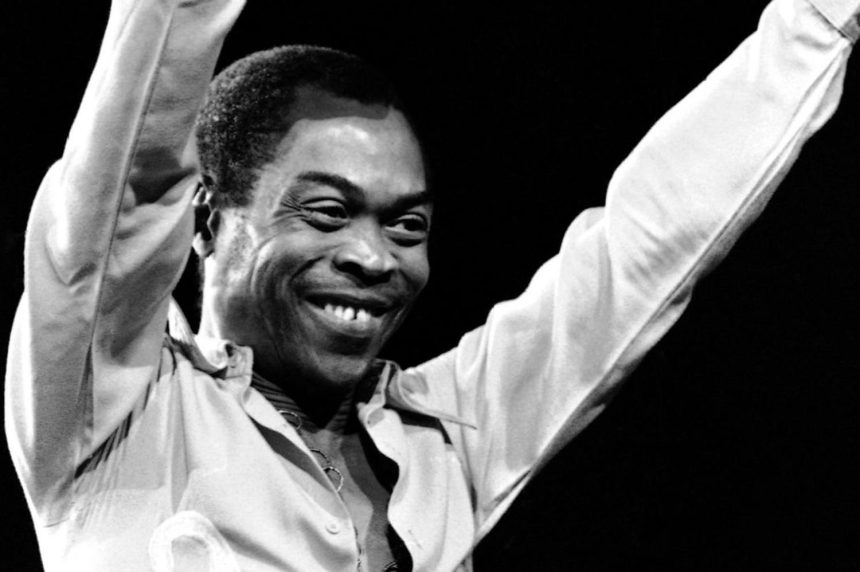
Most revolutionary figures announce themselves early. Fela Anikulapo Kuti did not. Born Olufela Olusegun Oludotun Ransome-Kuti on 15 October 1938 in Abeokuta, Nigeria, the child who would become the father of Afrobeat spent his early years as a well-behaved, middle-class boy. He attended school. He learnt piano. He smoked nothing. He followed rules.
His transformation into one of Africa’s most defiant cultural icons was not inevitable. It was earned through confrontation with power, loss, ideology, and an unwavering belief that music could be more than entertainment. Music could be revolution.
Fela did not create Afrobeat because he wanted a genre. He created it because he needed a weapon.
A Dynasty of Defiance
To understand Fela requires understanding the Ransome-Kuti family. This was not a household of artists. This was a lineage of resistance.


His grandfather, Reverend Josiah Ransome-Kuti, was an Anglican clergyman and musical pioneer. His father, Reverend Israel Oludotun Ransome-Kuti, was not only an Anglican minister and school principal but the first president of the Nigeria Union of Teachers. Israel Ransome-Kuti believed so strongly in education that he became known in Abeokuta as “Baba gbomgbomo,” meaning “the man who steals children.” He would literally take children from the streets and from their mothers’ homes, insisting they attend school and learn to read.
Among those who benefited from this educational zeal was a young boy named Olusegun Obasanjo, who would later serve as Nigeria’s president. The Ransome-Kuti family did not merely participate in Nigerian society. They shaped it.
But it was Fela’s mother who would prove to be his most profound influence.
Funmilayo Ransome-Kuti was not “Fela’s mum,” though that is how many Nigerian newspapers described her when she died in 1978. She was a nationalist, a feminist, and a political force who led the Abeokuta Women’s Revolt in the 1940s, mobilising 20,000 women to challenge unfair taxation and colonial authority. She confronted the British administration. She faced down traditional rulers. She travelled the world advocating for women’s rights, became the first Nigerian woman to drive a car, and received the Lenin Peace Prize in 1970 for her activism.


When an Ifa priest told Funmilayo and Israel that their son Fela would be stubborn and challenge the government, it was not a prophecy. It was an observation of inherited temperament. Fela came from people who refused to accept oppression quietly.
The Making of a Revolutionary
Fela was sent to London in 1958 to study medicine. His parents hoped he would return to Nigeria as a doctor, perhaps as the country’s future Minister of Health. He enrolled at Trinity College of Music instead.
This act of defiance was small compared to what would follow, but it established a pattern. Fela would not be told what to become. He formed Koola Lobitos, a band that played highlife jazz, and spent the 1960s searching for an audience that did not yet exist.
Everything changed in 1969 when he toured the United States. There, he encountered the Black Panther Party. He read The Autobiography of Malcolm X. He met Sandra Smith, a Black American activist who introduced him to Pan-Africanism and the politics of Black consciousness. These encounters did not radicalise Fela. They clarified what he had always known but had not yet named.
He returned to Nigeria no longer playing jazz with African influences. He was creating something entirely new.
Afrobeat as Political Weapon
Afrobeat was not music for dancing, though it was irresistibly danceable. It was not entertainment, though it entertained millions. Afrobeat was confrontation set to polyrhythmic grooves that could stretch for 15 minutes without losing intensity.
Fela sang in Nigerian Pidgin, the common language that transcended ethnic divisions. He did not want to reach only the educated elite. He wanted to reach everyone. His lyrics were not subtle. They named names. They mocked soldiers. They called out corruption. They described state violence with forensic precision.



In 1977, Fela released Zombie, an album that compared Nigerian soldiers to mindless automatons who followed orders without thought or conscience. The song became an anthem. It also became evidence.
On 18 February 1977, approximately 1,000 soldiers surrounded Fela’s compound in Lagos, a communal space he had declared the independent Kalakuta Republic. They came with weapons, with fury, and with orders. They beat Fela and his brother, Dr Bekolari Ransome-Kuti. They assaulted residents. They destroyed instruments and recordings. They set the building on fire.
And they threw Fela’s 76-year-old mother, Funmilayo Ransome-Kuti, from a second-floor window.
She survived the fall with a broken leg. She did not survive the psychological trauma. Funmilayo refused food and medication. She slipped into depression and eventually into a coma. She died on 13 April 1978, at Lagos General Hospital, at the age of 77.
Fela’s response was characteristically defiant. On the first anniversary of her death, he placed her coffin in a hearse and drove it nearly 20 kilometres to Dodan Barracks, the Nigerian military headquarters. He left it at the gate.
The songs that followed were not grief. They were accusation. “Coffin for Head of State,” “Unknown Soldier,” and “Beast of No Nation” ensured that no one in Nigeria could claim ignorance about what had been done to his mother.
Music had become testimony. Music had become indictment. Music had become the only court where Fela could demand justice.
The Rejection of Names and Nations
Shortly after his mother’s death, Fela formally changed his surname from Ransome-Kuti to Anikulapo-Kuti. “Ransome,” he argued, was a slave name given to his grandfather when he converted to Christianity. “Anikulapo” is a Yoruba word meaning “he who carries death in his pouch” or “one who controls his own destiny.”
He did not want European religion. He did not want colonial legacy. He wanted to reclaim what had been taken.
Fela rejected Christianity entirely, embracing African traditional religion with the same intensity he brought to his music. He was not searching for spirituality. He was rejecting what he saw as a tool of colonisation, a system that taught Africans to worship European gods whilst their land, resources, and dignity were stolen.
His nightclub in Lagos was not called a club. It was called The Afrika Shrine. It was a sacred space where music, spirituality, politics, and community converged. People did not simply go to hear Fela play. They went to be part of something larger than themselves.
The Complexity of the Man
Fela’s personal life was as provocative as his politics. In 1978, he married 27 women in a single ceremony.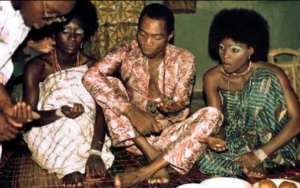 He later claimed he married them all because they were already living with him in Kalakuta and he wanted to legitimise their status. Critics called it exploitation. Fela called it African tradition.
His views on sexuality were equally unapologetic. In interviews, he described sex as life itself, as a source of great pleasure and vitality. He did not hide his appetite. He did not apologise for it. He lived as though many Western moral standards were themselves colonial impositions.
This created a paradox. Fela was a champion of the oppressed who created a commune where women served him. He was an anti-colonialist who adopted some of the same hierarchical structures he claimed to oppose. He was a revolutionary whose personal relationships often reflected the gender dynamics of the society he criticised.
His contradictions do not erase his contributions. They complicate them. Fela was not a saint. He was a man who believed that African liberation required total rejection of Western values, even when that rejection produced new forms of harm.
The Price of Defiance
Fela was arrested more than 200 times during his life. He was imprisoned on drug charges, beaten by police, and subjected to constant harassment. The Nigerian government raided Kalakuta repeatedly. They burned his recordings. They destroyed his instruments. They tried to silence him with violence when they could not silence him with law.
He refused to be silenced.
Even when his body began to fail in the mid-1990s, weakened by illness later reported by his family to be AIDS-related, Fela continued to perform. He continued to challenge authority. He continued to insist that music mattered, that resistance mattered, that Nigeria deserved better than the military regimes that had looted the country for decades.
When Fela died on 2 August 1997, more than one million people attended his funeral. It was not mourning. It was recognition. Fela had given voice to what millions felt but could not say. He had stood when others kneeled. He had refused compromise when compromise was the path of survival.
The Legacy That Endures
In January 2026, long after his death, Fela Anikulapo Kuti became the first African artist to receive a Grammy Lifetime Achievement Award. The honour, presented at the 68th Annual Grammy Awards, placed him alongside Whitney Houston, Cher, and Paul Simon.
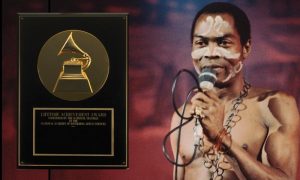
His children accepted the award on his behalf. His music continues to inspire a new generation. Artists from Beyoncé to Burna Boy cite him as an influence. The New Afrika Shrine in Lagos still hosts Felabration, an annual festival celebrating his birthday and his legacy.
Afrobeat has evolved into Afrobeats, a global genre that dominates charts worldwide. The sound is different. The politics are softer. But the connection to Fela remains.
What Fela proved was that music does not have to be polite to be powerful. He showed that art created under oppression can become the most lasting form of resistance. He demonstrated that rejecting Western approval does not mean rejecting excellence.
Fela was not perfect. He was brilliant, flawed, visionary, and human. He created a genre that changed African music forever. He challenged governments that wanted him dead. He lived as though freedom was not something to request but something to take.
His life asks uncomfortable questions. What does liberation require? Can personal contradictions coexist with political courage? How do we honour figures whose contributions were monumental but whose personal lives were complicated?
These are not questions with easy answers. Fela did not offer easy answers. He offered music, defiance, and a belief that Africa deserved to define itself on its own terms.
Decades after his death, that belief still resonates. The man who carried death in his pouch outlived every government that tried to destroy him. His music remains. His spirit endures. His revolution continues.
At LivingExplained, we explore culture not as performance but as lived experience. Fela Anikulapo Kuti was not a performer. He was a force. Understanding him requires understanding that art, when wielded with purpose, becomes something far more dangerous than entertainment.
It becomes truth.